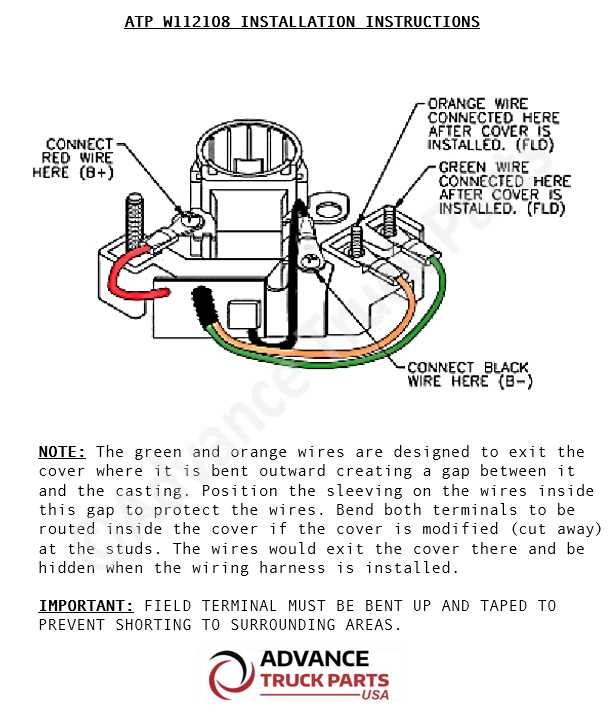
Measure system voltage at the battery terminals before inspecting the charging control layout. A healthy vehicle charging unit usually maintains 13.8–14.6 V while the engine runs above idle speed. Values outside this range indicate problems with the field control section or sensing network.
Trace the excitation path that feeds current to the rotor winding. This path normally includes a transistor control stage, a sensing line connected to the battery, and protection components such as diodes and resistors. The control stage increases or decreases rotor current depending on the measured system voltage.
Locate the voltage sensing point connected to the battery line. This connection allows the control electronics to monitor electrical output from the generator unit. When voltage rises above the set level, the control stage reduces current flowing through the rotor coil.
Inspect heat dissipation and grounding points. The control module often attaches to a metal housing that acts as a heat sink. Solid grounding between the module, vehicle chassis, and battery negative terminal prevents unstable output and protects electrical components.
Use a multimeter to track signal flow through the control electronics. Check continuity from the sensing line to the control transistor or integrated module, then follow the path toward the rotor excitation terminal. This inspection reveals broken connections, damaged components, or unstable voltage control.
Alternator Voltage Regulator Circuit Layout and Charging Control Guide
Verify battery voltage while the engine runs at 2000 RPM. Normal charging output remains between 13.8 V and 14.6 V. Values outside this range point to problems in the voltage control module, sensing line, or rotor excitation path.
Key Sections in the Charging Control Layout
The electrical layout used in most vehicle charging units includes several connected stages that control rotor current and maintain stable output:
- Battery sensing line
- Control transistor or integrated control module
- Rotor excitation connection
- Protection diodes
- Ground reference connection
The sensing line monitors battery voltage directly. When voltage rises above the preset threshold, the control module reduces current flowing through the rotor winding. Lower rotor current decreases magnetic field strength and lowers generator output.
Field Current Control Operation
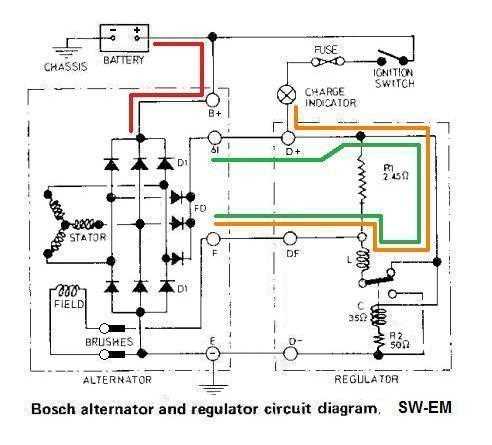
The control module modulates current flowing through the rotor coil using a switching transistor or internal semiconductor stage. This component rapidly connects and disconnects the excitation line. By varying duty cycle, the system stabilizes electrical output during changes in engine speed and load.
Follow the electrical path during inspection:
- Battery positive line feeds the sensing input
- Control module compares measured voltage with reference value
- Output stage drives rotor excitation terminal
- Ground path completes current flow through the rotor coil
Heat management and grounding strongly influence charging stability. The control module typically mounts on a metal housing connected to vehicle ground. This surface dissipates heat generated by the switching transistor and maintains stable operation under continuous electrical load.
Identifying Voltage Sensing Line and Field Control Path in Alternator Regulator Layout
Locate the battery sensing conductor first. This line connects directly to the battery positive terminal or main charging output. Its task is continuous voltage monitoring so the control module can adjust rotor excitation current.
Tracing the Voltage Monitoring Line
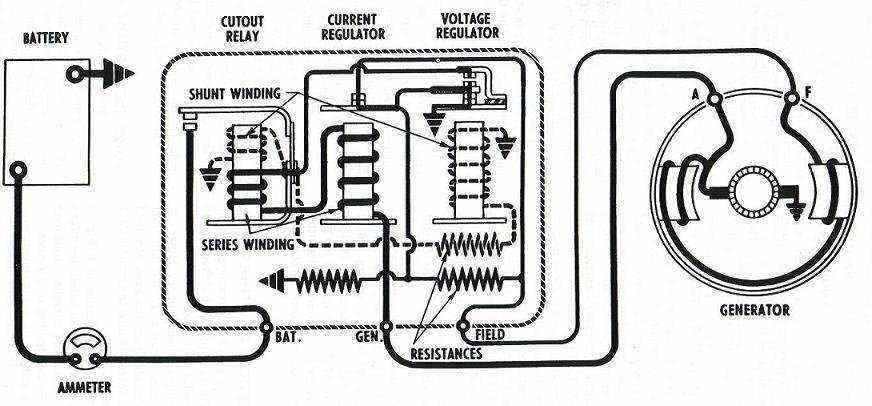
The sensing path normally contains a resistor divider connected to the control electronics. This network scales the battery voltage to a level suitable for the internal comparator. Typical designs reduce 14 V to a reference range between 2 V and 5 V.
Check continuity between the sensing terminal and battery positive. A damaged conductor or corroded connector prevents accurate voltage measurement. When the module reads a lower value than the real battery voltage, the charging unit may produce excessive output.
Common connection points used for voltage monitoring include:
- Main battery output terminal
- Fuse box distribution point
- Dedicated sensing pin on the control module
- Internal reference network inside the control electronics
Tracing the Rotor Excitation Path
Follow the path that supplies current to the rotor winding. This line normally exits the control electronics through a transistor stage that switches the excitation current on and off at high speed.
The field current path usually contains several elements arranged in sequence:
- Battery positive source
- Ignition-controlled supply line
- Control transistor or switching stage
- Rotor winding connection
- Ground return path through slip rings and brushes
Measure voltage at the excitation terminal while the engine runs. Values change rapidly as the control electronics adjust rotor current. Stable battery voltage together with varying excitation signals indicates normal charging control operation.
Inspect grounding connections near the control module. Poor grounding can distort voltage readings and interrupt the excitation path, causing unstable charging or intermittent electrical output.