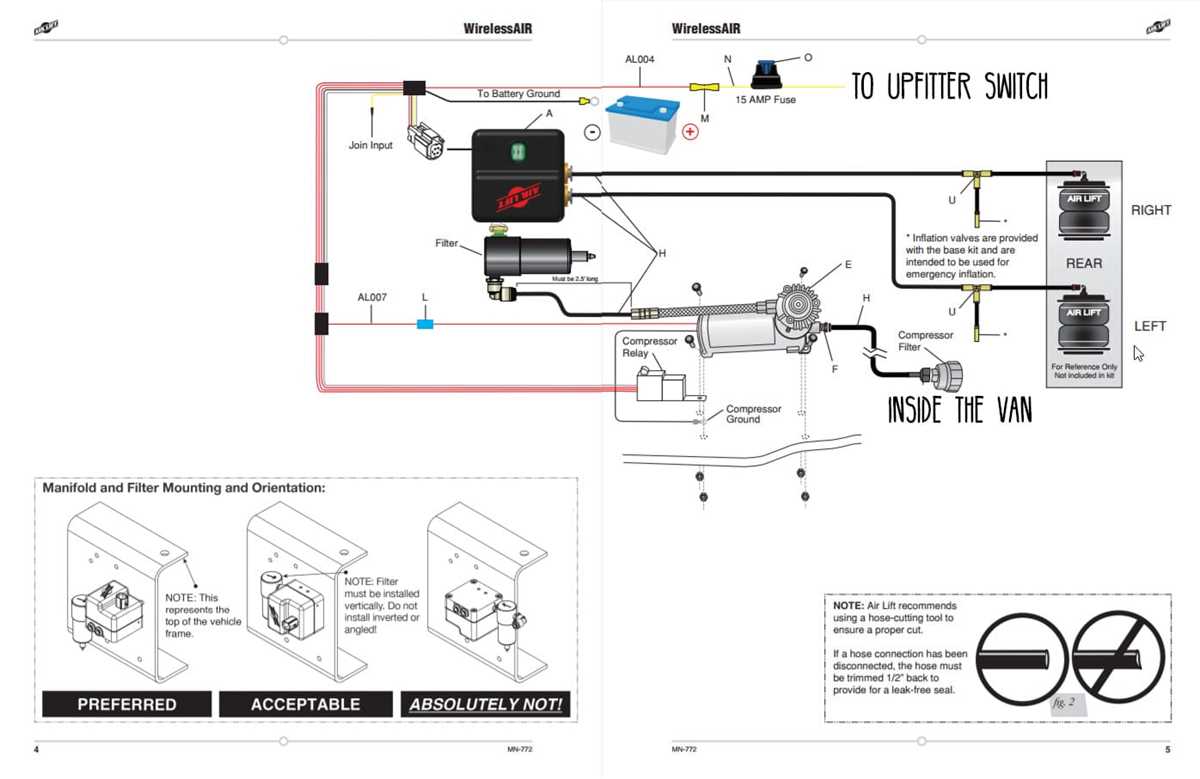
Use a clear electrical schematic before connecting any component of a pneumatic ride-height control setup. Route the main power line from the battery through a 30–40 A fuse positioned within 20–30 cm of the positive terminal. From this fuse, lead the line to a 40 A relay that switches the compressor motor. This configuration prevents voltage drop and protects the control module during current spikes that may exceed 35 A while the compressor starts.
The compressor, valve block, and pressure sensor must share a stable ground point attached directly to the vehicle chassis. Use 8–10 AWG cable for the compressor feed and 16–18 AWG conductors for signal paths between the controller and solenoid valves. A typical valve manifold uses four channels, each triggered by a 12 V pulse from the control unit. Label each conductor clearly–front-left, front-right, rear-left, rear-right–to prevent crossed connections that could cause uneven ride height.
The controller receives input from a pressure transducer (usually 0.5–4.5 V output across a 5 V reference line). Connect the sensor signal to the designated analog pin on the control module while shielding the cable to reduce interference from ignition coils and alternator noise. Install a dedicated 5 A fuse for the control electronics, separate from the compressor circuit, which isolates sensitive electronics from high-current loads.
Inside the cabin, the control panel typically distributes low-current signals to the main module through a multi-pin harness. Maintain twisted pairs for data lines and keep them at least 10 cm away from high-current cables feeding the compressor motor. Such routing keeps voltage fluctuations low and preserves accurate pressure readings, allowing the pneumatic ride-height mechanism to respond quickly and maintain stable vehicle clearance.
Pneumatic Ride Height System: Practical Layout and Connection Guide
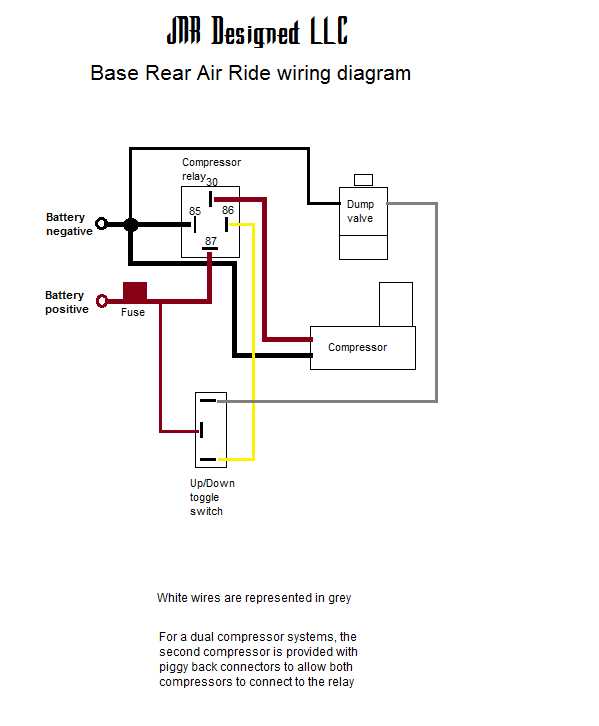
Place the compressor relay within 20–30 cm of the battery and route the 12 V supply through a 30–40 A fuse; this limits voltage drop and protects the circuit during compressor startup peaks that often exceed 28 A. Run a dedicated ground cable (minimum 8 AWG) directly to the chassis contact point cleaned to bare metal. The pressure switch output should feed the relay control terminal (pin 86) while the ignition-switched line activates the controller module, preventing the compressor from cycling when the vehicle is parked.
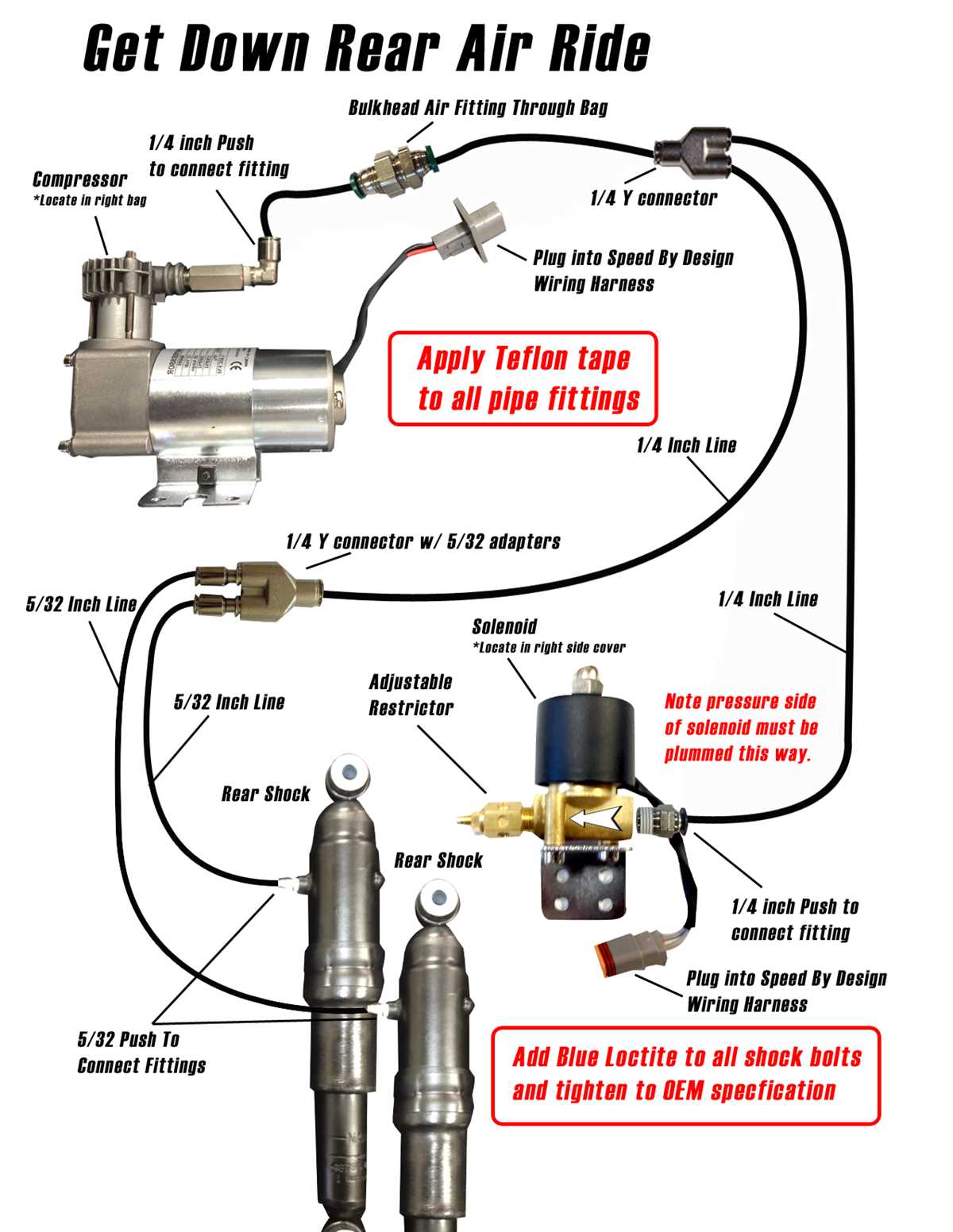
Arrange the electrical layout so the control module sits inside the cabin while solenoid valves and the compressor remain near the reservoir tank. Use 16–18 AWG leads for valve control lines and shield them with corrugated loom when routed under the chassis. Separate power cables from signal leads by at least 5 cm to limit electromagnetic interference affecting height sensors. Each valve block port normally receives a two-wire pair: one lead from the controller output and one shared ground rail mounted near the valve manifold. Label every conductor using heat-shrink markers because four-corner height control systems may involve 12–16 individual connections. Secure harness paths with P-clips every 25–30 cm and avoid routing near exhaust sections where ambient temperature exceeds 120 °C; high heat hardens insulation and leads to intermittent faults in the control network.
Identifying Power Sources, Fuses, and Relay Paths in a Pneumatic Ride-Height Control Electrical Schematic
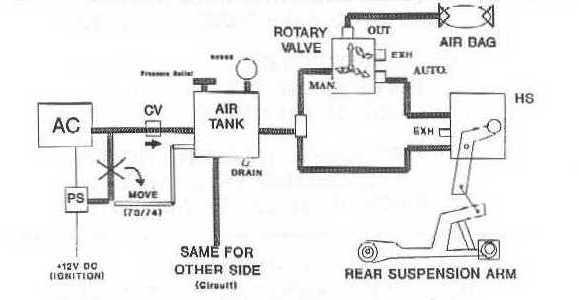
Locate the primary voltage feed first and trace it outward through protection elements and switching components. The main supply usually originates from the vehicle battery distribution block or a high-current terminal in the engine bay. Follow the heavy gauge conductor (commonly 8–12 AWG in retrofit leveling kits) toward the compressor control module or valve manifold controller. Any branch leaving that feed should pass through a protection device before reaching electronic units.
Power supply identification becomes easier when checking voltage labels and connector pin numbers printed near the circuit map. Many manufacturers mark constant battery feed as B+, BAT, or Terminal 30. Switched ignition feed often appears as ACC or Terminal 15. Confirm the path by checking the following common supply routes:
- Battery → maxi fuse (30–60A) → relay contact → compressor motor
- Battery → 10–15A fuse → controller module
- Ignition line → 5–10A fuse → height sensor interface
- Controller output → solenoid valve pack
Fuse placement reveals how the electrical network separates high-load components from low-current electronics. The compressor motor circuit usually carries the highest amperage, so the protection element sits close to the battery. Smaller blade fuses protect signal processors and sensor circuits. When examining the layout, confirm fuse rating, color code, and physical location inside the fuse block.
Typical fuse ratings seen in ride-height leveling installations:
- 40A–60A: compressor motor protection
- 20A–30A: valve manifold block
- 10A–15A: electronic control unit
- 5A–7.5A: height sensor circuits
Relay paths control heavy loads without sending large current through dashboard switches or microcontrollers. The relay contains two separate circuits: a low-current coil and a high-current contact. The coil activates when the controller outputs a trigger signal, closing the contact and supplying battery voltage to the compressor or solenoid assembly.
Trace the relay route step-by-step:
- Controller output pin → relay coil terminal 86
- Ground reference → coil terminal 85
- Battery feed → contact terminal 30
- Output to compressor or valve block → terminal 87
Connector numbering helps confirm the route. For example, a controller connector labeled C2 pin 4 may drive the relay coil. If that pin receives 12 V during activation, the path should continue through the relay to the compressor lead. Use a multimeter to verify continuity across the contact when energized.
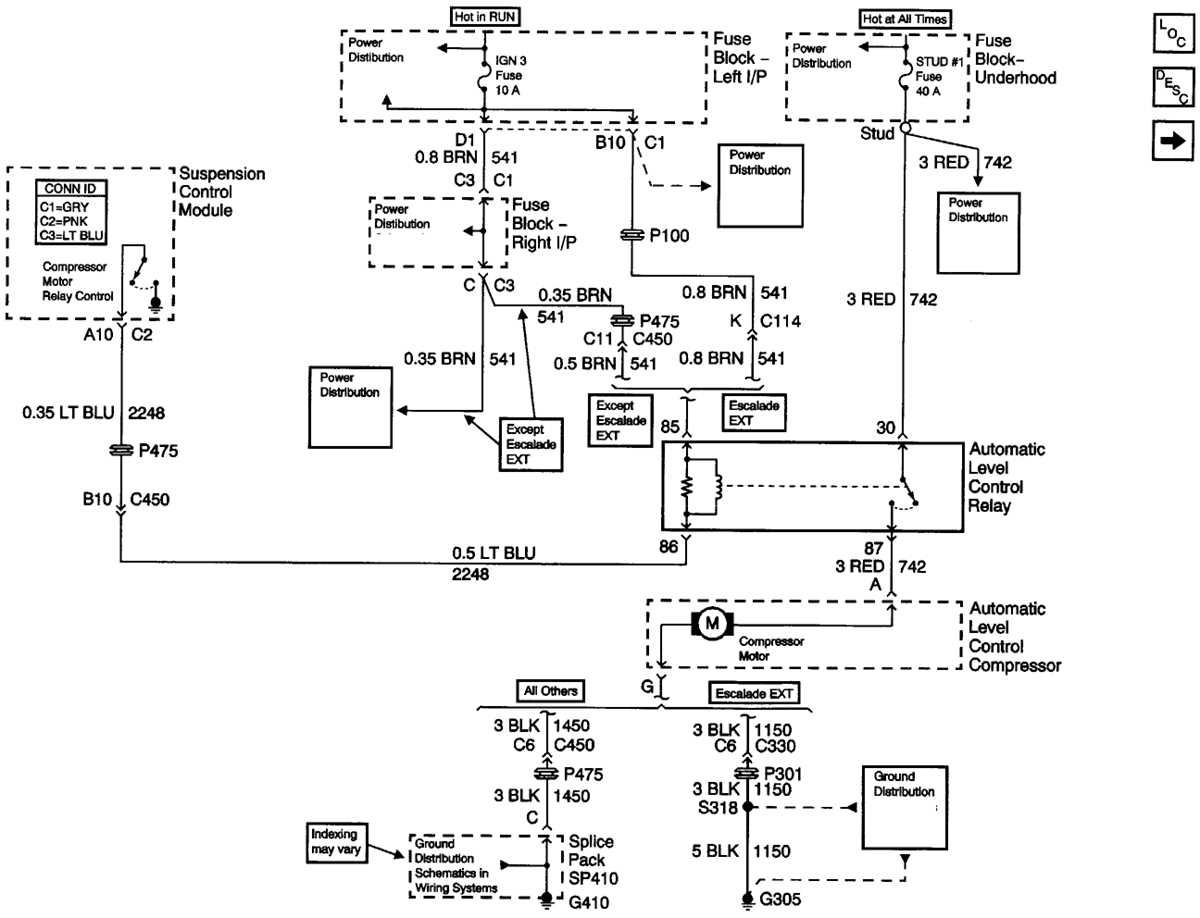
Color codes also assist identification. Common aftermarket harness patterns include red for constant battery feed, yellow for ignition-controlled voltage, black for ground return, and blue or green for relay triggers. Matching those colors across the circuit map allows fast recognition of power distribution and switching paths without tracing each conductor physically.