
Connect the ground conductor first and attach it directly to the metal frame of the transport unit. A poor ground connection causes dim lamps, unstable brake signals, and intermittent turn indicators. Use a 10–12 AWG copper lead secured with a corrosion-resistant bolt and clean contact surface.
The standard seven-contact plug distributes power for multiple signaling circuits used by heavy cargo carriers. Each terminal carries a dedicated function such as tail illumination, stop indicators, left and right directional signals, auxiliary power, and braking control. The most common color scheme assigns brown for tail lamps, yellow for left turn signal, green for right signal, white for ground, and red for stop circuit.
Voltage delivered from the tractor electrical system normally reaches 12 volts DC. Measure output with a multimeter before connecting conductors to confirm stable supply. Voltage below 11.5 V often leads to weak illumination or delayed signal response along the rear assembly.
Route conductors through protective loom along the chassis and secure them every 30–40 cm with insulated clamps. This method reduces abrasion from vibration and road debris, maintaining reliable operation of rear signaling equipment across long distances.
Semi Trailer Light Wiring Diagram with 7 Pin Connector and Color Code Guide
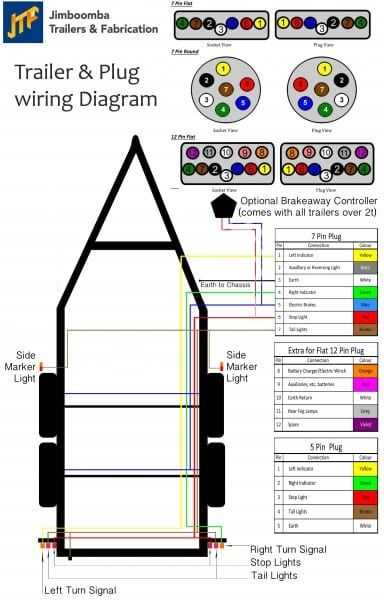
Match each contact in the seven-slot plug with the correct conductor color before connecting the rear signaling system. Incorrect pairing causes reversed turn indicators or nonworking brake lamps. Use a tester to confirm voltage at each pin from the tractor socket.
Standard color allocation used in North American heavy cargo carriers follows this pattern:
- White – ground connection attached to chassis frame
- Brown – tail and marker lamps along the vehicle body
- Yellow – left turn indicator
- Green – right turn indicator
- Red – brake signal
- Blue – electric brake controller output
- Black – auxiliary 12 V supply
Attach the ground conductor directly to bare metal on the frame. Remove paint or rust before tightening the bolt. Poor grounding leads to dim rear lamps and flickering signals during braking.
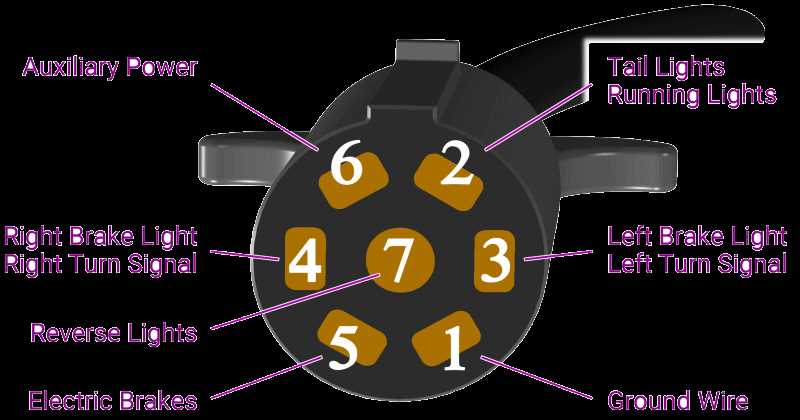
The seven-contact plug layout follows a circular pattern. Center position normally carries the brake controller line, while the surrounding contacts distribute signals for tail lamps, turn indicators, and auxiliary power.
Recommended conductor sizes depend on current load:
- 10–12 AWG for ground and brake controller circuits
- 14 AWG for stop and turn indicators
- 16–18 AWG for marker and tail lamps
Route the harness along the frame rail and secure it every 30–40 cm using insulated clamps. Protective loom reduces damage from vibration, road debris, and moisture.
After completing connections, test each signal from the tractor cab using this sequence.
- Activate tail lamps
- Check left turn indicator
- Check right turn indicator
- Press brake pedal
- Verify marker lamps along both sides
7 Pin Semi Trailer Light Wiring Diagram with Standard Color Codes and Pin Functions
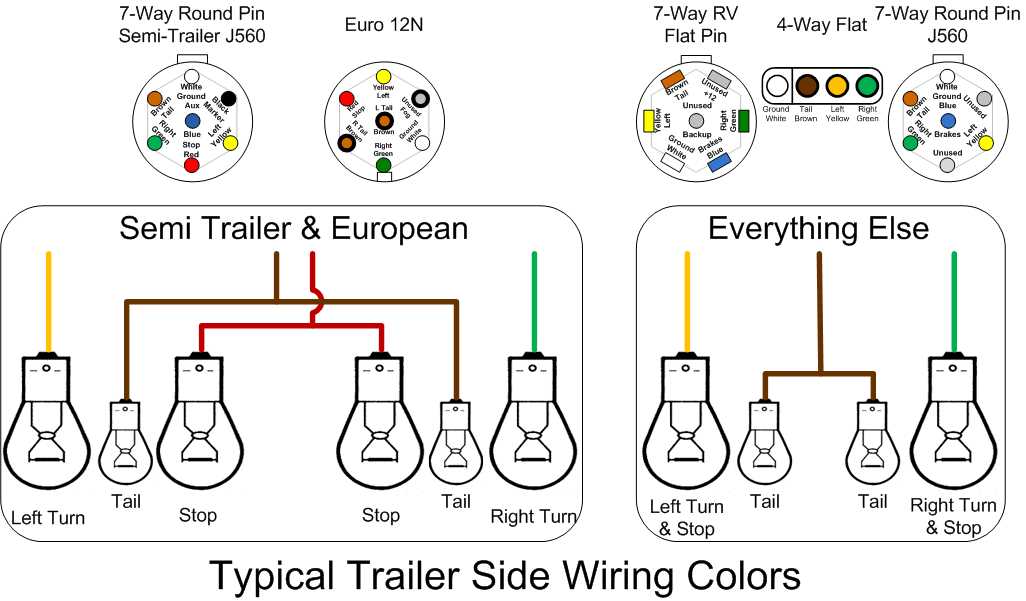
Match each conductor in the seven-contact plug to the correct terminal before connecting the rear signal harness. The ground lead (white) attaches to the frame, brown supplies tail and marker lamps, yellow carries the left turn indicator, green operates the right indicator, red transmits the stop signal, blue connects to the electric brake controller, and black delivers auxiliary 12-volt power from the tractor electrical system.
The circular connector normally places the brake controller circuit in the center position, while the six outer contacts distribute remaining signals around it. Use 10–12 AWG copper for the ground and brake controller circuits, 14 AWG for stop and directional indicators, and 16–18 AWG for marker lamps along the cargo unit body. Tight mechanical connections inside the plug housing reduce resistance and prevent signal loss across long vehicle combinations.