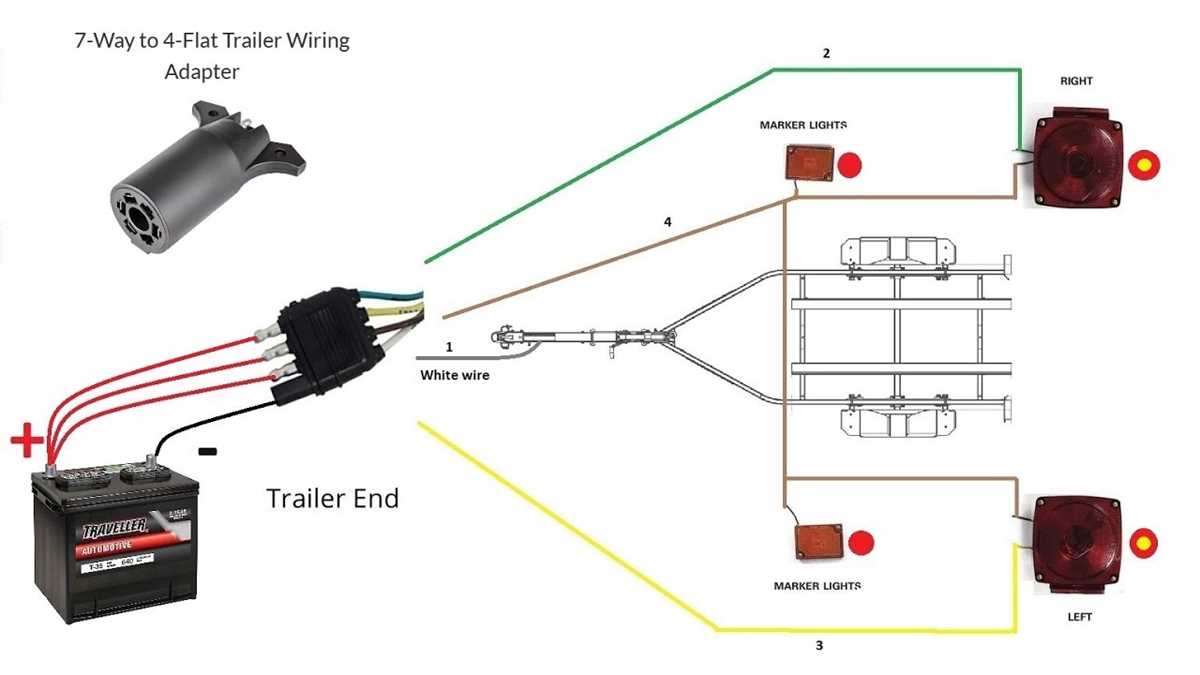
Disconnect the towing vehicle from power before handling any connection harness. Use a tester to confirm no current flows through the circuits to prevent shocks.
Identify each conductor by color: green for ground, yellow for left turn signal, brown for running lights, and red for right turn signal. Proper identification prevents shorts and ensures lights operate correctly.
Strip insulation carefully and insert each conductor fully into its terminal on the plug. Tighten screws securely without damaging the metal. Loose connections can cause flickering or intermittent power.
For extended setups, join extra leads using splices and wire connectors. Wrap the junctions with tape to maintain insulation and avoid moisture intrusion. This preserves the integrity of the electrical system.
Check continuity across all circuits with a multimeter and verify ground paths are connected to the frame. Reliable grounding prevents electrical faults and enhances safety.
Mount the connector housing securely on the towing vehicle and ensure leads are routed without pinching or sharp bends. Proper routing reduces wear and prevents accidental disconnection.
Test all lights and signals by connecting the harness to the trailer and operating each function. Observe correct response for running lights, turn signals, and brake lights. Verification ensures safe operation during towing.
Four Conductor Flat Connector Connections
Disconnect the towing vehicle from power before handling any connector. Verify zero voltage with a tester to prevent shocks during installation.
Identify each lead by color: green is ground, yellow controls left turn, brown handles running lights, and red manages right turn signals. Correct identification ensures proper signal operation.
Strip insulation carefully and insert each conductor fully into its terminal. Tighten screws firmly without damaging the metal to avoid loose connections.
Use pigtail extensions when connecting multiple devices to prevent overloading terminals. Twist wires together, secure with wire nuts, and wrap junctions with electrical tape. This maintains insulation and prevents moisture intrusion.
- Verify continuity for each circuit using a multimeter.
- Check that the grounding conductor connects securely to the frame.
- Inspect terminals to ensure no exposed metal contacts remain.
Route the harness along the vehicle frame, avoiding sharp edges or pinch points. Secure with zip ties or clips to maintain stability and prevent wear over time. Proper routing increases durability and prevents accidental disconnection.
After completing connections, test all functions: running lights, brake lights, and turn signals. Observe correct operation for each function to ensure safe towing.
Document the layout of all conductors and label connections. Clear labeling simplifies future troubleshooting and modifications.
Inspect periodically for corrosion or loose connections. Apply dielectric grease to terminals if exposed to moisture or salt. Regular maintenance prolongs lifespan and prevents electrical failures.
Identifying Each Conductor and Its Role
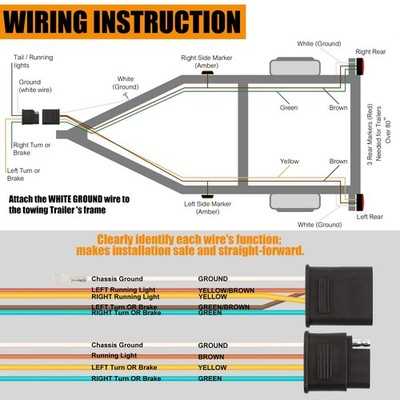
Always disconnect the towing vehicle from power before inspecting any connector. Confirm zero voltage with a tester to prevent accidental shock.
Green leads connect to the frame or chassis and serve as grounding paths. Ensuring a secure ground prevents electrical faults and protects equipment.
Yellow conductors control left-hand turn signals and must be connected to the corresponding lamp terminals. Incorrect connections can reverse signals and create hazards.
Red leads handle right-hand turn signals and should match the corresponding indicator lamps. Verify continuity before securing terminals to avoid intermittent operation.
Running Lights and General Circuit
Brown conductors carry tail and running lights. Connect to the positive side of the lamps and ensure the circuit is complete. Proper connections maintain visibility and safety during towing.
Use a multimeter to check each circuit individually, confirming proper continuity and correct polarity. This step prevents misfires and blown fuses.
Label each lead after identification, especially if modifications are made. Clear documentation simplifies future maintenance and prevents misconnection.