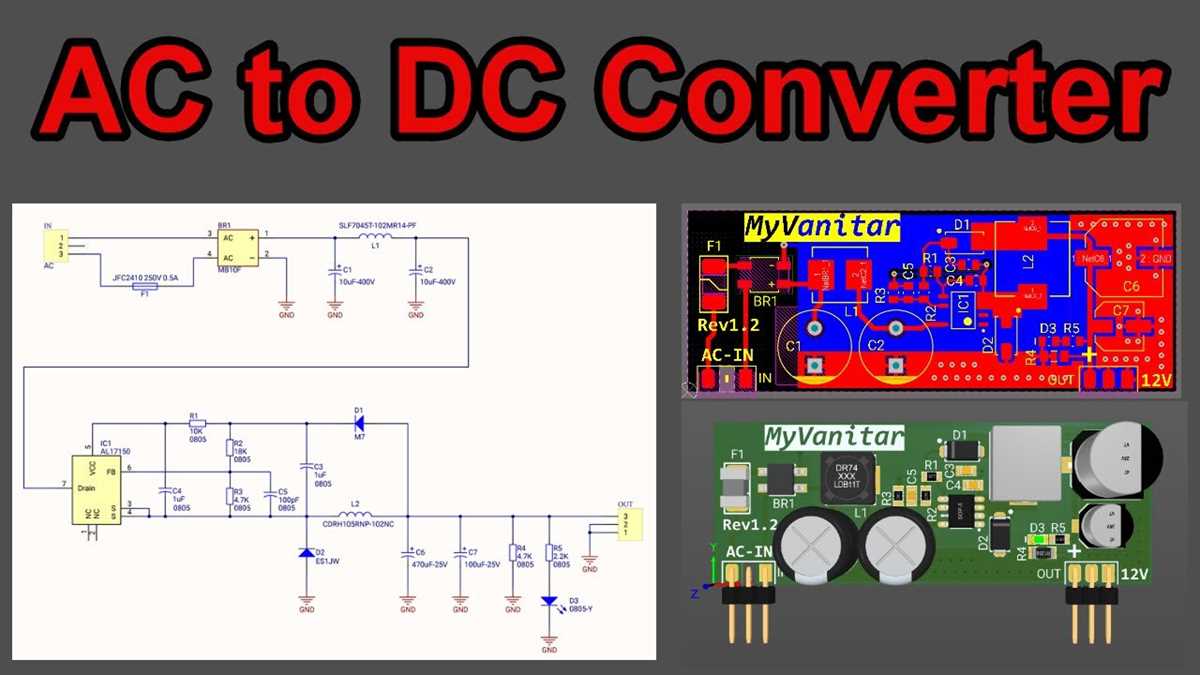
Use a high-voltage capacitor and bridge rectifier to convert mains AC into stable low-voltage DC. Choose a capacitor rated at least 400V for 220V input or 250V for 110V input to handle peak voltage surges. Include a fast-recovery diode bridge with a current rating 1.5 times higher than the load.
Select a smoothing capacitor based on load current and voltage ripple requirements. For a 500mA load at 12V, a 2200µF electrolytic capacitor reduces voltage fluctuations below 0.5V. Place the capacitor immediately after the rectifier to minimize AC ripple before feeding any sensitive electronics.
Integrate a series resistor or thermistor to limit inrush current. A 10Ω NTC thermistor for small loads or a 5Ω resistor for medium loads prevents capacitor stress and prolongs component life. Ensure all components are rated for continuous operation at the expected temperature.
Check voltage regulation using a low-dropout linear regulator for consistent DC output under varying load. For example, an LM7812 provides a steady 12V at currents up to 1A when paired with a properly sized smoothing capacitor. Always measure output under actual load to confirm stability.
AC to DC Power Setup Step by Step Guide
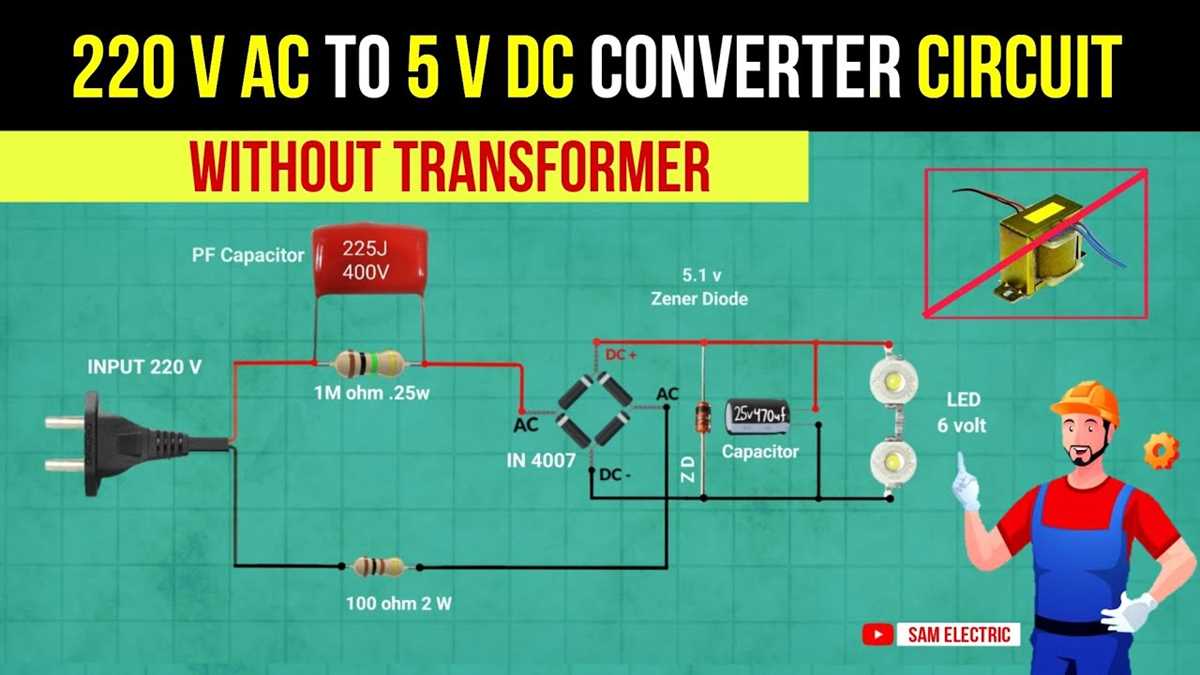
Start by selecting a high-voltage capacitor rated at least 400V for 220V mains input. Connect it in series with a fast-recovery diode bridge capable of handling 1.5 times the maximum load current to rectify the AC waveform into pulsating DC.
Install a smoothing electrolytic capacitor immediately after the rectifier. For a 12V 500mA load, use a 2200µF capacitor to reduce voltage ripple below 0.5V. Ensure the capacitor is oriented correctly, with the positive lead connected to the rectified positive rail.
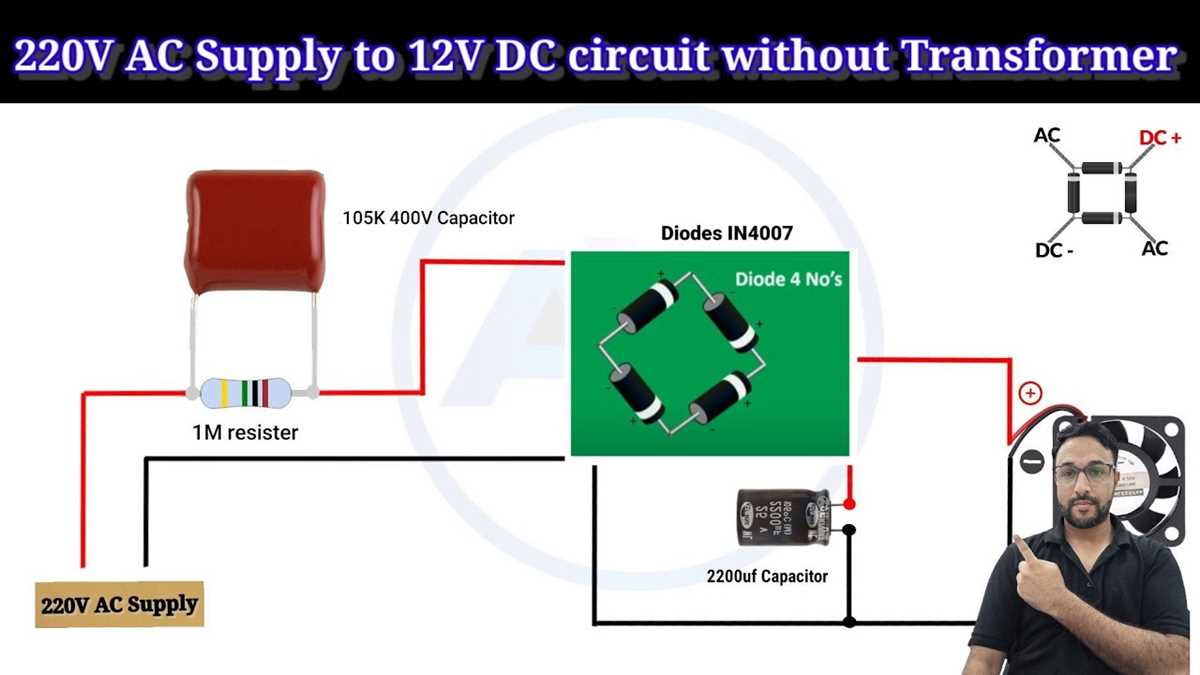
- Insert a series resistor or NTC thermistor to limit inrush current when first powering the setup.
- Use a 10Ω thermistor for low-current loads or a 5Ω resistor for higher currents up to 1A.
- Check component temperature during initial power-on to avoid overheating.
Add a low-dropout linear voltage regulator to stabilize the output for sensitive electronics. For a 12V output, an LM7812 can maintain steady voltage up to 1A when paired with an adequately sized smoothing capacitor. Verify output with a multimeter under actual load conditions.
Include a small ceramic capacitor (0.1µF) across the regulator input and output to filter high-frequency noise. Place these capacitors close to the regulator pins to improve stability and reduce ripple spikes.
- Measure DC voltage at multiple points along the rails to confirm consistent output.
- Adjust component values if voltage drops exceed 0.5V under full load.
- Ensure all leads are short and connections soldered to prevent oscillations or unwanted heating.
Selecting Components for High-Voltage AC to DC Setup
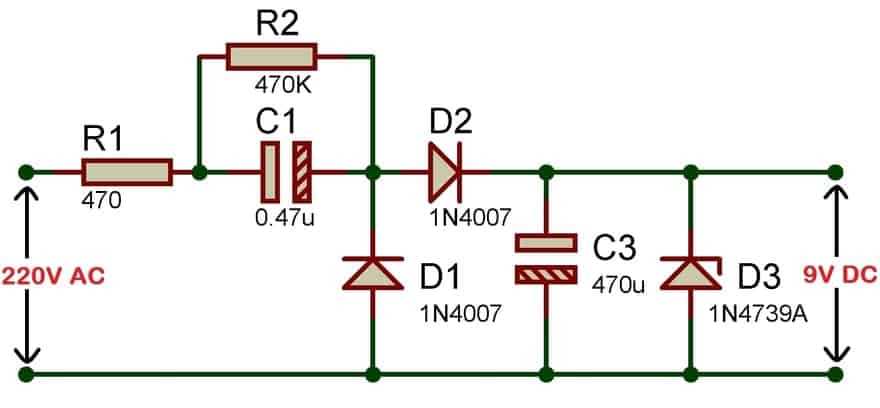
Choose a high-voltage capacitor rated at least 400V for 220V mains or 250V for 110V input. Use polypropylene film types for low leakage and stable performance. The capacitance should match load requirements, for example, 0.47µF to 1µF for low-power LED applications.
Select a fast-recovery diode bridge capable of handling 1.5 times the maximum load current. For a 12V 1A output, choose diodes rated at least 2A with a peak reverse voltage of 600V to tolerate transient spikes. Ensure all diodes are heat-sinked if continuous operation exceeds 0.5A per diode.
Include smoothing and protection components. A 2200µF electrolytic capacitor stabilizes DC voltage for moderate loads, while a 10Ω NTC thermistor limits inrush current. For additional stability, add a 0.1µF ceramic capacitor across the output to suppress high-frequency noise and prevent oscillations under varying load conditions.