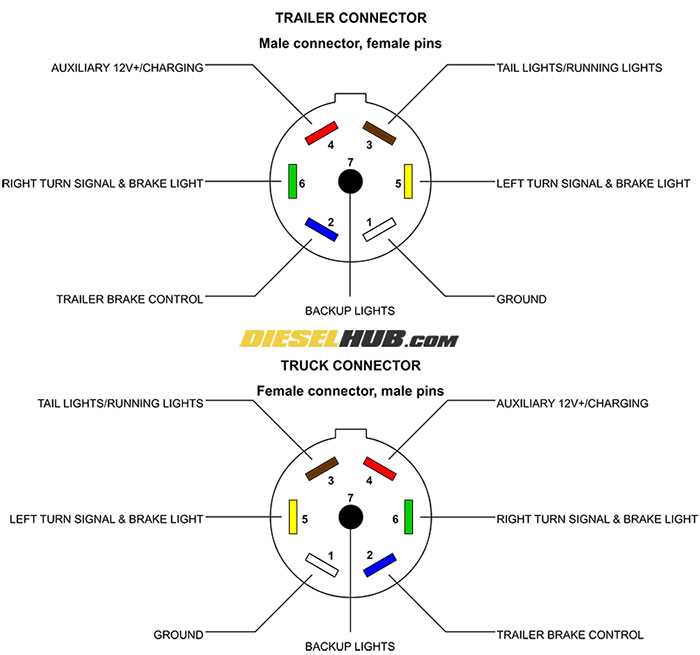
Ensure the towing vehicle is turned off before attaching any leads to the rear connector. Verify that all circuits read zero voltage using a reliable multimeter. Direct contact with live circuits can cause severe injury, so wear insulated gloves and use insulated tools during connections.
Match each conductor to its specific function on the trailer junction. Use color-coded insulation or labels to identify ground, running lights, brake lights, and auxiliary circuits. This prevents short circuits and ensures proper signal transmission between vehicle and trailer.
Select the appropriate gauge copper or aluminum wire for each line. For standard 12 V lighting and braking circuits, 16–12 AWG is recommended depending on total load. Undersized wires can overheat and cause malfunction under heavy braking or extended illumination periods.
After securing all connections, run a low-current test by turning on the vehicle lights and gently activating trailer brakes. Check each function individually to confirm continuity and proper operation before towing on public roads.
Seven-Connector Vehicle Installation Guide
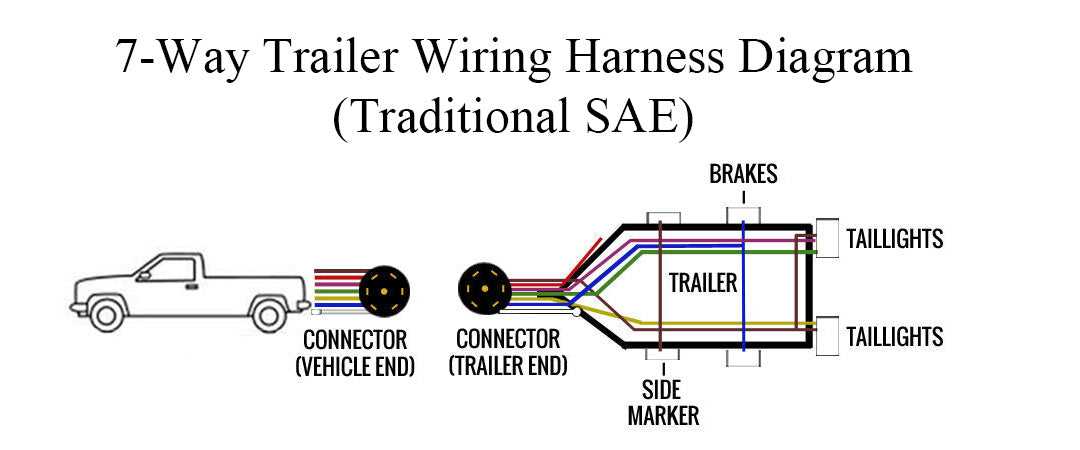
Disconnect the vehicle battery before starting the installation to prevent shorts. Confirm zero voltage at all terminals with a digital multimeter. This step avoids sparks and protects sensitive electronics.
Identify each terminal function using the manufacturer chart. Typical functions include left and right turn signals, brake lights, running lights, ground, reverse, and auxiliary circuits. Label each conductor clearly to prevent cross-connection errors.
Use appropriately rated conductors for each circuit. For standard 12 V systems, 16 AWG handles most lighting loads, while 12 AWG is recommended for auxiliary or high-draw devices. Incorrect sizing can cause overheating or blown fuses.
Mount the connector on a stable bracket near the rear of the vehicle. Ensure terminals face downward or are shielded to minimize water ingress. Tighten screws to recommended torque values and apply dielectric grease to metal contacts to reduce corrosion.
After securing all leads, test each function individually. Activate running lights, brakes, and turn signals while measuring voltage at the connector end. Verify continuity and consistent operation under a small load before connecting the full load of the trailer.
Finally, secure all conductors with cable ties or clamps to prevent movement and chafing. Inspect the installation for sharp bends or pinch points. Routine checks before every trip ensure long-term reliable operation of lighting and braking systems.
Identifying Each Connector Function and Vehicle Terminal
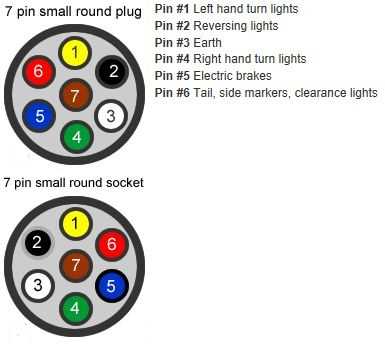
Label each lead before connecting to the vehicle junction to prevent misrouting. Use a multimeter to verify continuity between the source terminal and the corresponding device. Accurate identification avoids short circuits and signal failure.
Standard Circuit Assignments
- Left signal output – connect to left side indicator lamp
- Right signal output – connect to right side indicator lamp
- Brake circuit – link to rear brake lamps
- Running lights – attach to all marker lamps
- Ground – secure to chassis metal point
- Reverse circuit – optional, connect to reverse lights
- Auxiliary/12 V supply – power interior or auxiliary equipment
Testing and Verification
After connection, activate each circuit individually while observing the corresponding function at the vehicle end. Measure voltage drop under light load to ensure proper transmission. Document all readings for troubleshooting and future reference.