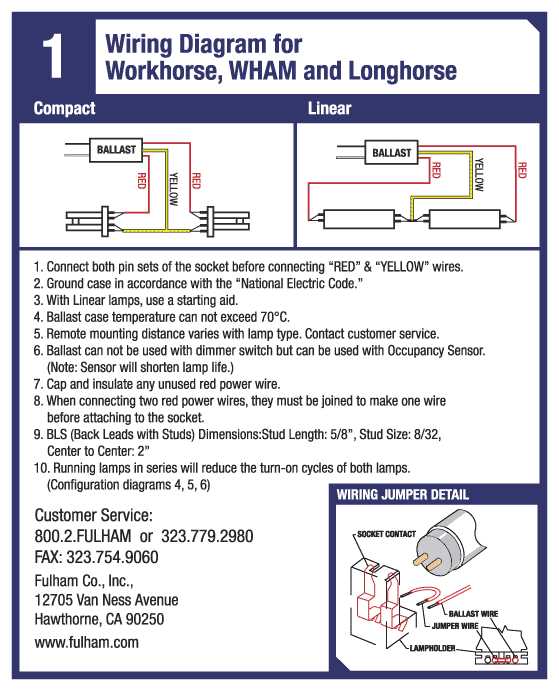
Identify input terminals and verify line voltage compatibility before connecting. Use color-coded leads to separate live, neutral, and ground connections and prevent short circuits or reverse polarity issues.
Check output connections to the lamps carefully. Ensure each filament receives the correct voltage to avoid flickering, premature burnout, or uneven illumination across multiple tubes.
Include protective devices such as fuses or miniature breakers inline with the power supply. Select ratings based on maximum current draw of all connected tubes and their starter components.
Use short, insulated conductors between the starter module and lamp pins to reduce voltage drop and maintain stable ignition. Avoid routing wires near heat sources or metallic enclosures that could induce interference.
Document all terminal assignments including voltage, phase, and load values. Accurate labeling simplifies future maintenance, allows safe replacements, and prevents misconnection during upgrades or system expansions.
Fluorescent Lamp Starter and Transformer Connection Guide
Verify input voltage before making any connections. Ensure that live and neutral lines match the specified range of the starter module to prevent overheating or fuse tripping.
Label each output terminal to correspond with the lamp pins. Correct identification prevents reversed polarity that can lead to uneven ignition or rapid filament wear.
Route leads in a tidy manner using insulated conductors no longer than necessary. Minimize proximity to metallic housings to reduce electromagnetic interference and voltage spikes during ignition.
Include inline protection devices such as fuses rated slightly above the combined load of all connected tubes. Confirm that the interrupting capacity is adequate for the worst-case short circuit scenario.
Series and Parallel Lamp Connections
When connecting multiple tubes, series connections require attention to cumulative voltage ratings, while parallel arrangements need proper current distribution. Ensure that each tube receives the specified starter voltage without overloading any component.
Test all filaments for continuity before energizing. Detecting open filaments prevents misfiring and reduces stress on the starter and transformer elements during initial power-up.
Documentation and Safety Practices
Record each terminal assignment with voltage levels, phase identification, and protective device ratings. Clear documentation enables rapid troubleshooting and ensures safe modifications or replacements during maintenance.
Identifying Input and Output Terminals for Proper Connections
Mark each power input with voltage and phase designation before making connections. Use color-coded leads to separate live, neutral, and ground lines, ensuring accurate alignment with supply rails and avoiding short circuits.
Trace each output terminal to the corresponding lamp pins. Confirm that filament voltage matches specifications to prevent flickering or premature burnout, especially in multi-tube setups with shared transformer outputs.
Testing Continuity and Load Paths
Use a multimeter to verify continuity between input and output terminals before energizing the system. Detecting open connections or shorted leads reduces stress on starters and prevents damage to transformer components during initial startup.
Labeling and Documentation
Document each terminal assignment with voltage, current rating, and connected load. Clear labeling simplifies maintenance, enables safe component replacement, and prevents misconnection during expansions or modifications.