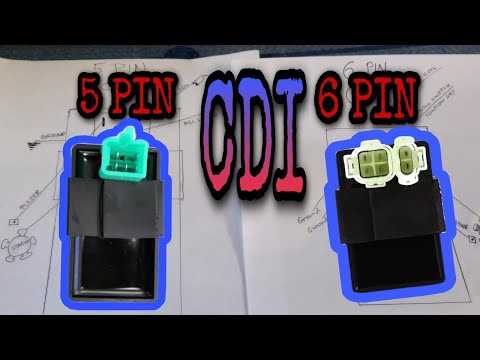
Ensure correct attachment of the six-terminal ignition unit by identifying each connector according to its function. The primary input receives the battery voltage, while other leads transmit signals to the stator and ignition coil. Misconnection can prevent the engine from starting or cause intermittent sparks.
Follow the color-coded cables carefully to match power, ground, trigger, and control lines. Typically, red is positive supply, black is ground, yellow handles pulse input, and green or blue connects to the coil. Testing continuity before final installation prevents damage to sensitive electronics.
Secure all connectors with insulated terminals to avoid short circuits. Keep wires away from moving parts and high-heat areas, and use zip ties or clips to maintain proper routing. Proper attachment ensures stable performance and extends the lifespan of the ignition system.
Regular inspection of each connection point is recommended after initial installation. Look for loose contacts, corrosion, or frayed insulation, as these issues can interrupt current flow and reduce engine reliability. A systematic check after assembly confirms that all circuits function as intended.
Complete 6 Pin Ignition Module Connection for Correct Engine Function
Attach each lead according to its role by matching the signal, power, and ground terminals precisely. Incorrect placement can prevent spark generation or damage the control unit.
Verify power input first. The main supply wire should carry stable voltage between 12 and 14 volts. Use a multimeter to check before connecting to the module.
Follow this sequence for signal connections:
- Trigger input from the stator
- Output to the ignition coil
- Timing adjustment lead if available
Secure ground connections directly to the frame or engine block. Loose or corroded grounding reduces current flow and causes misfires.
Protect each conductor with heat-resistant sleeves and insulated terminals. Avoid sharp bends and keep wires away from exhaust pipes or moving components.
After completing connections, perform a continuity test on all circuits. Ensure that each line shows proper conductivity and that no two terminals are shorted.
Start the engine carefully and observe spark timing. Adjust the output line if necessary to achieve a stable ignition sequence and consistent performance under load.
Identifying Each Terminal on a 6 Lead Ignition Module
Label each connection clearly before installation. The six terminals include the main supply, ground, trigger signal, coil output, timing adjustment, and auxiliary sensor input. Use a multimeter to confirm voltage and continuity for each line, ensuring proper function when the module is energized.
Color codes and manufacturer markings provide additional guidance. Red or white usually marks power, black indicates ground, yellow or green carries the trigger signal, and blue or orange may be assigned to coil or timing leads. Accurate identification prevents shorts, misfires, and potential damage to surrounding circuits.