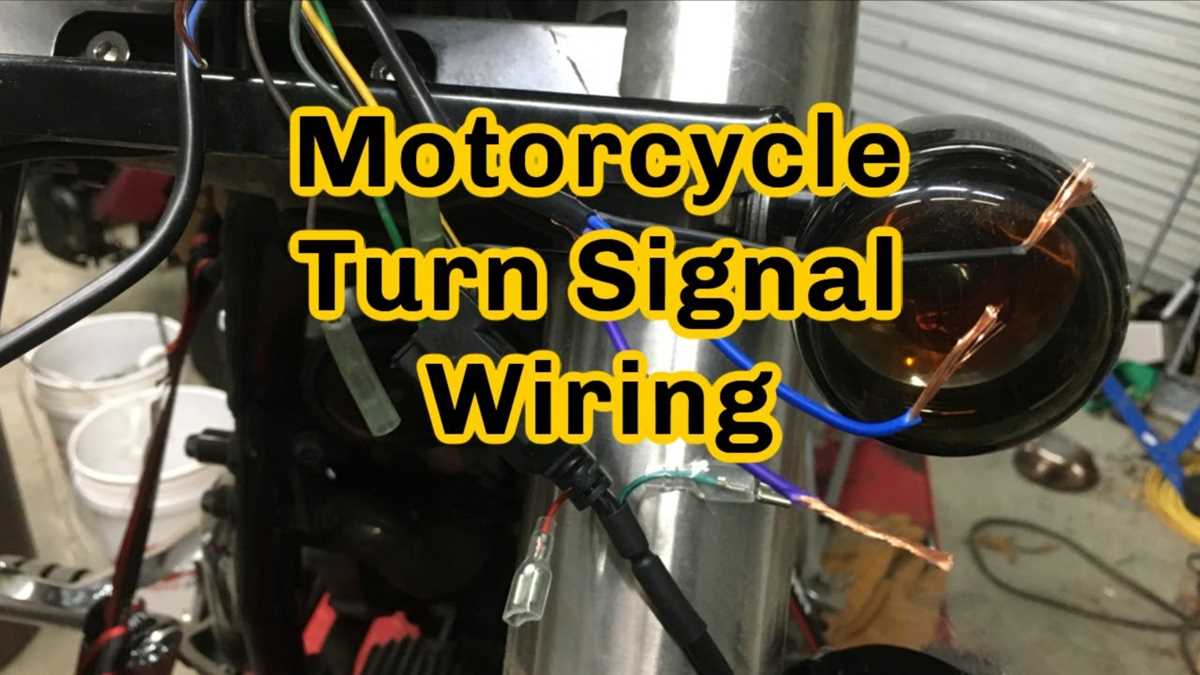
Connect the positive feed from the control module to the designated input on each indicator. Use crimped terminals or solder joints to secure connections and prevent intermittent contact during vibration.
Identify the ground path on the frame or battery negative and attach each rear and front lamp to this point. Ensure the connection is clean and free of corrosion to maintain consistent illumination.
Follow the color coding on the harness for left, right, and common lines. Use an inline fuse rated between 3A and 5A to protect the circuit from short circuits and overloads.
After completing connections, test each light individually before assembling fairings. Apply the control switch and observe that each indicator flashes at a uniform rate, adjusting the resistor or flasher module if necessary.
Check that all insulation is intact and avoid pinching lines under brackets. Routing the conductors along existing harness paths reduces stress and prevents premature wear from friction or heat.
3 Conductor Motorcycle Indicator Connection Guide with Layout and Color Codes
Start by identifying the three leads on each lamp assembly. Connect the common line to the main power source using a fused connection rated for 3 to 5 amps. Ensure terminals are clean and free from oxidation to maintain consistent current flow.
Follow these steps for front and rear connections:
- Attach the left side lamp to the control module using the color-coded conductor.
- Connect the right side lamp following the corresponding color path.
- Verify the ground or return path is secure for both front and rear assemblies.
- Double-check that no conductors cross or contact metal surfaces that could short the circuit.
After completing the layout, test each lamp individually by activating the control switch. Observe that all indicators blink uniformly. Adjust the flasher unit or replace any resistor that causes uneven flashing. Use protective sleeving to shield conductors from abrasion and high temperatures along the frame.
Identifying Conductor Colors and Functions for Proper Installation
Start by examining the harness for distinct color codes. The common lead is usually black or brown and should connect directly to the negative terminal or chassis ground.
The left side lamp typically uses a green or yellow lead. Confirm this by tracing it from the control module to the lamp housing to ensure correct polarity and operation.
The right side lamp often has an orange or blue conductor. Test continuity with a multimeter before securing terminals to prevent misrouting and potential shorts.
Mark each conductor with tape or a label after identification. This prevents confusion during assembly and allows for easy troubleshooting later.
Inspect insulation for cracks or abrasions, especially near bends or mounting brackets. Replace or reinforce any damaged sections to avoid intermittent contact.
Measure resistance along each conductor. Values should be near zero ohms for proper continuity. High resistance indicates a poor connection or internal break that must be repaired.
When routing conductors, keep them separated from high-current paths such as starter or headlamp circuits to minimize electromagnetic interference that can affect flashing consistency.
After installation, verify operation by applying power to each lamp individually. Confirm that the correct side flashes in response to the control input and that the common path carries return current without heating.