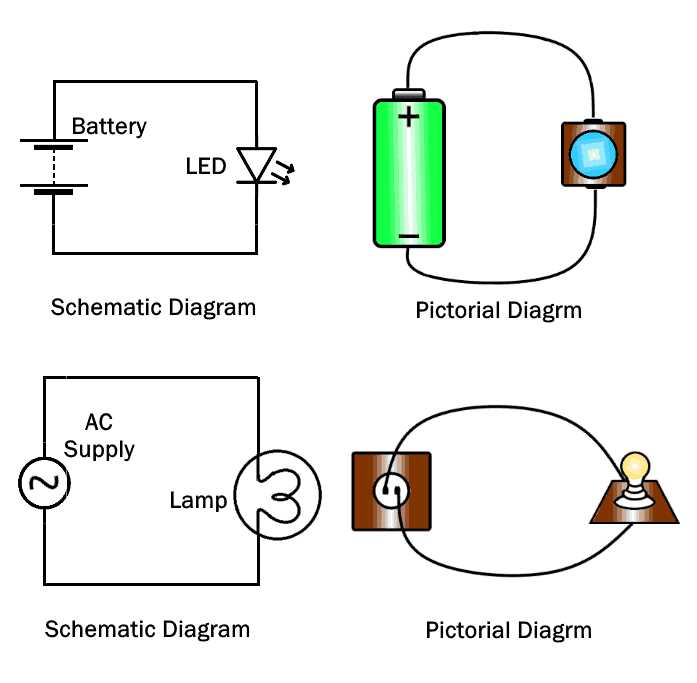
Identify the power source first, then trace the path through the control device and finally toward the load component. Most household electrical layouts operate on 120V AC in North America or 230V AC in many other regions. The hot conductor carries voltage from the distribution panel, the neutral returns current to the panel bus bar, and the grounding conductor links exposed metal parts to earth for fault protection.
Each component in an electrical layout uses standardized symbols that represent real devices such as lamps, motors, resistors, and protective breakers. Straight lines represent conductors carrying current between components. Intersections marked with dots indicate joined conductors, while crossing lines without a dot normally show conductors that pass without contact.
Reading a system layout requires following the flow of electrical energy step by step. Begin at the supply point, move through control elements such as toggle devices or relays, and continue toward the load element. For example, a basic lighting system routes the hot line through a wall control device before reaching the lamp holder, while the neutral line travels directly from the distribution panel to the lamp.
Load devices determine current flow through the electrical path. A common household light fixture may draw less than 1 amp, while larger appliances can require 10 to 15 amps. Because of these differences, conductor size and breaker ratings must match the current demand of the equipment.
Understanding the layout drawing helps locate faults quickly. If a lamp fails to illuminate, checking the path from the panel breaker through the control device and finally to the lamp holder reveals whether the issue comes from a loose conductor, a failed control device, or an open neutral return.
Circuit Connection Diagram Showing Power Source Switch Load and Ground Path
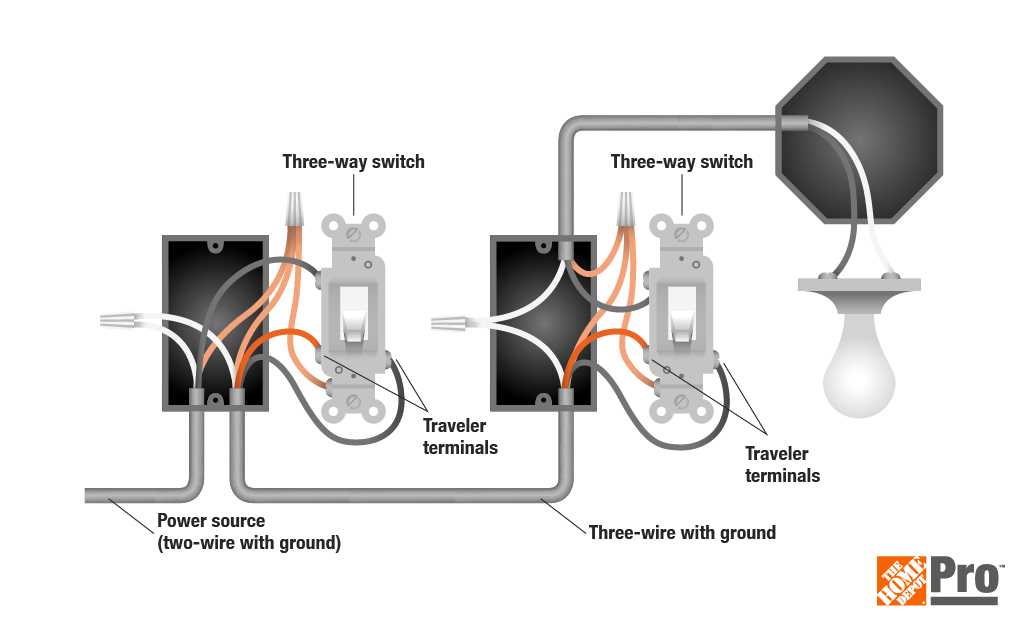
Locate the supply point first and trace the energized conductor from the distribution panel through the control device toward the load. In a typical household lighting layout operating at 120 volts AC, the hot line exits the breaker, travels to the wall control device, and continues toward the lamp holder or appliance terminal.
The neutral return travels directly from the load back to the panel bus bar without passing through the control device. This layout allows the control element to interrupt only the energized line, preventing voltage from remaining at the load terminals when the device is turned off. Correct routing of the neutral path also stabilizes current flow and reduces the chance of unintended voltage at exposed contacts.
The grounding conductor links all exposed metal parts to the grounding bus inside the distribution panel. During a fault such as insulation damage, this path allows fault current to flow rapidly toward earth and trip the breaker. Most residential systems use copper grounding conductors sized 14 AWG or 12 AWG depending on the branch breaker rating.
Identifying power source load switch and ground in a circuit connection diagram
Locate the supply symbol first and trace the energized conductor leaving the distribution panel. In most residential electrical layouts, the supply originates from a breaker rated 15 or 20 amps and feeds branch conductors that deliver voltage to lighting fixtures, outlets, or appliances.
The supply point is usually marked by a symbol representing a battery, generator, or alternating current source. In household systems the symbol normally indicates 120V or 230V AC. From this point, the energized line travels toward control devices and then to the load component.
Control devices interrupt the energized conductor and regulate when current flows. Common examples include:
- Wall-mounted toggle controls for lighting
- Push-button contacts used in control panels
- Relay contacts activated by control electronics
- Thermostat contacts used in heating systems
Load elements appear at the end of the electrical path and convert electrical energy into light, heat, or mechanical movement. These components determine how much current flows through the system. Typical examples include:
- Incandescent or LED lighting fixtures
- Electric motors
- Heating elements
- Electronic devices
The neutral return provides the path for current back to the panel bus bar. This conductor often appears as a straight line returning from the load directly to the supply symbol without passing through the control device. Proper identification prevents incorrect placement of control devices on the neutral line.
The grounding conductor protects users and equipment during electrical faults. This conductor connects metal housings and frames to the grounding bus in the distribution panel. If insulation fails, fault current travels through this low-resistance path and activates the breaker.
Common grounding symbols include three stacked horizontal lines decreasing in width or a line connected to an inverted triangle. These symbols mark points where equipment chassis connects to earth grounding.
Trace the path of current in this order when reading an electrical layout:
- Supply point at the panel or power source
- Control device that interrupts the energized conductor
- Load element such as lamp or motor
- Neutral return back to the panel
- Grounding path for fault protection