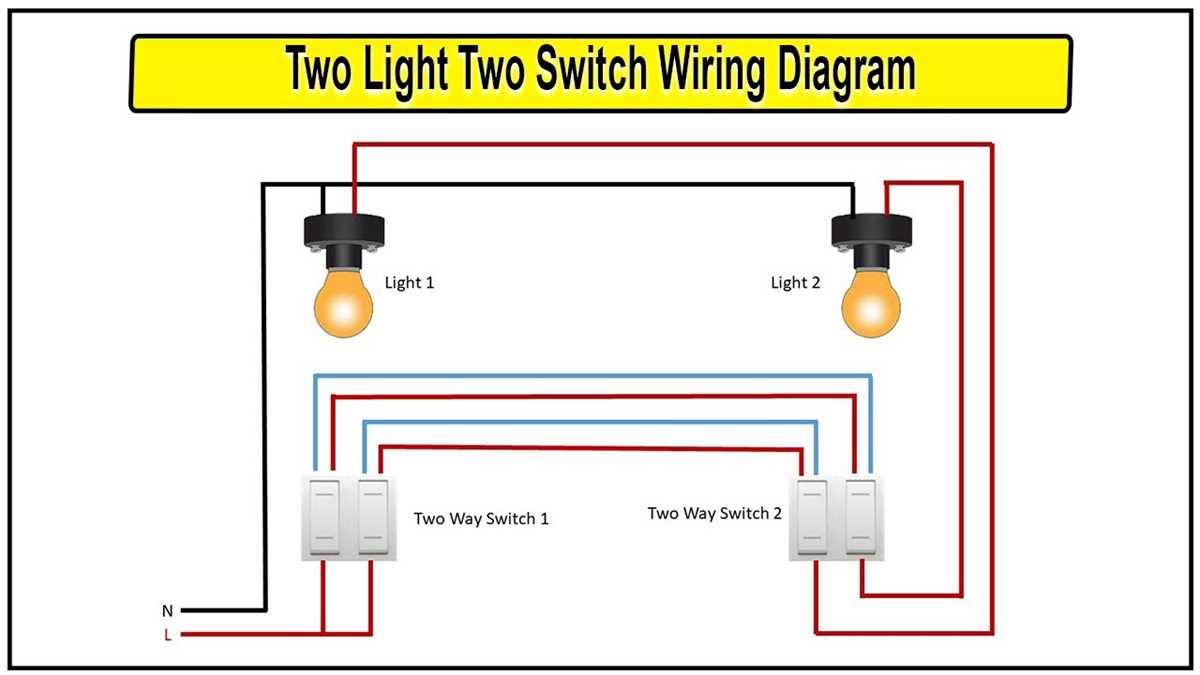
Turn off the main power before handling any conductors. Use a voltage tester to confirm that no current flows through the cables to prevent shocks or accidental shorts.
Identify the live, neutral, and traveler lines accurately. Live conductors are usually black or red, neutral is white or gray, and travelers linking the two control points can be red or black. Label each wire to avoid confusion during installation.
Use proper connectors like wire nuts or terminal screws to secure all connections. Ensure that each conductor is fully inserted and insulated to prevent sparking or intermittent operation.
Test the system by operating both control points. Verify that the load responds correctly and that no conductor carries unintended current, adjusting connections as needed to achieve reliable operation.
Check for voltage drops along longer runs. If the load does not activate fully, measure resistance in the traveler lines and tighten connections or replace wires with suitable gauge to maintain consistent performance.
Guide to Connecting Two Electrical Switches
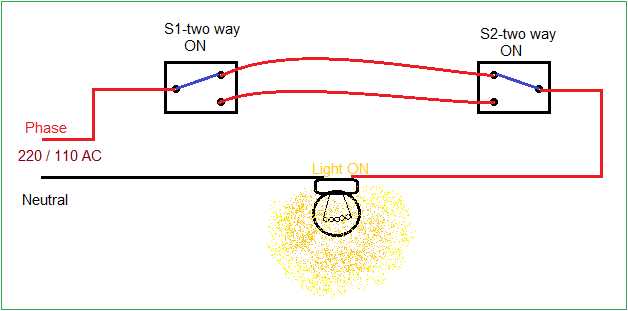
Ensure the power supply is off at the breaker before handling any conductors. Use a voltage tester on each line to confirm no current is present.
Identify each conductor by type and color:
- Live lines are typically black or red and carry current from the source.
- Neutral lines are usually white or gray and complete the circuit.
- Traveler lines connecting the two controls are often red or black and alternate current between points.
Connect the terminals carefully using wire nuts or screws. Ensure that:
- Each live and neutral line is secured to the correct terminal.
- Traveler lines are labeled and connected consistently at both ends.
- Insulation is intact and there is no exposed metal.
Test the configuration by toggling both control points. Verify that the load responds correctly and that no unexpected voltage appears on the neutral or traveler lines.
Perform final checks by inspecting connections for tightness and continuity. Use a multimeter to confirm voltage across terminals and correct any resistance issues along longer conductor runs.
Identifying Live Neutral and Traveler Wires
Turn off the main breaker and verify no voltage is present using a non-contact tester. Always treat each conductor as potentially live until confirmed.
Live lines usually have black or red insulation and carry current from the power source. Test each line against a known ground to ensure correct identification before making any connections.
Neutral conductors are typically white or gray. They complete the electrical path and rarely show voltage unless the system is miswired or backfed. Label these lines clearly to prevent mistakes.
Traveler conductors link the two control points and often use red or black wires. Mark each end with tape or labels to maintain consistent connections and prevent incorrect routing.
Confirm proper identification using a multimeter. Measure voltage between live and neutral, live and traveler, and traveler and neutral to ensure each line performs its expected function before final assembly.