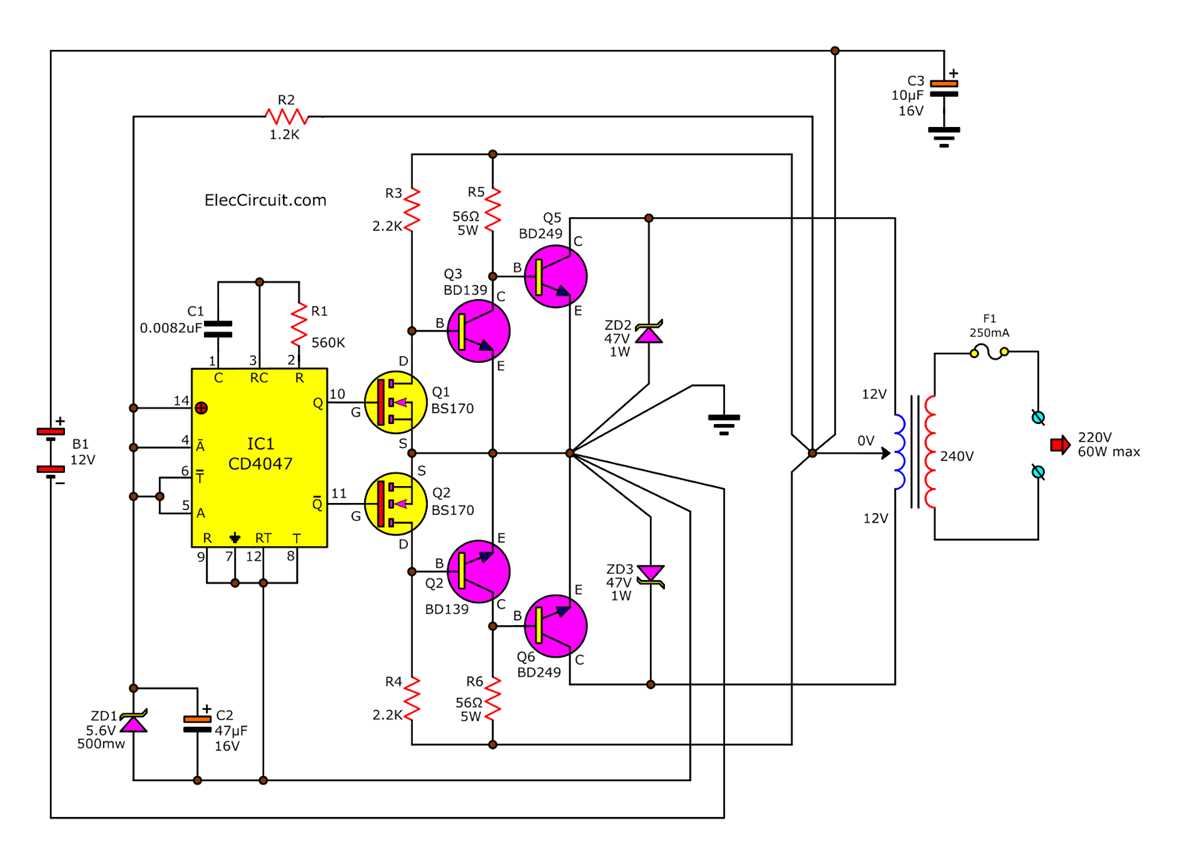
If you’re working on a project that requires stepping down high voltage to a lower level, one of the most straightforward methods is to use a step-down power supply. A reliable approach is designing a circuit that reduces a higher input voltage, such as 60V, to a more manageable 12V output. This solution is crucial for applications that need stable, lower voltage without the complexity of bulky, inefficient systems.
The first step in building such a system is to select the right components, such as transformers, diodes, and regulators, that will handle the power safely and efficiently. Pay close attention to the current ratings and the voltage tolerance to prevent damage to sensitive components. Additionally, ensure the system incorporates proper heat dissipation to maintain long-term reliability.
Once the primary components are in place, it’s important to test the design under load conditions. Verifying that the output voltage remains stable across a range of input conditions will help you avoid instability or over-voltage risks that can compromise your setup.
60V to 12V Power Conversion Design and Key Components
To step down high voltage to a lower level, the most efficient method is to use a buck regulator. The first thing to consider is selecting an appropriate transformer that handles the high input voltage. Choosing a transformer with the right turn ratio ensures the power is stepped down to the desired level while maintaining stable operation.
Primary Components in the Power Reduction System
The core components of such a system include the inductor, capacitor, and switching transistor. The inductor smooths out the current fluctuations, while the capacitor filters the output to reduce ripple. The switching transistor, usually a MOSFET, acts as the control element that regulates the power flow based on the feedback from the system.
Input Voltage and Current Considerations
Before proceeding with any design, it’s critical to determine the input voltage tolerance and maximum current the system will handle. Ensure that the components are rated to withstand the maximum current drawn by the load. For example, choosing an inductor that can handle the required current without saturating is crucial for reliable performance.
Feedback and Control Mechanisms
The feedback loop in this design is key to ensuring the output remains stable under varying load conditions. A feedback circuit that compares the output voltage with a reference voltage adjusts the duty cycle of the switching transistor. This process keeps the voltage at the desired level even as input conditions fluctuate.
Heat Dissipation and Component Protection
High voltage systems often generate significant heat, which can reduce component lifespan. To mitigate this, incorporate heat sinks or use components that are specifically rated for high thermal dissipation. Additionally, integrating protection circuits, such as overcurrent protection, will help prevent damage from unexpected spikes in power draw.
Testing and Validation
Once the system is assembled, it’s crucial to test the design under real-world conditions. Begin with a low input voltage and progressively increase it while monitoring the output. Check for any signs of instability or excessive heat generation. Continuous monitoring during load testing will confirm the reliability and safety of the setup before it’s deployed in critical applications.
Understanding the Key Components of a 60V to 12V DC DC Converter
The heart of the system is the step-down transformer, which reduces the high input voltage to a lower level. It is crucial to select one with the correct turn ratio to maintain efficiency and ensure that the power is converted properly. Additionally, a key element in the design is the inductor, which smooths out current fluctuations and helps prevent voltage spikes that could damage components.
Other Critical Elements
Another important part is the switching transistor, often a MOSFET, which regulates power by rapidly switching on and off to control the voltage output. The feedback mechanism monitors the output and adjusts the transistor’s switching cycle to maintain the desired voltage. Capacitors are also critical in filtering out any noise or ripple from the output, ensuring a clean and stable power supply to the load.