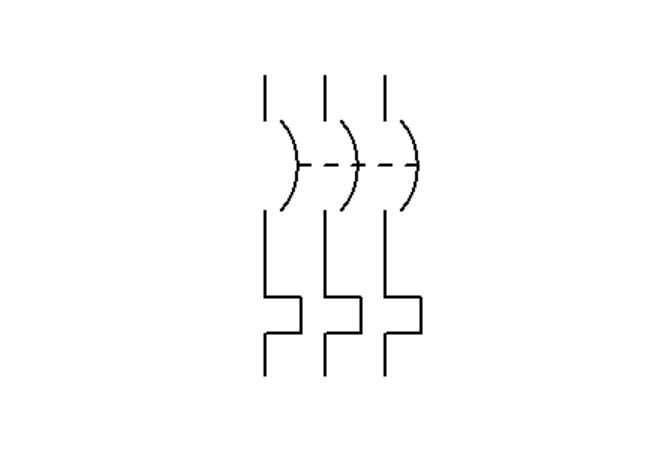
Check the protective switch marking and its graphical sign on the wiring plan before reading any electrical scheme. Many installation errors appear because a reader confuses the breaker sign with a switch, fuse, or isolator. On most technical drawings the protective switch is drawn as a small break in the conductor line combined with a rectangular or curved marker that represents the automatic trip mechanism.
On electrical schematics used in residential panels and industrial distribution boards, this protective device is typically labeled with ratings such as B16, C20, or D32. The letter identifies the trip characteristic, while the number shows the rated current in amperes. For example, B16 indicates a device rated at 16 A with a trip curve designed for lighting and low-inrush loads.
Graphical notation varies slightly between drafting standards such as IEC 60617 and common manufacturer documentation. A single-pole breaker is usually shown as a single interruption point on the conductor path, while multi-pole units display two or three linked interruptions joined by a dashed mechanical connection line. This detail signals that several contacts open simultaneously during a fault.
Another detail visible on many wiring plans is the placement of the breaker sign near panel identifiers such as QF1, QF2, or CB3. These tags correspond to the device list in the equipment schedule, where the rated current, pole count, and breaking capacity are specified. Reading the graphical sign together with these labels allows a technician to identify protection type, installation location, and load group without inspecting the physical panel.
Careful interpretation of these markings helps prevent incorrect wiring, especially in distribution boards containing multiple protective switches connected to lighting circuits, socket groups, HVAC equipment, and motor loads. Accurate recognition of the graphical notation on technical drawings shortens troubleshooting time and reduces the risk of connecting conductors to the wrong protection device.
MCB Circuit Diagram Symbols Guide with Standard Breaker Markings and Wiring Notation
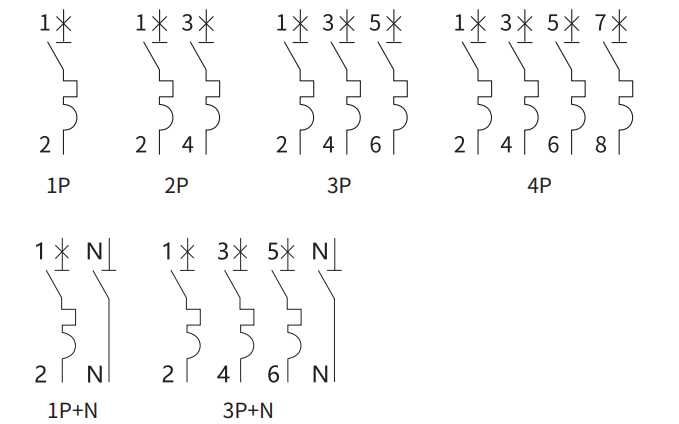
Locate the automatic breaker sign on the electrical drawing before tracing conductor paths. The graphical mark usually appears as a small gap on the line representing the conductor combined with a rectangular switch indicator. This graphic identifies a protective device that disconnects power during overload or short-circuit conditions.
Most installation drawings follow IEC 60617 or similar drafting standards. In these documents, the breaker graphic is paired with a device code placed next to the line segment. Typical identifiers include:
- QF – automatic protective switch
- CB – breaker used in many industrial plans
- BR – simplified tag in compact panel layouts
Rated current and trip behavior appear as alphanumeric markings next to the device tag. These markings describe how the protection reacts during overload conditions.
- B10 – 10 A unit designed for lighting loads
- C16 – 16 A unit suitable for socket groups and appliances
- D32 – 32 A device used with motors or equipment with high inrush current
Pole configuration is represented through repeated interruption marks along parallel conductor lines. A single interruption indicates a one-pole unit protecting a phase conductor. Two or three interruptions connected by a dashed mechanical link show that several contacts operate together.
Typical graphical variations used on wiring drawings include:
- Single-pole protection mark placed on one conductor path
- Two linked interruption points representing phase and neutral disconnection
- Three linked marks used in three-phase distribution boards
- A four-pole variant that disconnects three phases and neutral simultaneously
Device labels on the drawing usually correspond to a panel schedule. For example, the tag QF3 C20 indicates the third protective switch rated at 20 amperes with type C tripping behavior. Matching this identifier with the equipment list allows technicians to identify installation position, rated breaking capacity, and load group without opening the distribution board.
Standard MCB Symbols Used in Electrical Circuit Diagrams and Panel Schematics
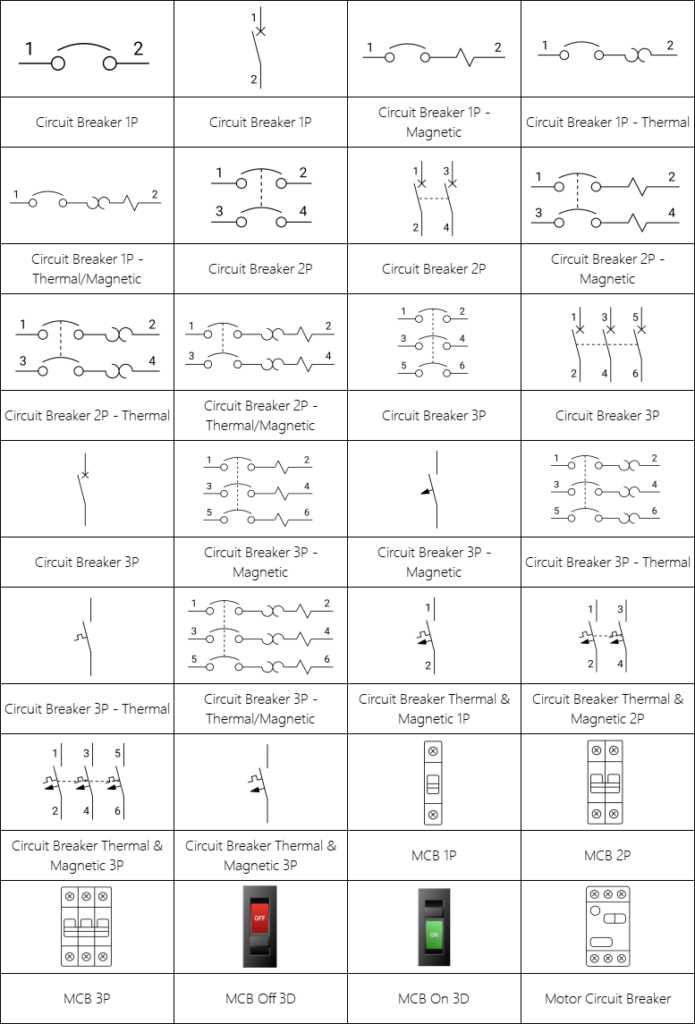
Identify the automatic breaker mark by locating a deliberate interruption in the conductor line combined with a switch indicator. On most wiring drawings this graphic appears as a short break in the line with a small rectangular or angled contact mark. This notation shows a protective switching device that opens automatically during overload or short-circuit conditions.
Technical drafting standards such as IEC 60617 and many manufacturer design guides use nearly identical graphical forms. The contact element represents the switching mechanism, while the line break indicates the controlled conductor. In panel schematics the mark is often placed directly on the phase line feeding a load group, with a reference label like QF1 or CB2 positioned next to it. That identifier connects the graphic to a device list describing rated current, pole count, and breaking capacity.
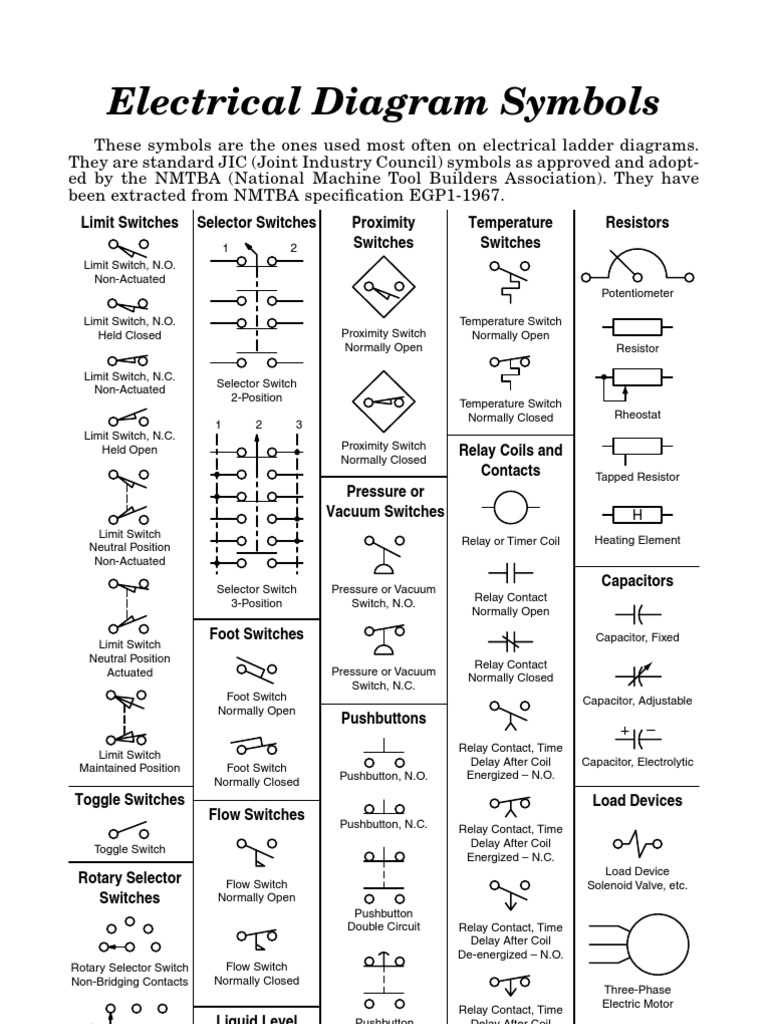
Pole configuration is represented through repeated contact graphics aligned along parallel conductors. A single interruption denotes protection for one phase conductor, common in lighting branches. Two linked contacts indicate simultaneous disconnection of phase and neutral conductors. Three aligned marks connected with a dashed mechanical linkage represent protection for a three-phase feeder supplying motors, pumps, or distribution subpanels.
Panel schematics frequently combine the graphical mark with rating information placed near the reference tag. Markings such as B16, C20, or D32 describe trip behavior and rated current in amperes. Reading the graphic together with this alphanumeric code allows technicians to determine device type, load category, and protection level directly from the drawing without inspecting the physical distribution board.