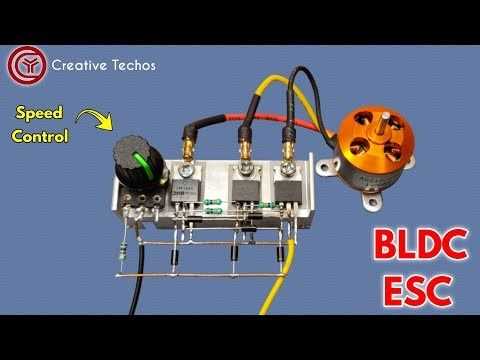
Understanding how to connect and interpret the components of an electronic speed controller is critical for anyone working with electric motors. Focus on the power stage, where transistors or MOSFETs regulate current flow to the motor, ensuring smooth acceleration and deceleration. It’s important to identify how these components are arranged, as incorrect wiring can lead to performance issues or even damage the system.
Pay attention to the control inputs such as the PWM signal, which dictates the speed and direction of the motor. This signal is processed by the microcontroller, often seen as a key part of the assembly. Understanding the microcontroller’s role in signal filtering and processing can help you troubleshoot issues related to motor response and efficiency.
For anyone designing or modifying this setup, knowing how to adjust feedback loops and voltage regulation circuits can enhance performance and stability. Addressing common issues like voltage spikes or inadequate heat dissipation will improve the reliability of the entire system.
How to Interpret an ESC Design for Motor Control
To properly read an ESC layout, begin by focusing on the power delivery components. These typically include MOSFETs or IGBTs that handle the high current flowing to the motor. It’s crucial to understand the way these components are arranged–any fault in the design, such as incorrect placement or inadequate heat sinking, can cause system malfunctions or failure.
Identifying Key Control Elements
The control board usually houses the microcontroller responsible for interpreting the input signals and adjusting the motor’s speed. These input signals, often in the form of PWM, are processed to regulate the motor’s operation. Look closely at the connections between the microcontroller and the MOSFETs, as errors here can result in poor motor response or even failure to start.
Voltage Regulation and Feedback Systems
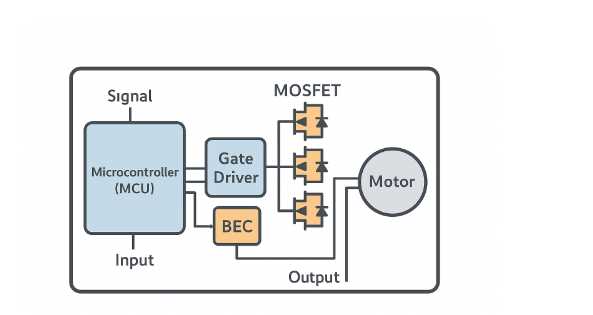
A feedback loop is often incorporated to ensure voltage regulation remains stable across varying load conditions. Examine the voltage monitoring components and their relation to the power stage. Proper voltage feedback ensures the system adapts efficiently to fluctuations in power demand, protecting the motor and extending its lifespan. Adjusting the feedback parameters can enhance motor performance by preventing over-voltage or under-voltage situations.
How to Read an ESC Design and Identify Key Components
Start by locating the power stage components, usually represented by transistors or MOSFETs. These elements manage the flow of current from the power supply to the motor. It’s important to trace the connections between the power source and these components to ensure there are no interruptions or incorrect paths, as these can lead to overheating or inefficiency.
Identifying Input and Control Signals
Next, focus on the input lines, typically marked with labels like PWM (pulse-width modulation) or control signals. These signals dictate the motor’s speed and direction, and they are processed by a microcontroller. Make sure to verify the integrity of the input paths, ensuring they’re properly routed to the microcontroller without interference.
Power and Ground Connections
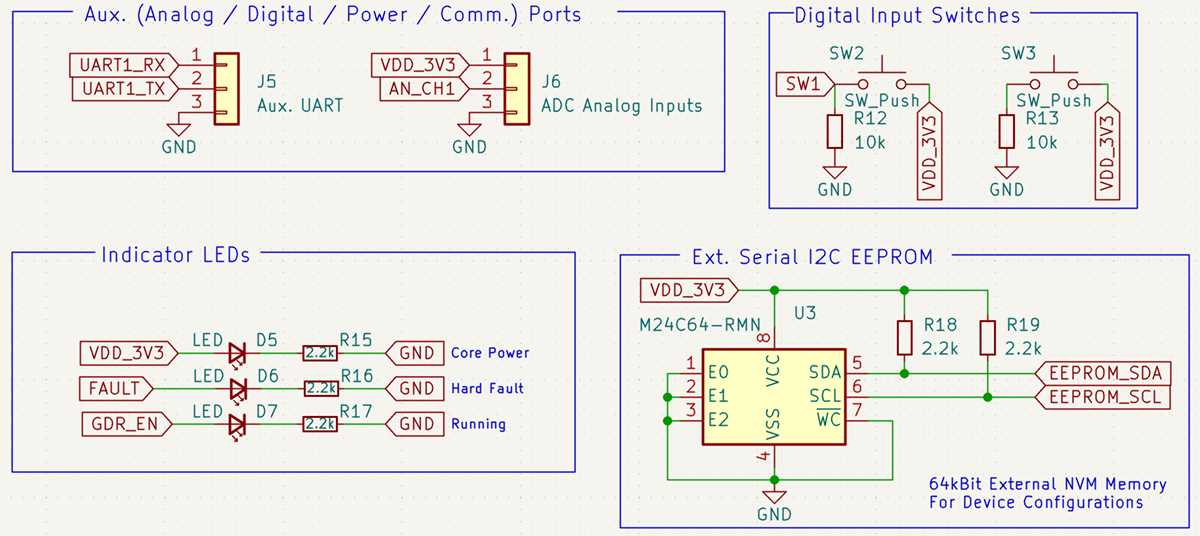
Pay close attention to the power and ground connections. These must be robust and capable of handling high current loads. Grounding should be uniform and clearly defined to avoid potential short circuits. If there are multiple power sources, be sure to check that each is connected to the correct stage in the design for optimal performance.
- Verify the voltage rating of each power line and compare it to the system’s specifications.
- Check that the grounding points are not shared with high-current paths to avoid interference.
Also, look for any protection components such as diodes or fuses. These prevent voltage spikes and short circuits from damaging the system. The placement of these parts is often critical–ensure they’re positioned in places where they can effectively block over-voltage or prevent current surges from reaching sensitive components.
Finally, focus on feedback systems, which ensure proper operation by monitoring voltage and current levels. These systems are vital for adjusting the output and maintaining motor stability. Ensure the feedback loops are properly implemented, with clear routes for information to return from the motor to the microcontroller for real-time adjustments.