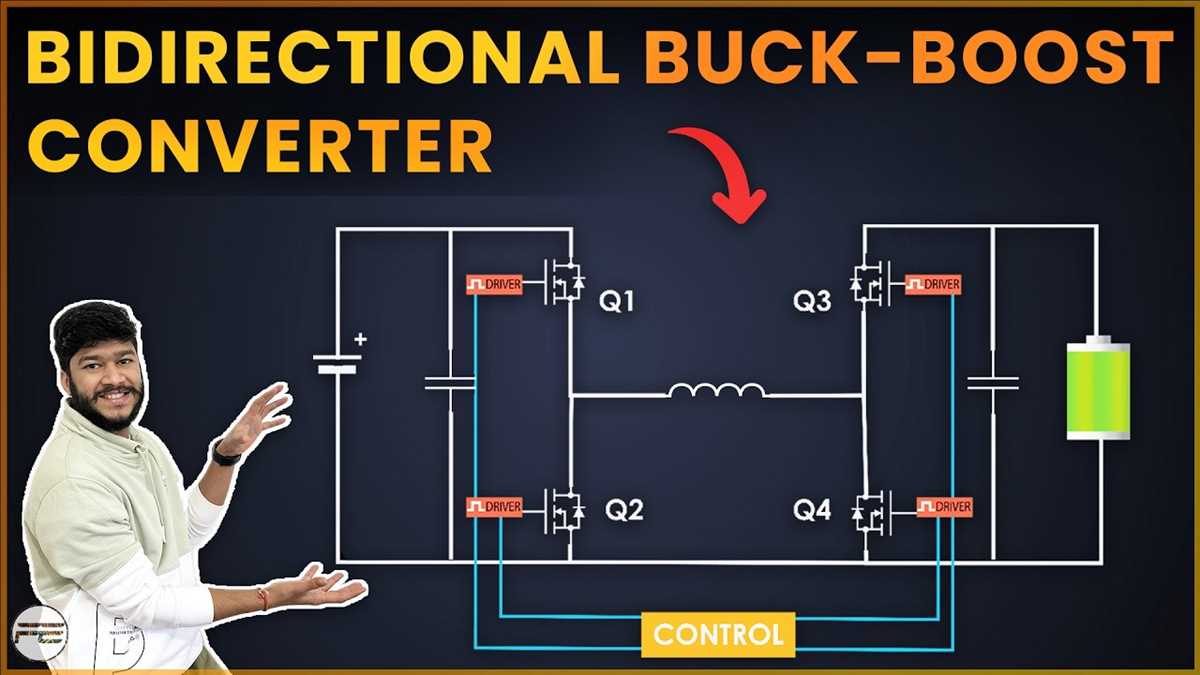
To achieve optimal performance in a system requiring the ability to transfer power in both directions, focus on selecting the right components. Begin by ensuring your system can effectively manage bidirectional current flow through efficient components such as MOSFETs and diodes.
One key factor in designing a dual-mode system is the use of inductors for energy storage. Properly sized inductors will allow for smooth transitions between power states, improving system stability and reducing losses. Choosing the right inductor size is crucial to maintaining performance while preventing overheating and inefficiency.
The control logic also plays an important role. A microcontroller or dedicated control IC should be used to manage the switching process, ensuring that the system operates in either direction based on demand. This also helps to manage the timing of energy flow, minimizing power losses and maximizing the system’s overall capability.
Lastly, make sure to implement proper filtering to reduce ripple effects, which could interfere with system performance. Capacitors placed strategically throughout the system will help maintain smooth operation by smoothing out high-frequency oscillations and providing stable power to the load.
Designing a Dual-Mode Power System
Start by selecting efficient power switches such as MOSFETs or IGBTs for switching between two energy states. These components are key in ensuring smooth transitions and minimizing energy loss. Proper heat management is crucial, so choose parts that can handle thermal dissipation under load.
Next, focus on the correct sizing of energy storage elements like inductors and capacitors. A well-chosen inductor will ensure that energy is efficiently transferred during the conversion process. Similarly, capacitors should be used to filter out high-frequency noise and stabilize the output voltage, preventing fluctuations that could affect the load performance.
Key Components for Dual-Mode Power Systems
For efficient energy conversion, high-performance semiconductors such as MOSFETs or IGBTs are required. These components act as the primary switches, enabling the transfer of energy while minimizing switching losses. When selecting transistors, make sure they are rated for both the input and output voltage levels. Additionally, choose components with a low Rds(on) for reduced conduction losses during operation.
Inductors and capacitors are integral for managing energy flow and maintaining voltage stability. High-quality inductors, designed with low core losses, help store energy and regulate current. When choosing capacitors, opt for those with low ESR (Equivalent Series Resistance) to reduce power dissipation and prevent excessive ripple. Proper sizing of both inductors and capacitors is critical for maintaining a steady and reliable output voltage, especially in dynamic conditions.