
If you need to build precise electronic plans without installing software, try EasySchematic Builder. It supports drag-and-drop placement of resistors, capacitors, and ICs, allowing accurate layouts for both beginners and advanced users. The platform exports files in PDF and SVG formats, making it compatible with most documentation tools.
SmartCircuit Designer offers real-time connection validation, highlighting mismatched nodes instantly. Users can simulate voltage and current flow directly within the interface, reducing errors before physical assembly. Its library includes over 1,200 components, covering standard and specialized electronic elements.
For collaborative projects, WireSketch Pro allows multiple contributors to edit a plan simultaneously, tracking changes with time-stamped logs. The interface supports zooming to micro-levels and grouping components into reusable modules, speeding up repetitive tasks and complex assemblies.
Integrations with popular PCB fabrication services streamline the process from planning to production. Export options include Gerber files and netlists, ensuring designs are ready for manufacturing without additional conversion steps. Compatibility with SPICE simulation tools adds another layer of verification for performance before committing to hardware.
Circuit Layout Tool Without Cost
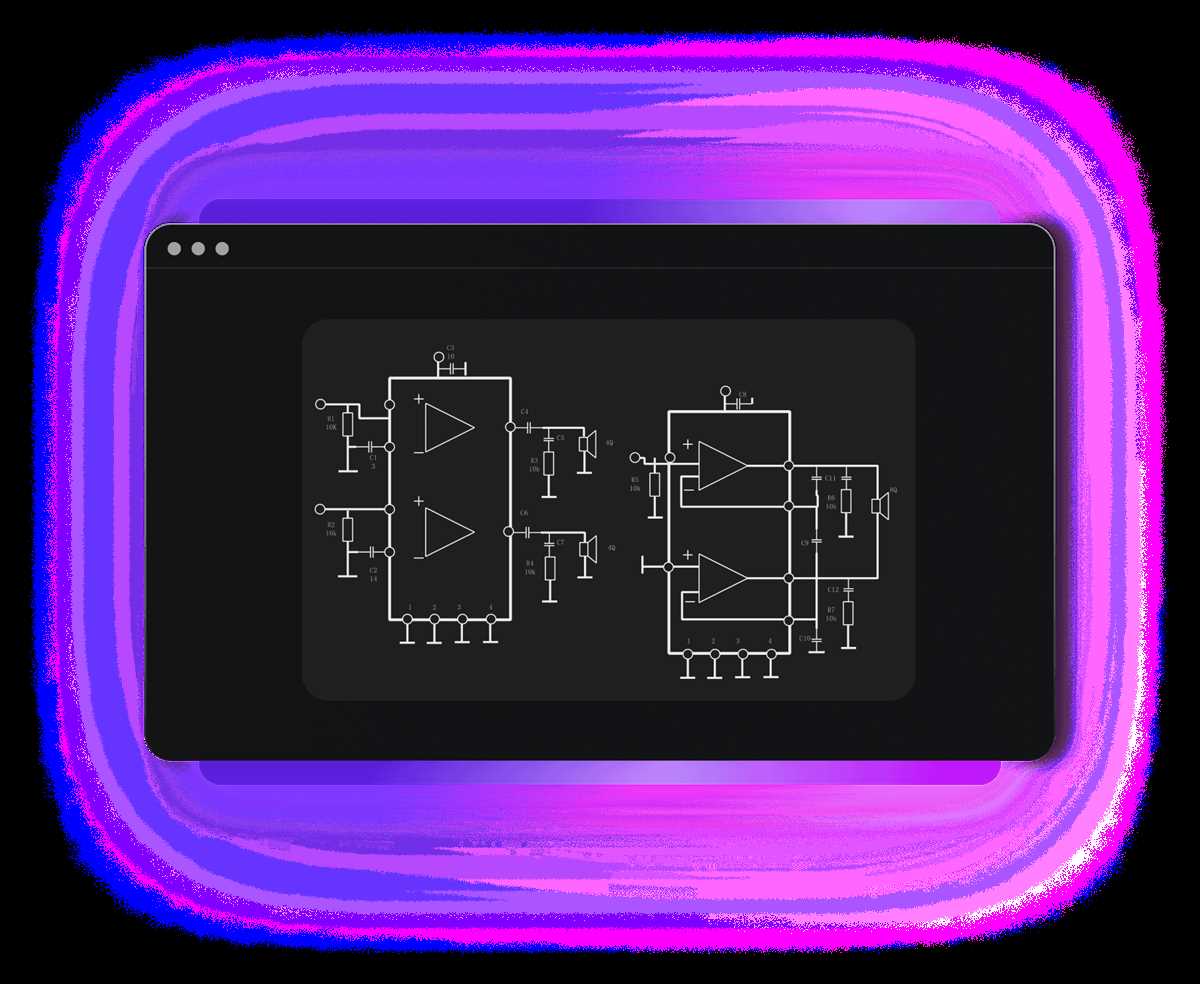
Try EasyEDA for creating electrical schematics with minimal setup. It supports multi-layer schematics, library components for resistors, transistors, and ICs, and allows exporting in PDF, PNG, or Gerber formats for fabrication. You can simulate circuits before printing, making it suitable for both hobbyists and prototyping engineers. Registration is optional, and the interface lets you drag-and-drop symbols with precise alignment tools.
Other options include:
- Falstad: Web-based editor with interactive simulation and live animation of currents and voltages.
- Tinkercad Electronics: Integrates microcontrollers like Arduino, letting you test code along with your layout.
- Scheme-it by Digi-Key: Extensive library, real-time validation, and BOM generation for component sourcing.
All these platforms provide collaborative features, version history, and cloud storage, so multiple users can work on the same schematic without conflicts. For quick prototyping or learning, Falstad’s visual approach helps understand behavior, while EasyEDA and Scheme-it focus on manufacturing-ready projects.
How to Create a Basic Circuit Diagram Step by Step
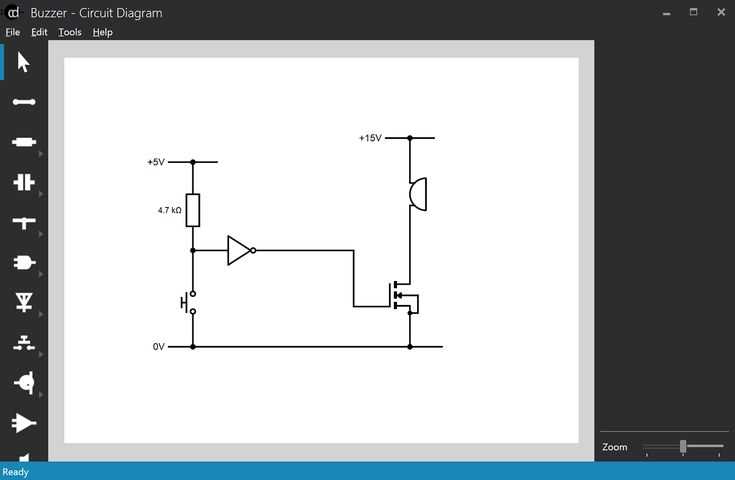
Choose a reliable schematic tool that allows dragging and dropping of electronic symbols. Focus on programs that provide resistors, capacitors, switches, and power sources without cluttered menus.
Start with a clear power source placement. Place the battery or voltage supply at the top-left corner to maintain conventional flow from positive to negative terminals.
Insert resistive elements along the intended path, connecting them with straight lines to maintain readability. Avoid diagonal connections, as they often confuse viewers and may overlap with other symbols.
Add interactive components like LEDs or switches next. Ensure each component shows polarity if required; for LEDs, mark the anode and cathode clearly with labels or arrows.
Include conductive paths using straight segments only. Use junction dots at intersections to indicate connections. Missing dots can imply unintended breaks, creating misinterpretation.
Label each element with unique identifiers and values. For instance, resistors should be labeled R1, R2 with their ohm rating, and capacitors as C1, C2 with farad values.
Double-check for loops and short circuits by tracing paths from the power source to each element. Confirm all connections match intended operation and adjust line positions to avoid crossings wherever possible.
Save your work frequently and export it in vector format if possible. This preserves clarity for sharing or printing and prevents symbol distortion when zooming or resizing the layout.