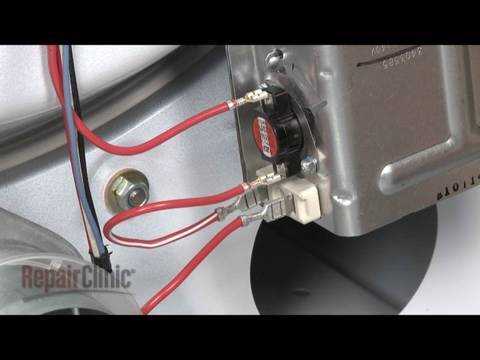
Check the two power leads from the 240-volt supply before inspecting the internal heat assembly. One live conductor usually runs through a temperature limiter and thermal cutoff, while the second line connects directly to the metal coil housing. If the appliance tumbles but produces no hot air, measure continuity across the resistive coil; a reading close to 9–12 ohms is typical in many models using a 240 V supply.
The warm air generator inside this laundry appliance operates through a simple path: power line → safety cutoff → temperature regulator → resistive coil → return line. Each protective device interrupts current if air temperature rises above safe limits. Many units use a high-limit thermostat rated near 250°F (121°C) and a one-time thermal fuse that opens near 309°F (154°C).
Identify terminal positions on the coil housing before reconnecting any conductors. One terminal links to the temperature control component, while the second attaches to the neutral return or opposite supply leg depending on the appliance configuration. Use 12–14 AWG high-temperature leads with fiberglass insulation rated above 200°C to avoid insulation damage inside the hot air chamber.
Color coding simplifies tracing connections. In many laundry machines manufactured in North America, red and black conductors carry the 240-volt supply, white acts as neutral in control paths, and blue or orange lines connect thermostatic devices. Following these color patterns reduces mistakes while restoring the internal electrical path of the heat generator assembly.
Whirlpool Dryer Heating Element Wiring Diagram and Thermostat Connection Layout
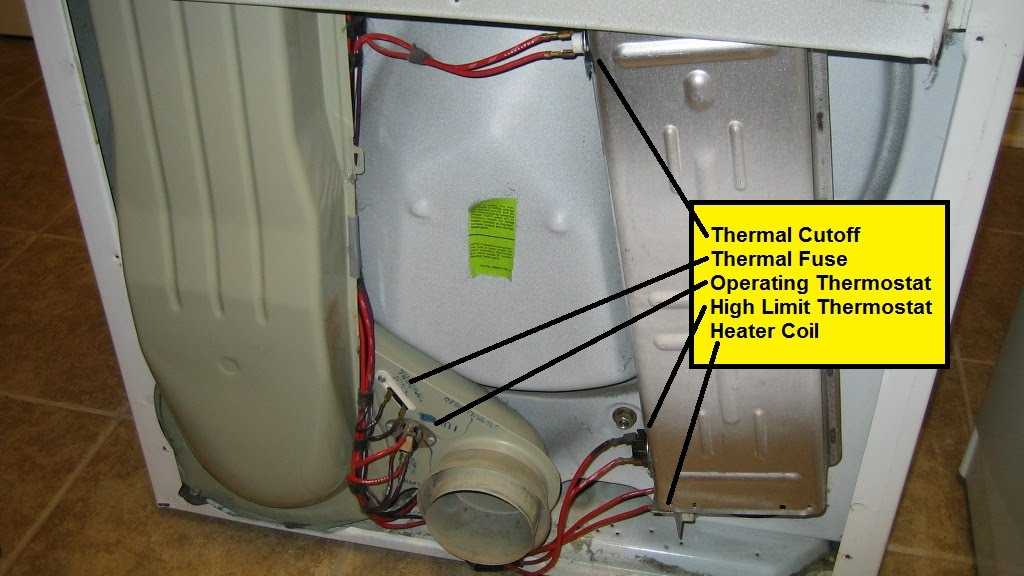
Disconnect the 240-volt supply and trace the path between the resistive coil housing and the temperature regulator before reconnecting any conductors. One power leg typically enters the thermal cutoff mounted on the blower housing, continues through the high-limit thermostat attached to the metal heater box, and then reaches the coil terminal. The second power leg connects directly to the opposite terminal of the coil assembly.
The internal current path used in many Kenmore and Whirlpool-built laundry machines follows a simple order. Each protection device interrupts power if air temperature rises above the safe limit.
- L1 power line from timer contact
- Thermal cutoff mounted on blower duct
- High-limit thermostat attached to heater box
- Resistive coil terminal A
- Resistive coil terminal B
- L2 supply returning to the main harness
Typical electrical readings help verify the condition of each component. The coil usually measures between 9 and 12 ohms. A closed high-limit thermostat shows near 0 ohms. The one-time thermal cutoff also reads near zero resistance when intact. An open reading indicates that the device has tripped and must be replaced.
Correct terminal routing prevents overheating and airflow problems. The metal heater box usually contains two insulated posts connected to the coil. One post receives current through the thermostatic devices, while the other returns directly to the second 120-volt leg of the 240-volt supply.
- Black or red conductor from timer contact carries L1.
- Lead runs through thermal cutoff mounted on the blower housing.
- Next connection goes to the high-limit temperature switch.
- Output from that switch reaches the first coil terminal.
- Second coil terminal attaches to the remaining supply leg.
Use high-temperature leads rated above 200°C inside the heater compartment. Fiberglass-insulated conductors resist heat exposure near the coil housing, where internal air temperature can exceed 150°C during operation.
Mount thermostatic devices firmly against the metal surface of the heater box. Direct contact allows the temperature switch to sense rising heat from the coil chamber and interrupt current before damage occurs to the drum seals, blower duct, or nearby plastic harness connectors.
Heating Element Terminal Connections in Whirlpool Dryer Power Circuit
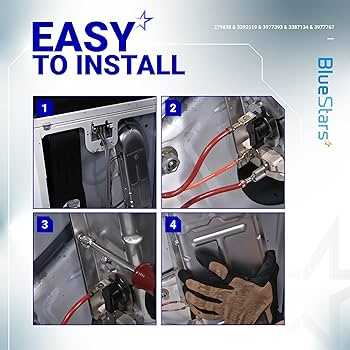
Disconnect the 240-volt supply and inspect the two coil terminals mounted on the metal heater housing before reconnecting any conductors. One terminal receives the L1 supply through a chain of thermal protection devices, while the second terminal connects to the remaining supply leg that completes the high-voltage path.
The resistive coil assembly used in many laundry machines operates on a split-phase 240-volt source. Each side of the coil receives 120 volts from opposite legs of the supply. When both legs are present, the coil produces heat as current flows through the resistance wire mounted inside the metal heater canister.
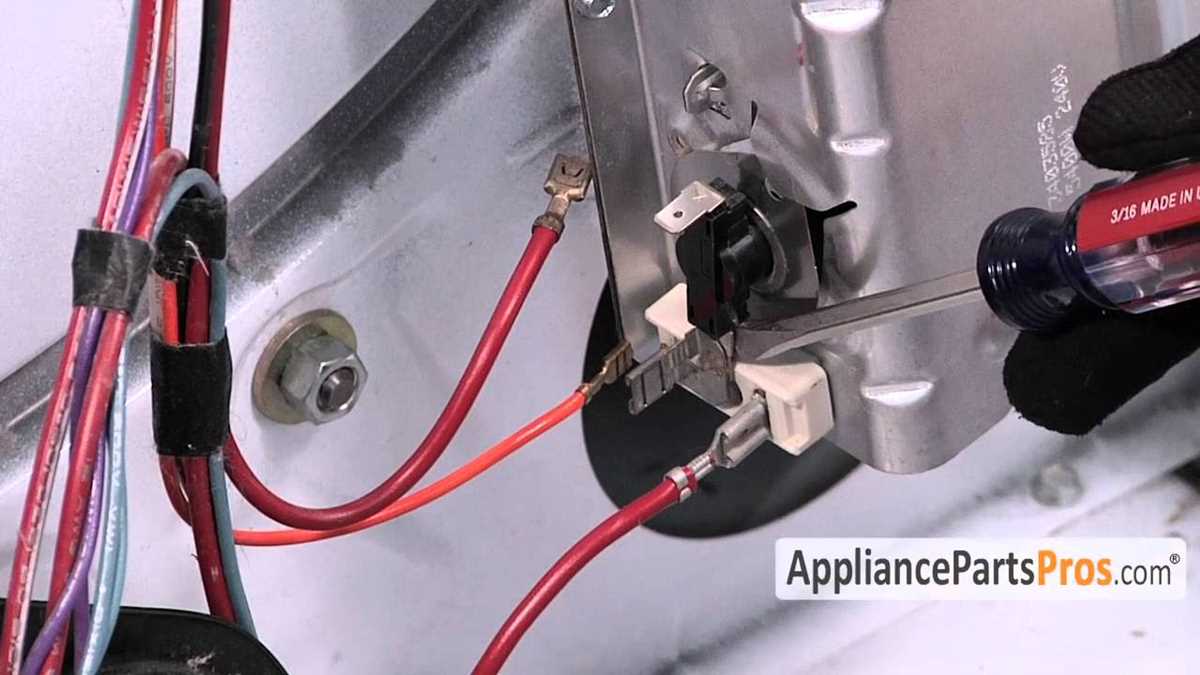
The first terminal usually connects to a wire coming from the high-limit thermostat. This device sits on the heater box and opens the circuit when temperature rises above roughly 250°F (121°C). A second safety device, commonly called a thermal cutoff, sits on the blower housing and interrupts current permanently if airflow becomes restricted.
Trace the L1 path from the timer or control board contact. Power travels through the thermal cutoff, then through the high-limit thermostat, and finally reaches the first coil terminal mounted on the heater housing.
The opposite terminal attaches directly to the second supply leg, often labeled L2. This line bypasses thermostatic controls and runs through the main harness toward the terminal block located at the rear of the appliance.
Resistance measurements provide quick confirmation of coil condition. A healthy coil assembly usually reads between 9 and 12 ohms. A reading near infinite resistance indicates a broken coil inside the heater housing, which stops warm air production.
Use high-temperature spade connectors rated above 200°C on both terminals. Standard vinyl-insulated connectors degrade quickly inside the heater compartment where internal temperatures often exceed 140°C during operation.
Secure each connector tightly on the terminal posts and keep wires routed away from the rotating drum and blower housing. Proper routing prevents insulation damage, electrical shorts, and overheating inside the heater chamber.