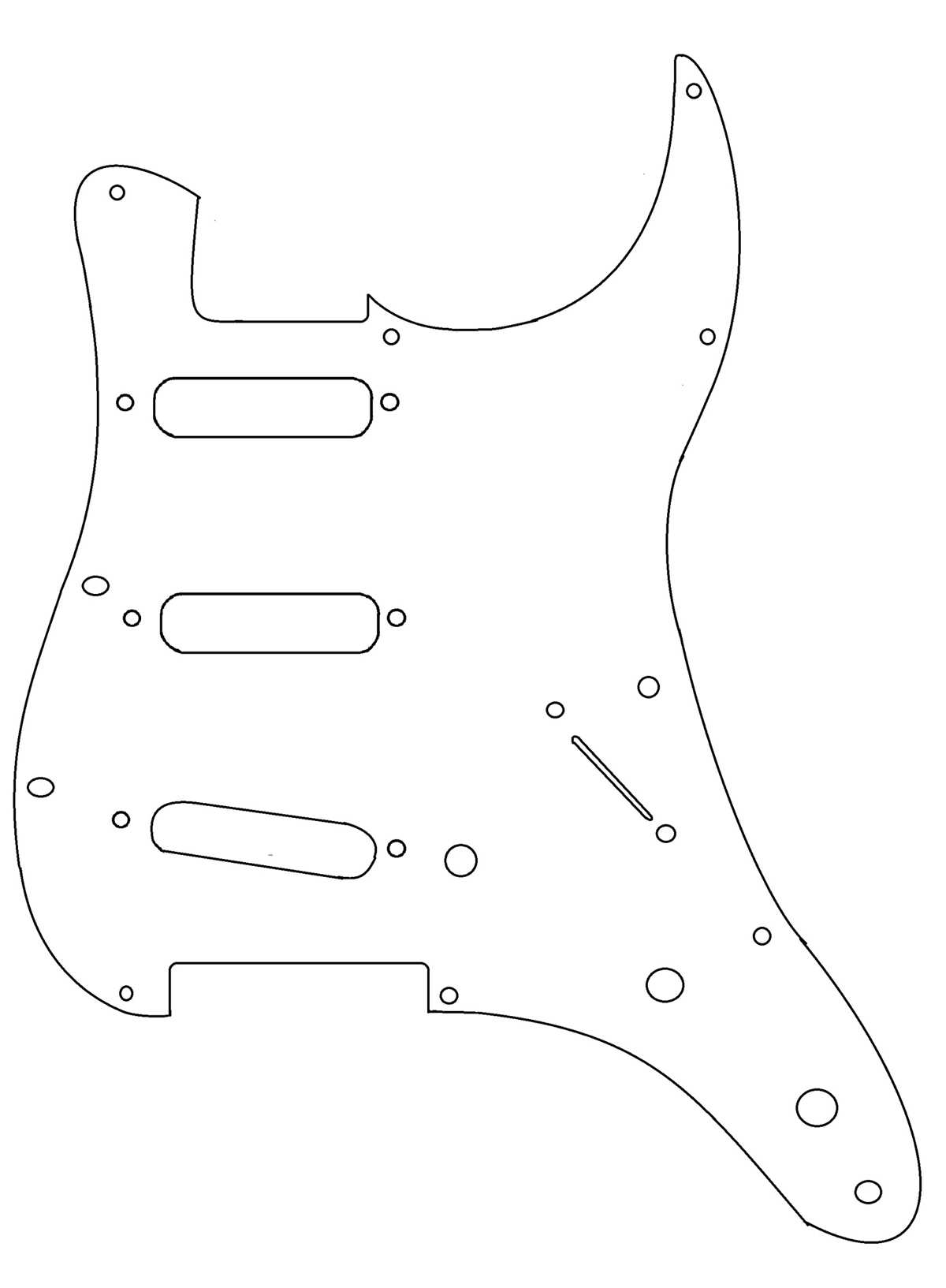
Connect two single-coil pickups in sequential signal routing if a thicker output and higher voltage level are required from a three-pickup guitar layout. This method routes the signal of one pickup directly into the next coil instead of sending both signals separately to the selector. Output increases noticeably, producing a stronger midrange response similar to a humbucker.
A common approach uses a five-position blade selector together with a small toggle or push-pull potentiometer. The modification allows switching between traditional parallel pickup operation and the linked configuration. Typical connection points involve rerouting the ground lead of the middle pickup toward the hot output of the neck pickup, creating a continuous signal path through both coils.
Standard single-coil pickups in this guitar design usually measure between 5.6 kΩ and 6.5 kΩ of DC resistance. When two units operate sequentially, the resistance adds together, often reaching 11–13 kΩ. This increase raises signal strength and slightly reduces high-frequency brightness, producing a thicker tone suitable for rock or blues playing.
Pay attention to pickup polarity and coil direction. Incorrect polarity may cause phase cancellation, resulting in weak output and thin tone. Reversing the hot and ground leads on one pickup usually corrects this issue and restores full signal strength.
Shielding and grounding also affect performance. Use shielded leads between pickups, selector, and output jack, and keep ground connections short. Solid solder joints prevent intermittent noise and maintain stable signal flow across the entire pickup switching network.
Stratocaster Series Pickup Wiring Layout With Switch Positions and Tone Controls
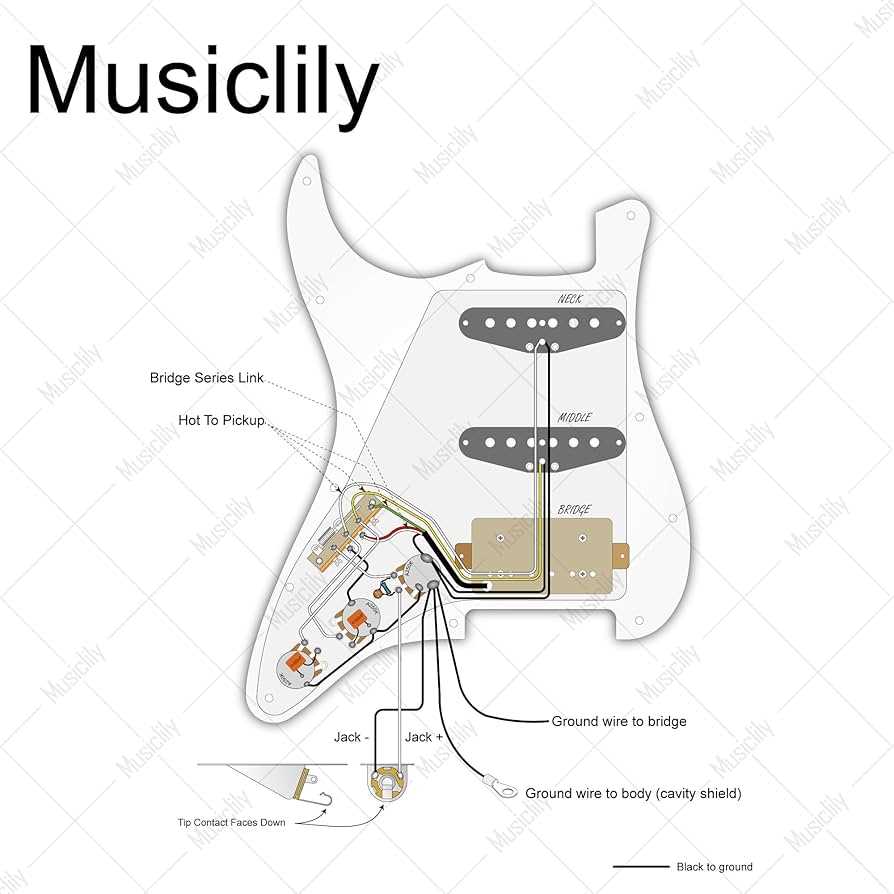
Route the hot lead of the neck pickup into the ground lead of the middle pickup through a blade selector modification if a higher output voice is required. This arrangement places two coils in a chained signal path rather than the typical parallel link. Voltage output rises noticeably and midrange frequencies become stronger while high-end brightness slightly decreases.
Selector Positions and Signal Paths
Use the standard five-position blade switch with a push-pull tone knob or mini toggle to control the chained pickup mode. In position 1 the bridge pickup remains alone, delivering the brightest tone. Position 2 can combine bridge and middle coils in the chained path, producing thicker output similar to a humbucker. Position 3 activates the middle pickup by itself, while position 4 links middle and neck units in the same chained configuration. Position 5 selects the neck pickup alone with full tone control range.
Tone Pot and Capacitor Routing
Connect a 250k potentiometer with a 0.047 µF capacitor to shape high frequencies. Many players route the first tone control to the neck unit and the second to the bridge pickup. Moving the tone connection to the bridge position reduces harsh treble during high-gain use. Shielded leads between selector lugs and potentiometers reduce background noise.
Check pickup polarity before soldering connections. If the output becomes thin or hollow while two coils operate in the chained configuration, reverse the hot and ground leads of one pickup. Correct polarity alignment restores full output and stable signal flow across the selector contacts and control cavity connections.
Series Pickup Connection Layout for Stratocaster Using Standard Five Way Switch
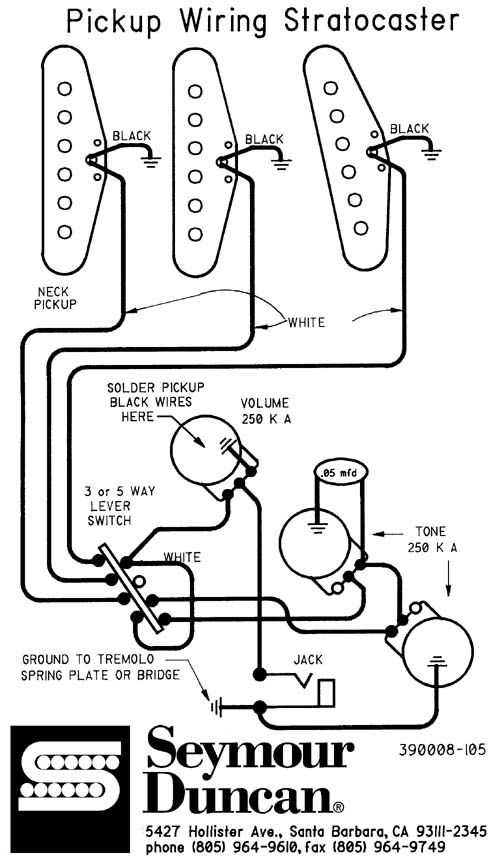
Link the neck pickup output to the ground lead of the middle pickup through the blade selector if a thicker tone is desired from the classic three single-coil guitar platform. This configuration routes the signal from one coil directly into the next before reaching the volume control, raising output and midrange response. Use a standard five-position lever selector with two pole sections and reroute one lug so that the neck pickup hot lead feeds the middle pickup ground when the selector reaches the combined position.
Typical Selector Connections
The blade switch terminals usually follow this layout during the chained pickup configuration:
- Neck pickup hot lead → selector lug assigned to position 4 or 5
- Middle pickup ground → routed through selector lug connected to neck pickup output
- Bridge pickup hot lead → separate selector pole for position 1 and 2
- Common output lug → connected to volume potentiometer input
- All pickup shields → soldered to the ground bus on the back of the volume pot
Check coil polarity before soldering the connections. If the combined tone becomes thin, reverse the hot and ground conductors on one pickup. Correct orientation restores full signal strength while the five-position lever continues to provide individual pickup tones along with the chained dual-coil option.