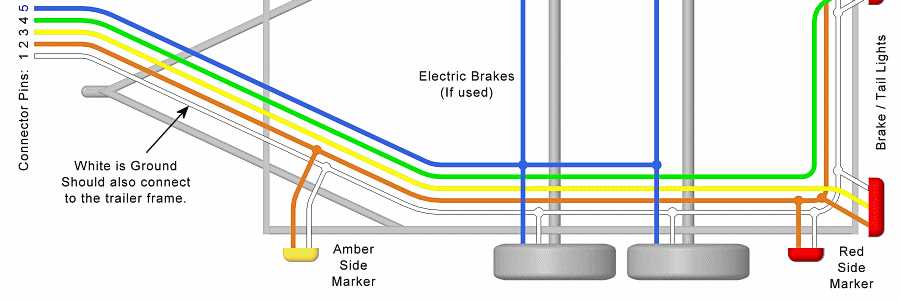
Start by ensuring that each wire is connected to the correct terminal. The standard color coding for a 7-wire system is consistent across most setups: brown for tail lights, yellow for left turn signal, green for right turn signal, red for brake lights, white for ground, blue for reverse lights, and the additional wire can be used for auxiliary power. Double-check each connection before use to avoid any faults.
Inspect all wire lengths to make sure they reach the appropriate connection points on both the vehicle and the towing system. If necessary, use high-quality connectors to ensure a solid, corrosion-resistant connection. When attaching the ground wire, always connect it to a clean, bare metal surface to guarantee proper function.
Before you hit the road, test the entire system. Verify that all lights and functions–brake lights, turn signals, reverse lights, and power for additional features–are working. If something is malfunctioning, check the connectors for tightness and inspect the wires for any visible damage.
7 Blade Towing Connection Setup
Begin by inspecting the connector and ensuring each terminal is clean and free of corrosion. If necessary, use a wire brush to clean the contacts. This step will help maintain a reliable connection over time.
Identify each wire by its standard color code. Typically, the tail light is brown, the left turn signal is yellow, the right turn signal is green, the brake light is red, the ground is white, reverse lights are blue, and the seventh wire is often used for auxiliary power. Ensure these color codes match between the vehicle and the towing system.
When connecting, start with the ground wire. This is the most critical part of the setup as a poor ground connection can cause electrical failures. Attach it securely to a clean, unpainted metal surface to ensure a proper connection.
For the signal and brake wires, ensure they are securely connected to their respective terminals. Loose or frayed connections can cause your lights or signals to malfunction, leading to safety issues on the road. Tighten all connectors properly and check for any signs of wear.
Use quality, corrosion-resistant connectors to ensure the system remains reliable, especially in harsh weather conditions. Heat shrink connectors can provide a watertight seal that protects the connections from moisture and dirt, extending the lifespan of the system.
Test the system thoroughly before use. Turn on your vehicle and verify that all lights, including the brake lights, turn signals, and reverse lights, are functioning as expected. Check the auxiliary power wire to ensure it provides the necessary voltage for any additional features or equipment.
If something isn’t working, inspect the individual wires and connections for damage. A quick test with a multimeter or test light can help you pinpoint the issue. Sometimes, a loose or corroded connection is the culprit.
After ensuring everything is functioning correctly, secure any loose wires with zip ties or clamps to prevent them from getting caught or damaged during use. Regularly check the system for signs of wear or corrosion to maintain optimal performance.
Understanding the Functions of Each Wire in a 7 Wire Setup
The 7-wire connection system serves several key functions, with each wire dedicated to a specific task. Here’s a breakdown of the common wiring colors and their purposes:
- Brown: Tail lights
- Yellow: Left turn signal
- Green: Right turn signal
- Red: Brake lights
- White: Ground
- Blue: Reverse lights
- Black: Auxiliary power
Each of these connections is crucial for safe operation. The ground wire is often the source of most electrical issues, so make sure it’s securely fastened to an unpainted, clean surface to ensure proper current flow. The signal and brake light connections are also vital for visibility and safety, as they control the vehicle’s communication with other drivers on the road. If any wire malfunctions, it can lead to lights not functioning correctly, which could result in unsafe driving conditions.