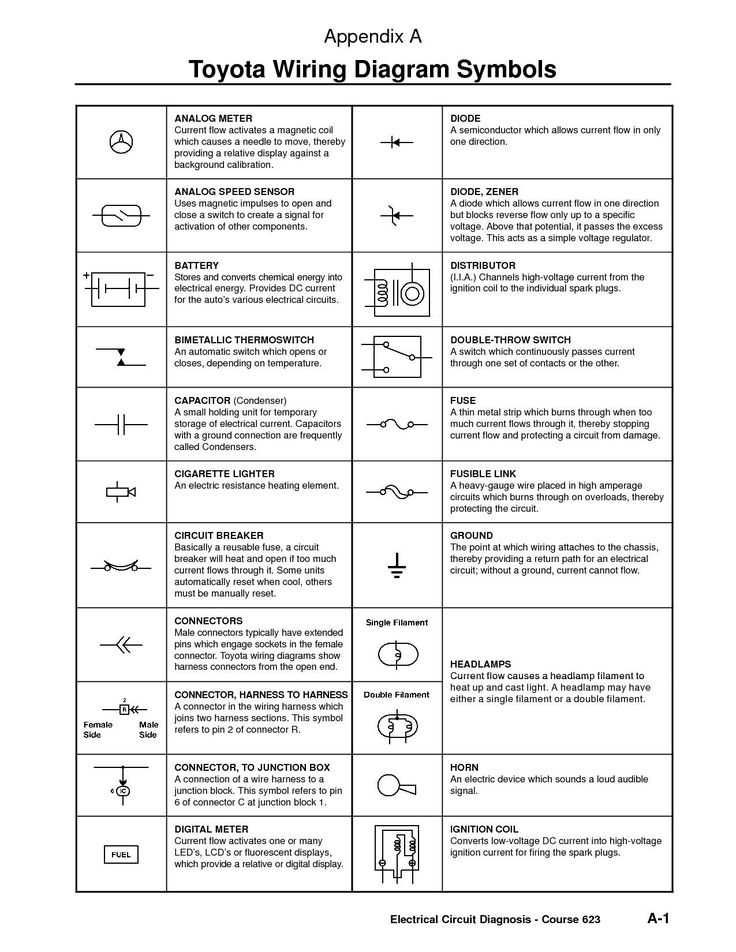
Start by familiarizing yourself with the most common graphical representations used in technical drawings. These simplified illustrations help to convey complex electrical connections in an easy-to-understand way. Each component, from resistors to switches, is represented by a unique symbol, allowing you to quickly identify parts and connections.
For successful interpretation, it’s important to recognize the standardization of these depictions. Whether you’re working on a small project or a large-scale installation, understanding the meaning of each graphical representation can save time and prevent errors in design and assembly.
When drawing your own schematics, follow the basic rules for each symbol’s placement and ensure they reflect the proper connections. Make sure to connect components correctly and avoid confusion by keeping track of different types of connections such as ground, power, and signal pathways.
As you gain more experience, understanding how these illustrations relate to real-world connections becomes clearer. Whether you’re troubleshooting an existing system or designing from scratch, these representations form the foundation of your work, providing a roadmap for wiring and circuit construction.
Circuit Diagram Symbols and Their Uses
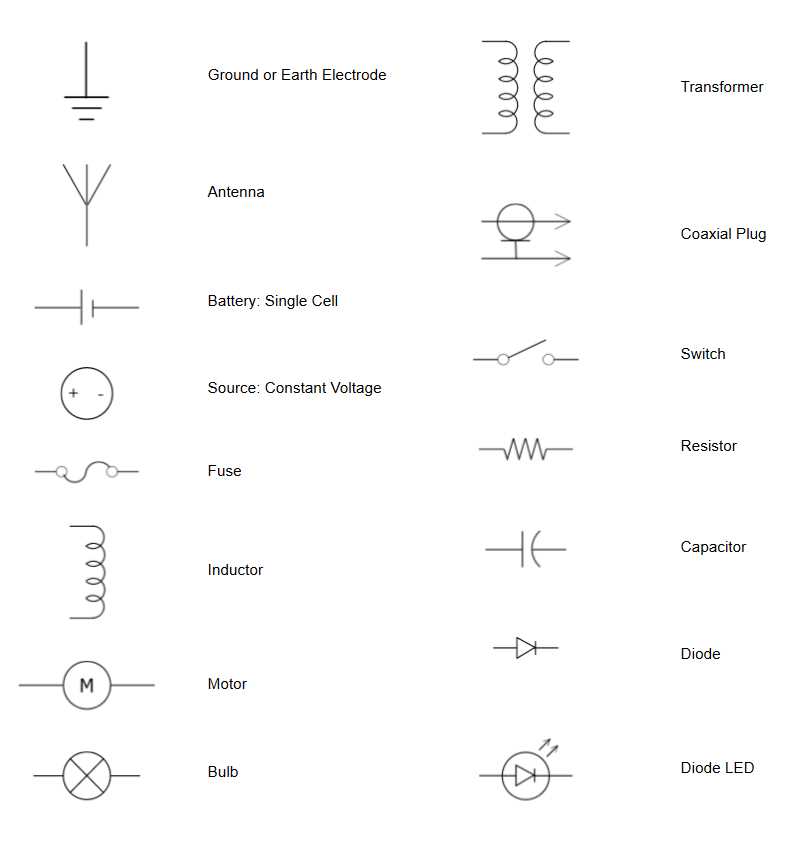
To accurately design or troubleshoot an electrical setup, it’s vital to understand the meaning and application of the various graphical representations. Each one serves to simplify complex relationships between components, making connections easier to visualize and implement. These depictions help avoid confusion, especially when reading or drawing layouts for electrical systems.
One of the most commonly used symbols is the resistor, represented by a zigzag line. This symbol indicates resistance in a path, controlling the flow of current. Understanding where and how to use resistors is important in maintaining the appropriate electrical flow and preventing damage to other components.
Switches and Connectors
The switch symbol is typically a break in a line, indicating the ability to open or close a circuit. Switches are used to control power flow to a device or circuit, allowing users to turn systems on or off. Whether it’s a simple light switch or a more complex system, understanding how to interpret this symbol helps in both designing and troubleshooting.
Another frequently used icon is the capacitor, often shown as two parallel lines with a gap between them. Capacitors store electrical energy and release it when necessary. They are crucial in filtering, smoothing, and stabilizing voltage within a system, especially in power supplies or signal processing circuits.
Power Sources and Grounds
Power sources, represented by a circle with a plus and minus sign, indicate where the energy enters the system. These symbols are typically used to show DC or AC sources and are critical for ensuring that the flow of energy is routed to the appropriate parts of the system. Similarly, ground symbols, shown as downward lines forming a triangle, are essential for safety and stability, preventing excess energy buildup.
By mastering the interpretation of these graphical symbols, you can easily analyze and assemble electrical networks. Whether for educational purposes, repairs, or new installations, the correct use of these icons ensures systems function properly and safely.
Understanding Common Electrical Symbols in Circuit Diagrams
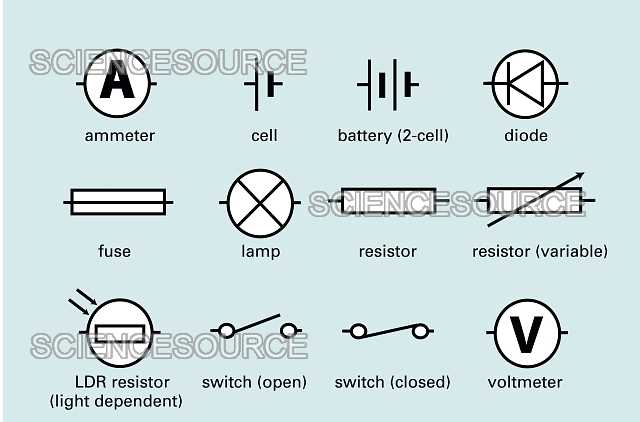
To interpret and build effective electrical systems, it’s necessary to know the key graphical representations used. These depictions allow for quick identification of various components, ensuring correct installation and maintenance. Start by familiarizing yourself with the most common ones used in schematics.
The resistor symbol, often drawn as a zigzag line, represents a component that resists the flow of current. It is used to control current levels, and knowing its position helps ensure voltage and current are regulated within safe limits.
- Capacitor: A pair of parallel lines with a gap between them, this part stores and releases electrical energy to stabilize voltage.
- Switch: A break in a line, indicating a component that can open or close the path of current flow.
- Ground: Represented by a downward-pointing triangle with horizontal lines, it ensures that any excess current is safely directed away from the system.
Familiarizing yourself with these basic markings will greatly improve your understanding and troubleshooting capabilities. By identifying each component, you can plan layouts more effectively and make sure all parts are functioning as intended.