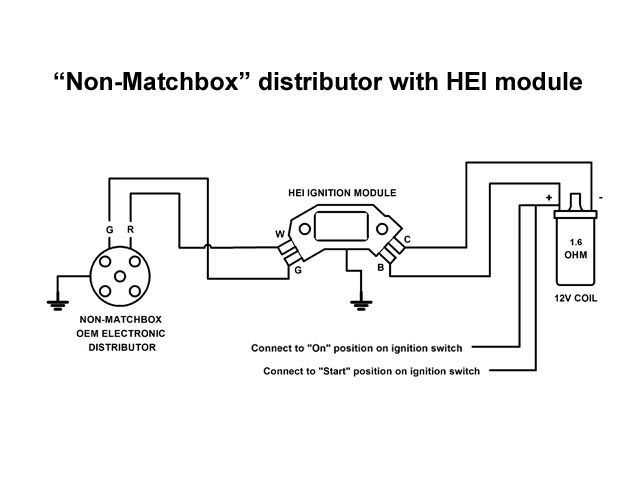
Connect a full 12-volt ignition supply directly to the BAT terminal on the ignition unit cap. This terminal feeds the internal coil and control module. Use a switched source from the ignition key, not a resistance line used on older breaker point systems. Voltage at this terminal should remain close to battery level during engine cranking and idle.
The TACH terminal provides a pulse signal for the tachometer. A single conductor runs from this post to the gauge input on the dashboard. Each ignition pulse generated by the internal module produces a voltage spike that the tachometer converts into engine speed readings measured in revolutions per minute.
The ignition assembly combines coil, trigger module, and rotor under one cap. Power entering the BAT terminal flows into the module and coil windings. The module switches the primary coil circuit on and off using signals from the magnetic pickup inside the housing. This rapid switching produces high voltage that travels through the rotor to each spark plug terminal.
Ground continuity between the engine block and the ignition housing must remain solid. The module relies on this path for proper switching. Loose mounting bolts or corrosion at the base of the unit can interrupt the return path and cause misfire, weak spark, or complete ignition loss.
Use 12-gauge copper conductors for the main ignition supply lead. Thinner cable increases resistance and reduces voltage at the coil during high load. Secure the connection with a crimped spade terminal that fits tightly on the BAT post to prevent vibration-related disconnection.
HEI Distributor Wiring Diagram with Coil Power Tach Lead and Ignition Module Layout
Connect a switched 12-volt ignition supply directly to the BAT terminal on the cap assembly. Voltage should measure between 11.5 and 12.6 volts during engine operation. Avoid resistance lines used with older breaker point systems; reduced voltage weakens spark output from the internal coil pack.
The TACH terminal provides a pulse signal used by engine speed gauges. Run a single insulated lead from this post to the tachometer input. Each ignition event creates a rapid voltage spike produced by the control module, allowing the gauge to calculate revolutions per minute based on pulse frequency.
Internal Coil Power Path
Battery voltage enters through the BAT terminal and flows into the internal coil primary winding mounted inside the cap. The ignition module interrupts the ground side of this circuit thousands of times per minute. Each interruption collapses the magnetic field within the coil and produces a high-voltage surge that travels through the rotor arm to the spark plug terminals arranged around the cap.
The module receives trigger signals from a magnetic pickup located beneath the rotor. As the reluctor wheel rotates with the engine camshaft, its teeth pass the pickup sensor and generate small AC signals. These signals instruct the module when to switch the coil primary circuit on and off.
Ignition Module Terminal Layout
The control unit mounted inside the housing typically uses four connection tabs: two leads from the magnetic pickup and two connections to the coil primary circuit. Correct placement matters. Reversed pickup leads can cause unstable timing or prevent spark generation.
Ground continuity between the housing and the engine block must remain solid. The module relies on the metal base plate as its electrical return path. Rust, paint, or loose mounting screws increase resistance and may produce intermittent ignition failure or weak spark output.
Use 12-gauge copper conductor for the ignition supply lead and secure the terminal with a tight female spade connector. Loose contacts create voltage drop under load and may cause hard starting, random misfire, or tachometer fluctuation during acceleration.
HEI Distributor Power Connection to Ignition Switch and 12 Volt Source
Connect the BAT terminal on the ignition cap directly to a switched 12-volt output from the ignition key circuit. Voltage must remain close to battery level both during cranking and engine operation. Use a dedicated lead rather than the resistance line originally used with breaker-point ignition systems, since reduced voltage weakens spark output and may cause misfire at higher engine speed.
Route a 12-gauge copper conductor from the ignition switch “RUN” position to the BAT post on the cap assembly. The circuit should supply constant battery voltage when the key is in RUN and START positions. Measure voltage with a multimeter: 12–12.6 volts with engine off, about 13.5–14.5 volts once the alternator is charging. Install a crimped female spade connector that fits tightly on the terminal to prevent vibration-related power loss.
Avoid sharing this supply line with high-current accessories such as electric fans or fuel pumps. Electrical noise or voltage drop from those loads can interrupt the coil primary circuit controlled by the internal ignition module. If the vehicle previously used a ballast resistor or resistance cable, bypass that section and run a new direct ignition-key feed so the internal coil receives full system voltage at all times.