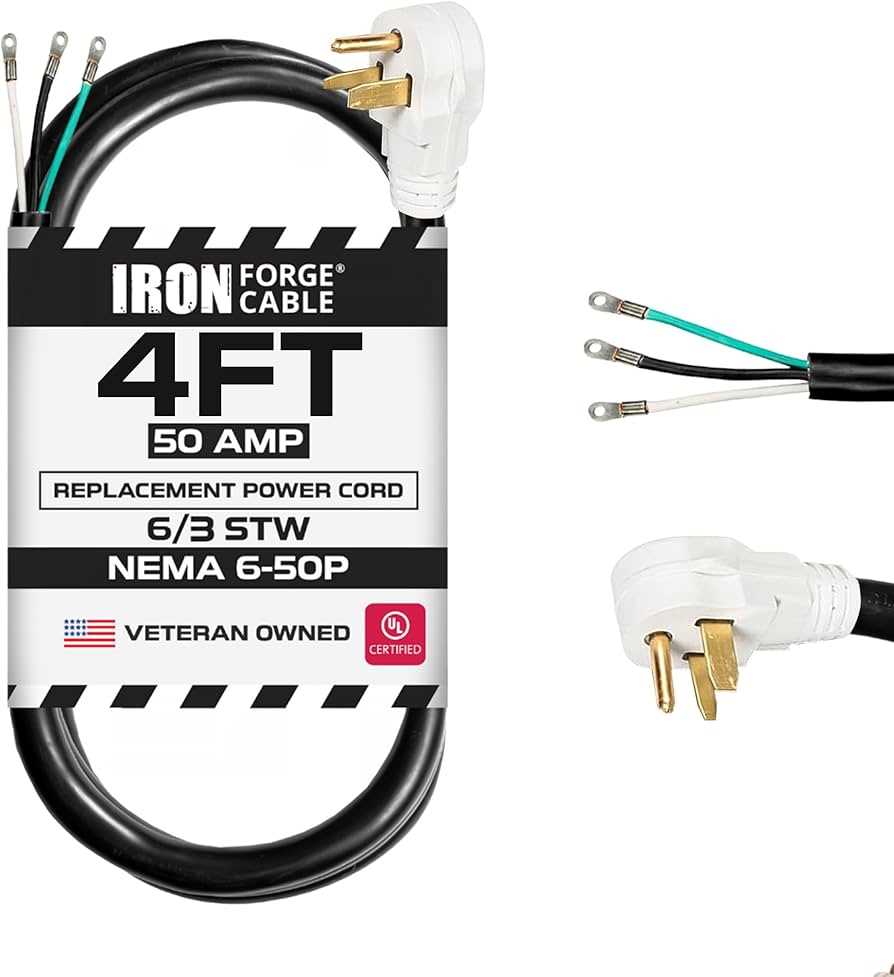
Connect the range cord so that two hot conductors attach to the outer terminals and the neutral conductor attaches to the center terminal. A typical 240-volt kitchen range circuit uses two 120-volt supply lines from the breaker panel. Together they deliver 240 volts for heating elements while the neutral path supports internal 120-volt components such as timers or control boards.
Older range installations commonly rely on a three-conductor power cord connected to a terminal block on the back of the appliance. The left and right terminals receive the hot lines, while the middle terminal carries the neutral return. A bonding strap often links the neutral terminal to the metal chassis, creating a shared return path for the appliance frame.
Use a 40- or 50-amp double-pole breaker in the service panel and a heavy power cable rated for the same current. Copper conductors with 6-gauge or 8-gauge size are typical for residential kitchen range circuits. Tighten terminal screws firmly and route the cord through a strain relief clamp so the connections remain stable during appliance movement.
Verify voltage at the receptacle before attaching the range cord. Measure between the two hot terminals and confirm approximately 240 volts. Measure between each hot terminal and the center connection; each test should show about 120 volts. Correct readings confirm proper supply from the electrical panel and safe operation for the cooking appliance.
3 Wire Stove Plug Wiring Diagram With 240 Volt Range Outlet Connections
Connect the power cord so that the two hot conductors attach to the outer terminals of the range terminal block while the neutral conductor attaches to the center terminal. This layout supplies 240 volts between the two hot lines and 120 volts between each hot line and the neutral connection.
The receptacle used in older kitchen range circuits usually contains three slots arranged in a triangular pattern. The two angled or horizontal openings deliver the hot lines from the electrical panel, while the straight slot connects to the neutral return conductor.
Use a heavy power cable rated for high current loads. Residential cooking appliances normally operate on circuits protected by a 40-amp or 50-amp double-pole breaker. Copper conductors sized 6 AWG or 8 AWG handle this load without overheating.
Attach the neutral conductor to the center terminal on the appliance terminal block. Many ranges include a metal bonding strap linking this terminal to the appliance chassis. This connection allows the frame to share the neutral path used by internal 120-volt components such as clocks, lights, and electronic controls.
The two hot conductors connect to the outer terminals labeled L1 and L2. Each line carries approximately 120 volts relative to neutral, while the potential between them measures about 240 volts.
Install a strain-relief clamp where the cord enters the appliance housing. This clamp prevents movement of the cable from loosening terminal screws during cleaning or repositioning of the range.
Confirm voltage before connecting the appliance. Measure across the two hot terminals at the receptacle and verify about 240 volts, then measure from each hot terminal to the neutral slot and confirm roughly 120 volts. These readings confirm correct supply from the service panel.
Terminal Identification on a 3 Prong Range Outlet With Two Hot Lines and Neutral
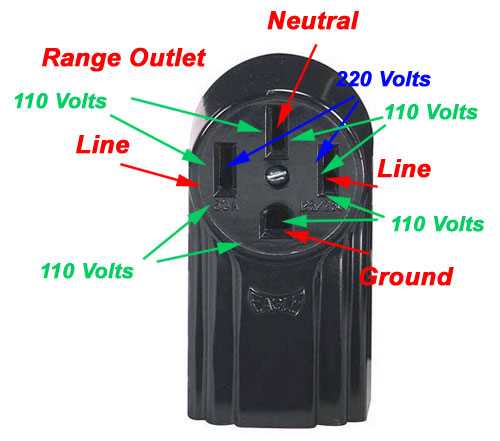
Identify the center slot as neutral and the two outer slots as hot conductors before connecting a range power cord. This configuration supplies both 240 volts for heating elements and 120 volts for internal components.
Outlet Slot Identification
- Left slot – hot line L1 from the breaker panel
- Right slot – hot line L2 from the breaker panel
- Center straight slot – neutral return conductor
Voltage between the two outer slots measures about 240 volts. Each outer slot measured against the center slot should show approximately 120 volts. These measurements confirm correct electrical supply from the service panel.
Verification With a Multimeter
- Set the meter to AC voltage above 250 volts
- Place probes on both outer terminals and confirm around 240 volts
- Measure between the left terminal and center slot and confirm about 120 volts
- Measure between the right terminal and center slot and confirm about 120 volts
Correct readings indicate that both hot conductors come from a double-pole breaker delivering split-phase power.
Terminal screws inside the receptacle connect these slots to heavy copper conductors from the electrical panel. Tighten these screws firmly and verify that insulation remains outside the clamp area.
After confirmation of terminal positions and voltage values, attach the range power cord so its two hot conductors align with the outer terminals and the neutral conductor attaches to the center terminal.