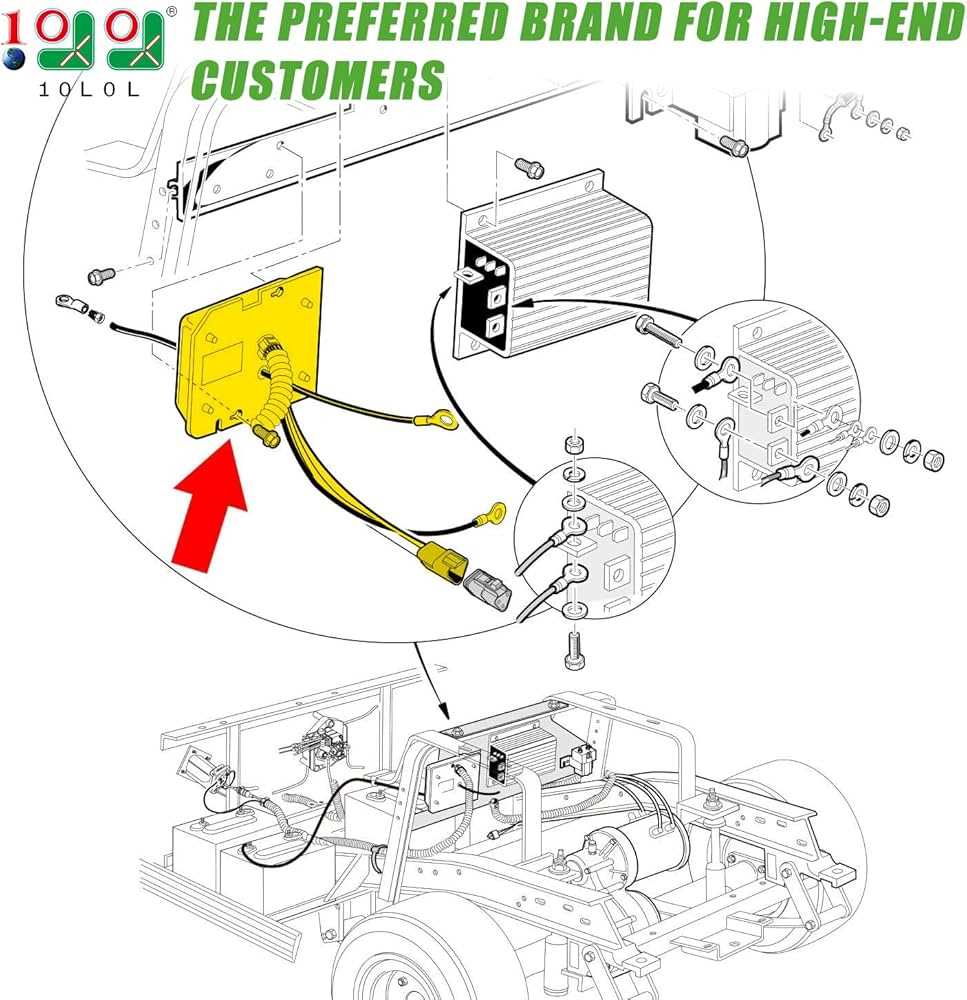
Connect the six traction batteries in a series chain so the total system output reaches about 48 V. Each battery typically provides 8 V. Link the positive terminal of one unit to the negative terminal of the next until all six form a continuous chain. The remaining free negative terminal becomes the main system ground, while the final positive terminal feeds the traction control unit.
Route the main positive cable through the solenoid contactor before it reaches the electronic controller. This component acts as the high-current switch controlled by the key switch and pedal microswitch. When the driver presses the accelerator, the contactor closes and allows current from the battery pack to reach the controller and traction motor.
The controller regulates motor speed using pulse-width modulation. Heavy gauge cables connect the controller to the motor terminals labeled A1 and A2 or U and V depending on motor type. Use cables rated for at least 4 AWG to handle high current that can exceed 300 A during acceleration.
Low-current control lines run from the key switch, forward-reverse selector, and pedal switch to the controller logic inputs. These smaller conductors manage system activation and direction selection while the large battery cables deliver traction power. Keeping control lines separated from high-current cables reduces electrical noise and helps maintain stable controller operation.
Club Car Precedent 48 Volt Wiring Diagram Battery Pack Controller and Solenoid Layout
Connect six 8-V traction batteries in a series chain so the system output reaches about 48 V. Link the positive terminal of each battery to the negative terminal of the next until the chain is complete. The remaining negative post becomes the main system ground, while the remaining positive post feeds the high-current path toward the contactor and electronic controller.
Use heavy copper cables rated between 4 AWG and 6 AWG for the main power path. Electric golf carts can draw more than 250–300 A during acceleration or hill climbing, so undersized conductors cause overheating and power loss. Keep cable runs short and tighten terminal nuts to around 110–120 in-lb to prevent resistance buildup.
Battery Pack Power Path
Route the main positive lead from the battery chain to the large terminal on the solenoid. From the opposite large terminal of this contactor, connect another heavy cable to the B+ input of the electronic motor controller. When the key switch and accelerator microswitch activate the coil, the solenoid closes and allows traction current to flow toward the controller.
The controller regulates motor speed through pulse width modulation. This unit rapidly switches current to the traction motor thousands of times per second. Output terminals from the controller connect to the motor armature leads, often labeled A1 and A2 on series motors or U and V on AC drive systems.
Install a fuse or high-current breaker between the battery chain and the solenoid. A common rating ranges from 250 A to 400 A depending on motor and controller configuration. This component protects the electrical system during short circuits or controller faults.
Control and Activation Lines
Low-current conductors activate the solenoid coil. One side of the coil receives battery positive through the key switch. The other side connects to the pedal microswitch and controller logic line, which completes the activation path when the accelerator is pressed.
Forward and reverse selection is handled by a direction switch connected to the controller signal pins. These control lines determine motor rotation direction without reversing the entire battery pack polarity.
Separate signal cables from high-current battery leads by several centimeters and avoid running them in parallel over long distances. This layout reduces electromagnetic interference that could affect controller inputs or throttle signals.
48 Volt Battery Pack Connection Order in Club Car Precedent
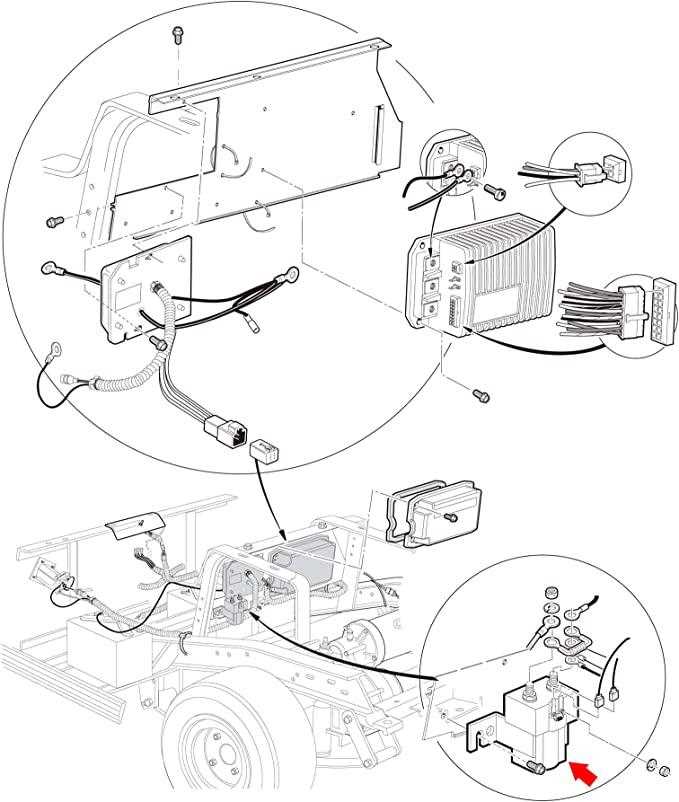
Link six traction batteries in a strict series chain so total output reaches about 48 V. Each unit normally provides 8 V, and the correct sequence connects the positive terminal of one battery to the negative terminal of the next. This arrangement sums the voltage of all batteries while keeping current capacity unchanged.
Follow this connection order from the system ground side toward the main positive output:
- Battery 1 negative terminal becomes system ground
- Battery 1 positive connects to Battery 2 negative
- Battery 2 positive connects to Battery 3 negative
- Battery 3 positive connects to Battery 4 negative
- Battery 4 positive connects to Battery 5 negative
- Battery 5 positive connects to Battery 6 negative
- Battery 6 positive becomes the main pack output feeding the traction system
Main Power Leads
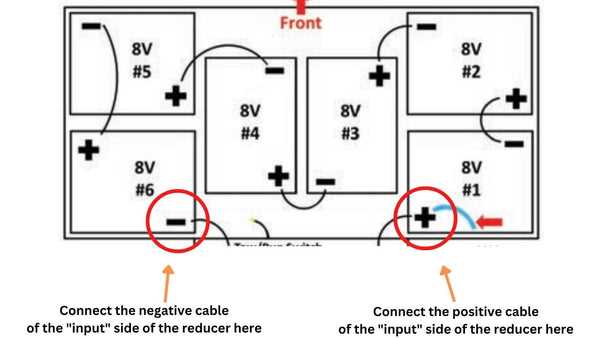
Attach the large negative cable from the traction motor controller to the first battery negative terminal. Connect the large positive cable to the final battery positive terminal through the solenoid and main fuse. These two endpoints represent the full pack voltage available to the propulsion electronics.
Connection Hardware and Cable Size
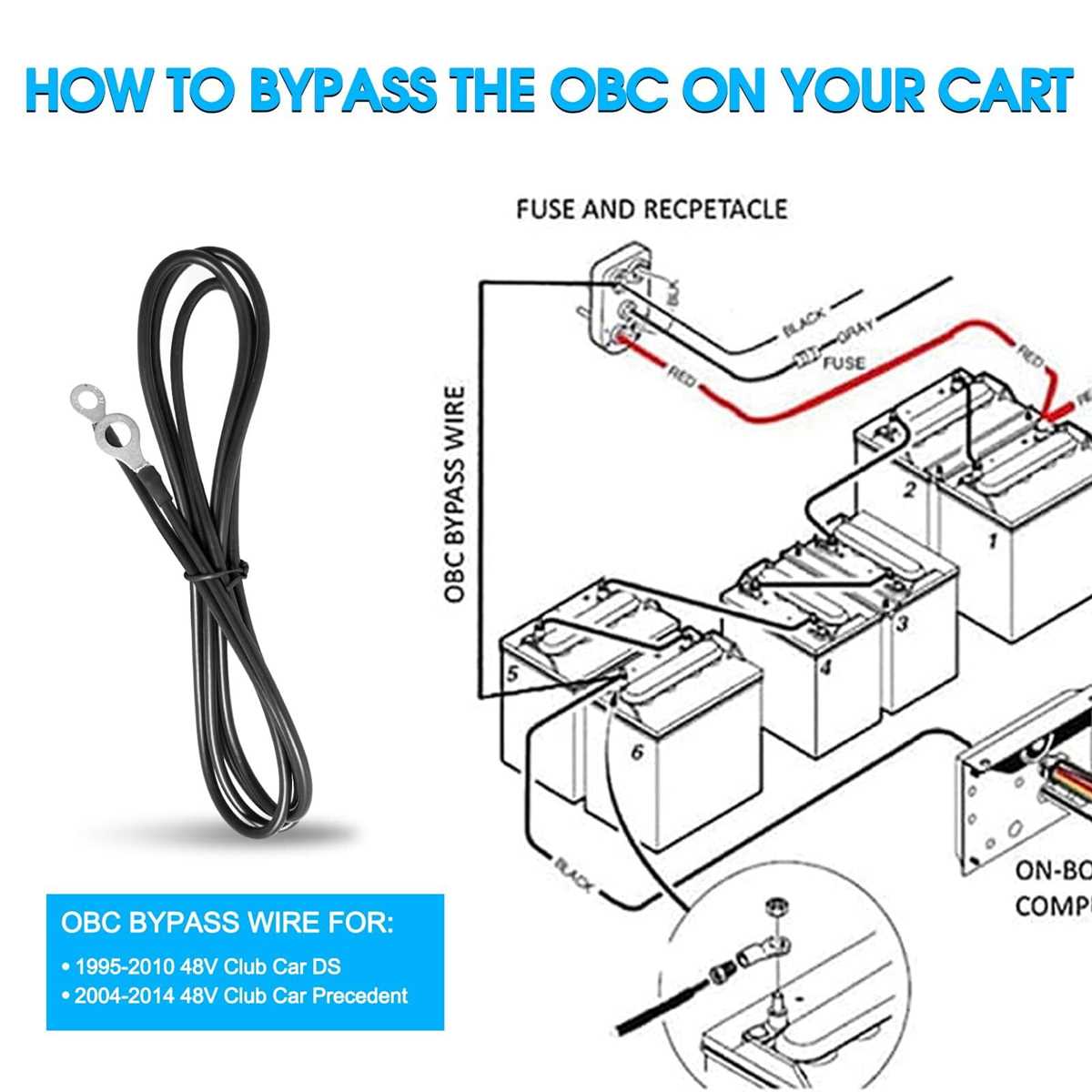
Use copper conductors between 4 AWG and 6 AWG with ring terminals rated for high current. Tighten battery terminal nuts to manufacturer torque values around 110–120 in-lb and clean posts before installation. Corrosion or loose terminals increase resistance and produce heat under heavy load.