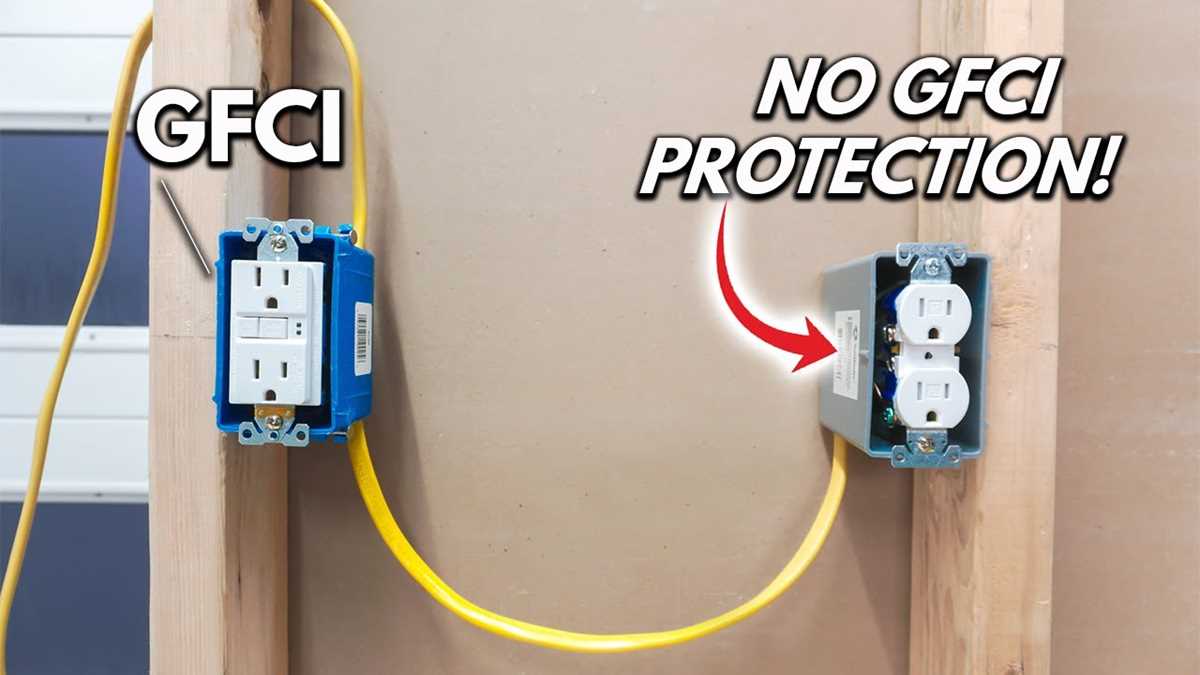
Connect the incoming power pair to the terminals marked LINE on the protective receptacle body; this step ensures the internal safety mechanism monitors current imbalance and cuts power within milliseconds during leakage. The hot conductor usually attaches to the brass-colored screw, while the neutral conductor connects to the silver screw. The grounding conductor must be secured to the green terminal bonded to the metal frame or grounding bus.
If additional receptacles downstream need shock protection, route their conductors through the terminals labeled LOAD. Power then flows through the protective device before reaching the next points on the branch circuit. A common installation error involves placing the supply pair on the LOAD side; this prevents the protective unit from energizing and the reset button will not latch.
Inside a standard wall box, maintain clear conductor identification: black or red for phase, white for neutral, and bare or green for grounding. Strip roughly 12–15 mm of insulation to create a firm clamp under terminal screws. Loose connections raise resistance and heat buildup, which may trigger nuisance trips or degrade contacts.
After installation, press the RESET control to energize the receptacle, then activate the TEST control. The device should immediately disconnect power; a plug-in tester or small lamp confirms the interruption. If power remains present, recheck conductor placement on LINE and LOAD terminals and verify grounding continuity.
Connection Layout for a Residual-Current Protected Receptacle
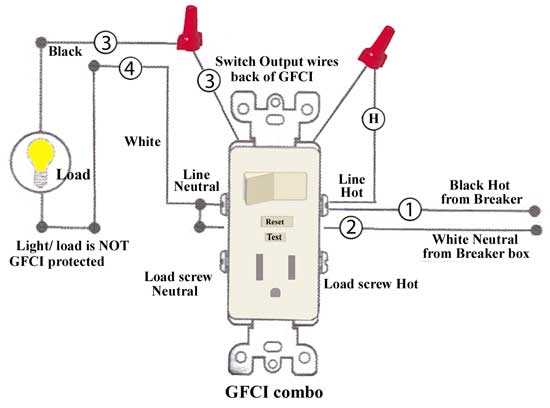
Cut power at the service panel and verify zero voltage with a tester before touching conductors. Attach the incoming phase conductor to the brass terminal marked for supply and the neutral to the silver terminal beside it. The bare or green grounding conductor must be fixed to the green screw connected to the metal yoke. Tighten terminal screws to roughly 14–18 lb-in to prevent loose contacts that lead to overheating.
Supply and Downstream Terminals
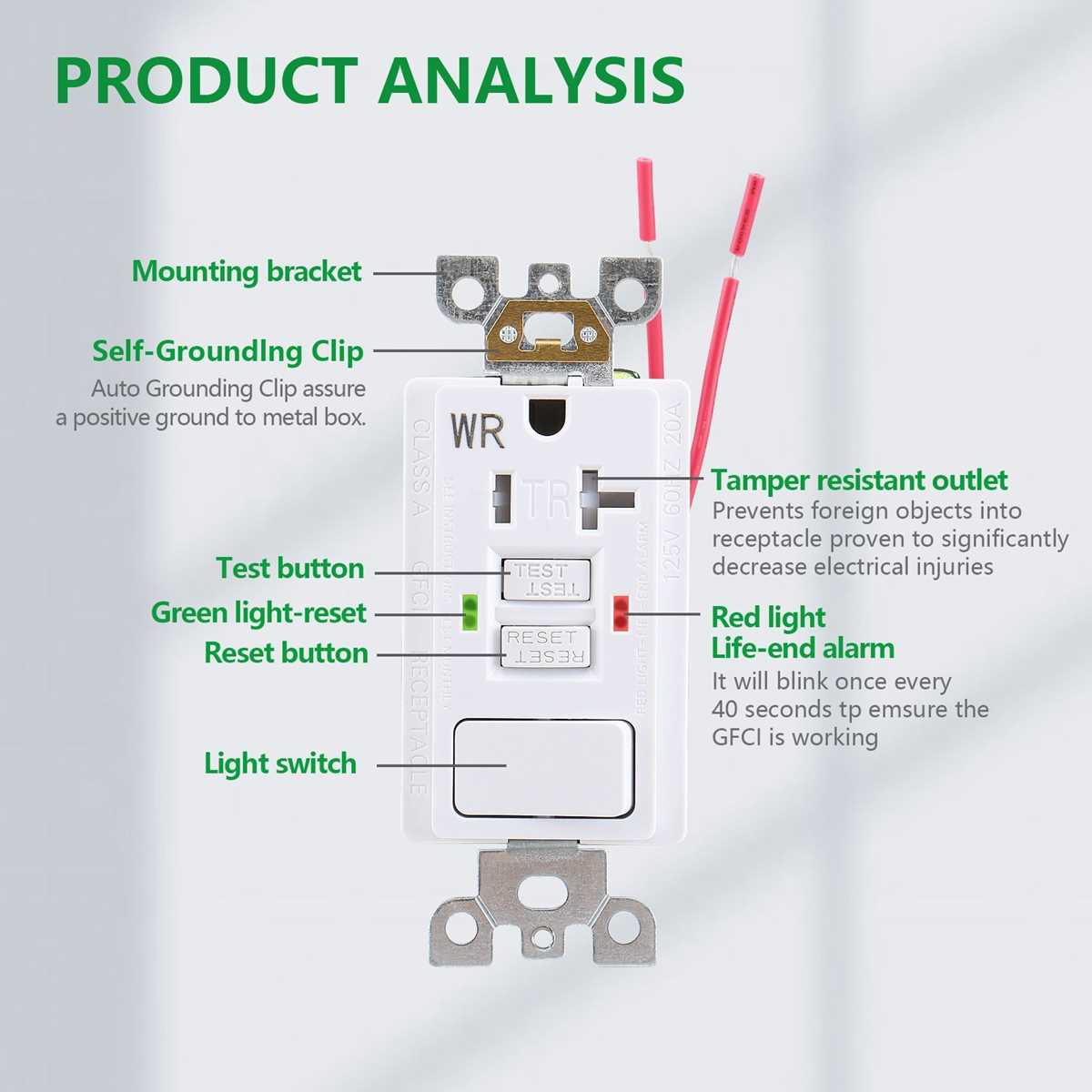
Devices of this type include two terminal pairs: one labeled for incoming power and another for downstream protection. If additional receptacles must receive leakage protection, route their phase and neutral conductors to the downstream pair. Leave these terminals unused when protection is required only at a single location. Mixing supply and downstream conductors disables protective tripping and creates a false sense of safety.
Use 12 AWG copper conductors on a 20 A branch circuit or 14 AWG on a 15 A circuit, matching the breaker rating in the distribution board. Strip insulation to about 16 mm (5/8 in). Insert straight conductors under clamp plates when present; wrap clockwise around screw posts if the device uses traditional terminals. Copper must sit fully beneath the screw head without exposed strands.
Mounting and Testing
Fold conductors carefully into the wall box, keeping the grounding conductor toward the rear. Secure the receptacle frame with mounting screws so the face sits flush with the wall surface. After restoring power, press the “TEST” button; the device should trip and cut power immediately. Press “RESET” to restore service. A plug-in tester showing correct polarity confirms phase-neutral placement and grounding continuity.
For bathrooms, kitchens, garages, and exterior circuits, place this protective receptacle at the first position in the branch line so every following receptacle receives leakage protection through the downstream terminals. Mark protected receptacles with the supplied labels stating that they are guarded by upstream leakage protection.
Periodic testing keeps the protection functional. Press the test button once per month and after any electrical work on the circuit. Failure to trip indicates internal mechanism wear or incorrect conductor placement; replacement of the device is recommended rather than repair.
How to Identify Line and Load Terminals on a GFCI Outlet Before Wiring
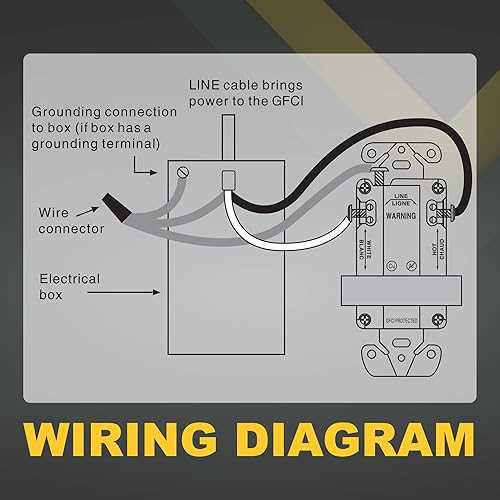
Disconnect power at the breaker and examine the protective receptacle body: the incoming supply terminals are almost always labeled “LINE” and positioned at the lower screw pair under a small factory sticker. Remove that sticker only if downstream protection is planned. The supply conductors from the electrical panel attach to these screws; attaching them to the wrong pair prevents the protection mechanism from resetting. Most units also use color coding–brass for the hot conductor and silver for neutral. The grounding point is a green screw connected to the metal strap. If markings are unclear, inspect the molded plastic next to the terminals; manufacturers typically emboss the labels directly into the housing. A non-contact voltage tester can confirm which cable carries power once the circuit is briefly re-energized for verification.
Physical Indicators on the Device
- “LINE” text molded into the plastic near the lower screw pair.
- A temporary tape or sticker covering the upper terminals.
- Brass screw = hot conductor connection.
- Silver screw = neutral conductor connection.
- Green screw = equipment grounding conductor.
How to Distinguish the Downstream Terminals
- Locate the pair labeled “LOAD” on the upper side of the device body.
- Check for a factory seal or warning label covering these screws.
- Trace the cable: conductors leading to additional receptacles or fixtures attach here.
- Use a multimeter to identify which cable becomes energized when the breaker is switched on.
The downstream pair distributes shock protection to additional receptacles on the same branch. If only a single protected receptacle is needed, leave those screws unused and keep the sticker in place. Many installation errors occur when the supply cable is attached to the upper terminals; the reset button will refuse to latch and the device appears defective. Verifying cable origin inside the box prevents this mistake: the feed from the panel typically enters the box alone, while the continuation cable leaves toward the next device. Matching the incoming hot and neutral to the lower terminal pair ensures correct operation of the protection circuitry.