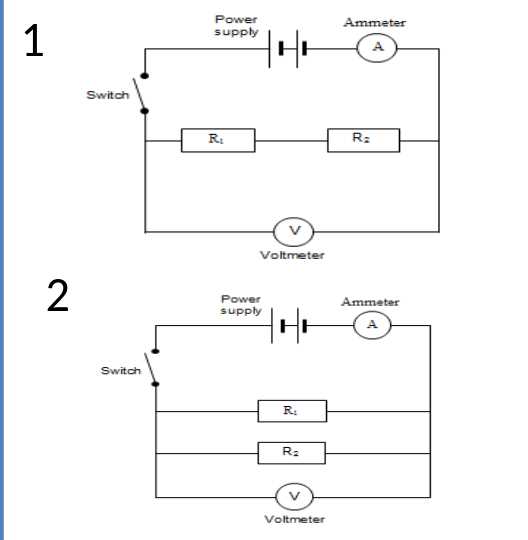
Place the current meter in series along the main supply path so all charge flow passes through its internal shunt. In a typical laboratory setup powered by a 6–12 V DC source, the current indicator sits between the positive terminal of the battery pack and the branching node that feeds multiple loads such as lamps or resistors.
The potential difference meter connects across a load branch, not along the main path. Attach its probes to both terminals of a resistor or lamp. This configuration allows direct reading of potential difference across that component while charge flow continues through other branches of the network.
In a multi-branch electrical network, each load receives the same potential difference from the source. For example, two 10-ohm resistors connected to a 9-volt battery each experience approximately 9 V across their terminals. The total charge flow measured by the current indicator equals the sum of branch currents, which follow Ohm’s law for each resistor.
Use low-resistance leads for the current indicator path so measurement accuracy remains high. The potential difference meter should have high internal resistance, typically above 10 megaohms in digital instruments, which prevents noticeable influence on the load branch.
Before powering the setup, verify polarity on both measuring instruments. The red lead connects to the positive side of the source or component terminal, while the black lead connects to the return path. Correct orientation prevents negative readings and protects analog meters from needle deflection in the wrong direction.
Parallel Circuit Diagram With Ammeter in Series and Voltmeter Across the Load
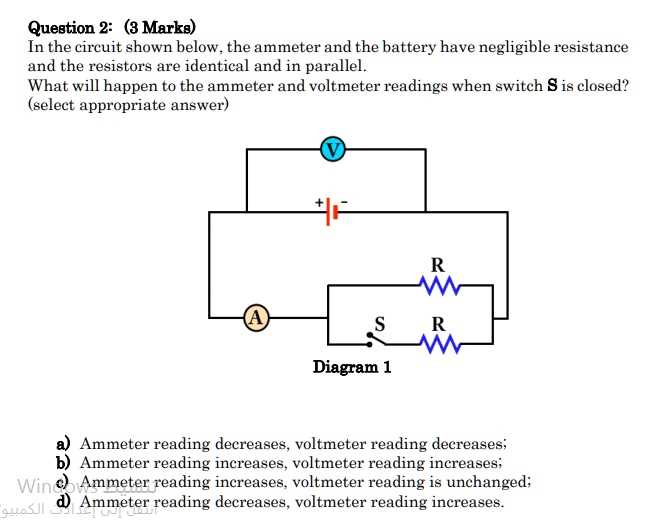
Insert the current meter directly in the main supply line between the power source positive terminal and the branching node feeding multiple loads. This placement forces the entire flow of charge through the measuring device, allowing the instrument to display total current drawn by all connected branches.
Current Measurement in the Main Line
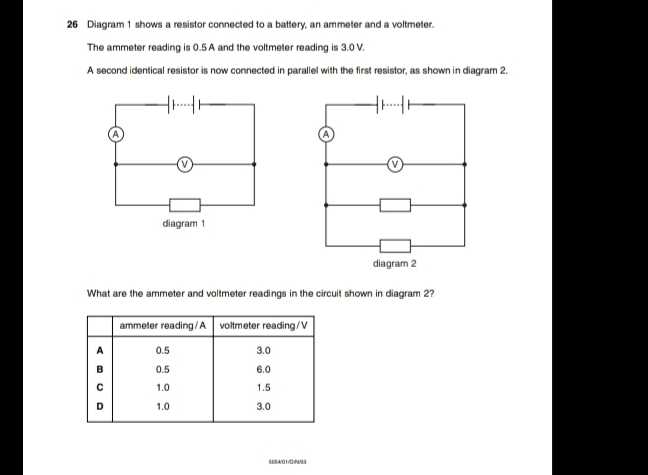
Use short, low-resistance leads between the power source, the current meter, and the node where branches split. For example, in a 9-volt laboratory setup containing two resistors rated at 10 ohms each, the total current measured in the main path approaches 1.8 amperes. Each branch then carries roughly 0.9 amperes because both loads receive the same potential difference.
Potential Difference Across the Load
Attach the voltage measuring instrument across the terminals of a selected resistor or lamp. Its probes connect to both ends of that component while the rest of the network remains untouched. Digital devices normally present internal resistance above 10 megaohms, preventing noticeable influence on the branch being observed.
Confirm polarity before energizing the setup. The red probe attaches to the higher potential side of the load, while the black probe connects to the return path. After power is applied, the current indicator shows total flow from the source, while the voltage meter displays the potential difference present across the chosen component.
How to Place an Ammeter in a Parallel Circuit to Measure Total and Branch Current
Insert the current meter directly into the main supply line between the power source positive terminal and the node where multiple load paths split. This location forces all moving charge through the instrument, allowing direct observation of total current drawn from the source.
Measuring Total Current
Break the main conductor leaving the power source and connect the meter in series between the two ends. For example, in a setup powered by a 12-volt battery feeding three resistors rated at 30 ohms each, the total current measured at the main line approaches 1.2 amperes. Each branch receives the same potential difference, while the total value equals the sum of currents flowing through individual loads.
Measuring Current in Individual Branches
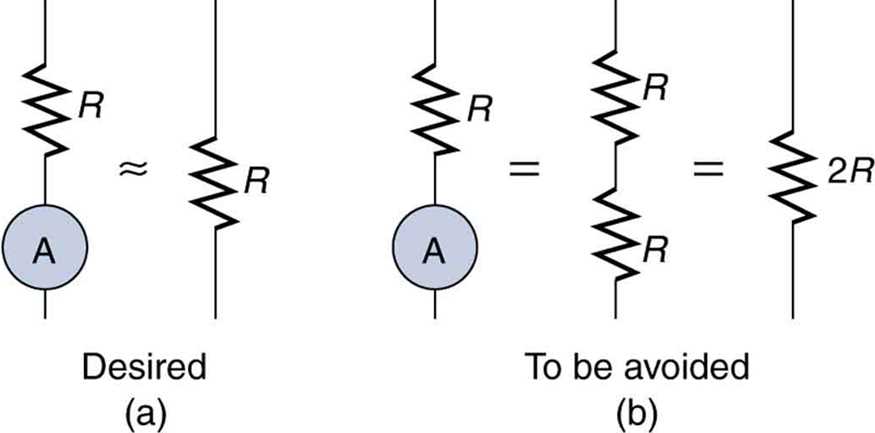
To observe current in one branch only, disconnect the conductor feeding that load and insert the measuring device in series along that single path. The rest of the network remains untouched. If one branch contains a 30-ohm resistor supplied by 12 volts, the instrument should display about 0.4 amperes according to Ohm’s law.
Use thick, short leads for this instrument connection because its internal resistance remains extremely low, often below 0.1 ohm. Poor connections increase resistance and distort readings. Confirm polarity by attaching the red terminal toward the positive side of the source and the black terminal toward the return path.