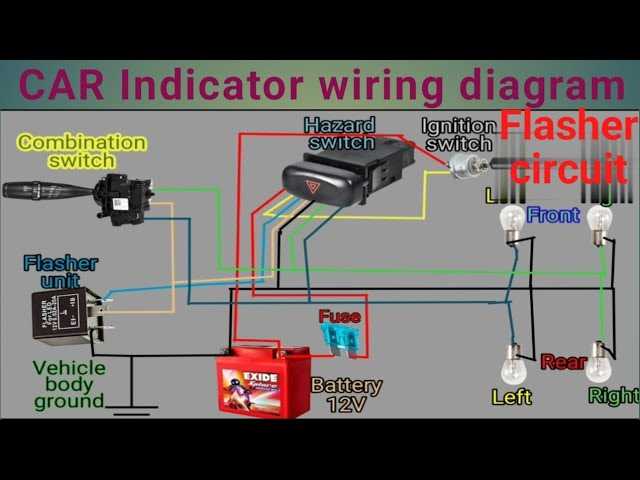
To correctly connect an indicator for your project, begin by selecting the appropriate components. A typical setup requires a light source, such as an LED, along with resistors to control current flow and prevent damage to the components. Use a current-limiting resistor in series with the LED to ensure it operates within its safe voltage and current range. This will prevent overdriving the LED and extending its lifespan.
Next, carefully plan the connections between the power source and the light-emitting element. The polarity of the LED is important, so always ensure that the positive leg (anode) is connected to the higher potential side of the power source, while the negative leg (cathode) connects to the ground or lower potential side. Incorrect polarity can prevent the LED from lighting up or even damage the component.
For higher-voltage applications, it’s necessary to integrate additional components like a voltage regulator or a transistor to handle the increased load. This step is particularly important in larger systems or when multiple lights are used. A switch should also be included to control the on/off state of the light, adding convenience and efficiency to the setup. Make sure all connections are insulated properly to avoid accidental shorts or component failure.
Indicator Circuit Wiring Setup
Start by selecting a suitable light source, such as an LED or bulb, based on your project’s voltage and current requirements. For LEDs, choose one with a forward voltage rating slightly below the supply voltage to prevent overloading. Always pair the light with a current-limiting resistor in series to regulate the flow and protect the component. This resistor value can be calculated using Ohm’s Law, taking into account the LED’s forward voltage and the power supply’s output.
Connecting the Components
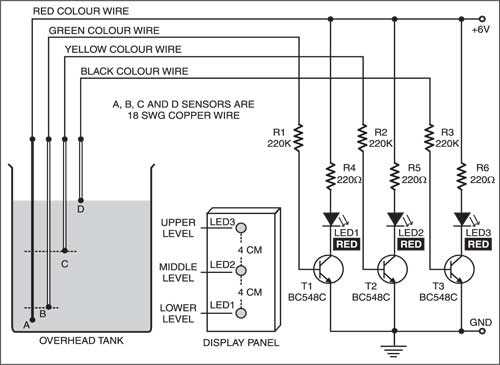
Next, connect the anode (positive) leg of the LED to the positive side of the power source. The cathode (negative) leg should be connected to the ground or the lower potential side. Ensure all connections are firm and properly insulated to avoid short circuits. If you’re dealing with multiple LEDs or other light sources, consider using a parallel setup, but ensure each LED has its own current-limiting resistor to prevent uneven current distribution.
Adding Control Elements
To control the light, include a switch in the system. This allows you to turn the light on and off without disrupting the rest of the system. A simple SPST (Single Pole Single Throw) switch is enough for most low-voltage applications. For higher voltage or more complex setups, use a relay or transistor to act as an intermediary between the power source and the light. This ensures safe operation and protects sensitive components.
If you’re working with higher loads or require more than one light to be powered simultaneously, include a voltage regulator to stabilize the current. This is especially important for ensuring a consistent light output. A voltage regulator ensures that the current remains within the desired range, preventing fluctuations that could lead to inefficient or unsafe operation. For systems with significant power requirements, consider heat dissipation methods like heatsinks to manage the heat generated by the regulator or transistors.
Choosing the Right Components for Indicator Circuits
Start by selecting the light source. If using an LED, ensure it matches your power supply’s voltage. Choose an LED with a forward voltage that fits within your system’s voltage output, typically between 1.8V and 3.3V for standard LEDs. For larger applications, incandescent or fluorescent bulbs may be required, depending on the power load.
Next, determine the current-limiting resistor. This component is necessary to protect the light source from excessive current. Calculate the resistor value using Ohm’s Law: R = (V_supply – V_LED) / I_LED. For example, with a 5V supply and a 20mA LED, the resistor should be 150 ohms. Choose a resistor with a power rating that exceeds the expected load to avoid overheating.
If you plan to control multiple light sources, opt for a transistor or MOSFET to switch the lights on and off. These components can handle higher currents than mechanical switches and are more reliable for continuous operation. Make sure the transistor you choose is rated for the expected current, and ensure it is properly heat-sinked if needed.
- Transistor (e.g., 2N2222 for low-current applications)
- Resistor (calculate based on your load’s specifications)
- Light source (LED, bulb, or other depending on application)
- Power supply (make sure it matches the required voltage and current)
Finally, consider any protective components, such as fuses or diodes for reverse polarity protection. A fuse will protect your system from short circuits, while a diode placed across the load will prevent reverse voltage from damaging the components. Select a fuse with a current rating slightly higher than your maximum expected current to prevent false trips.