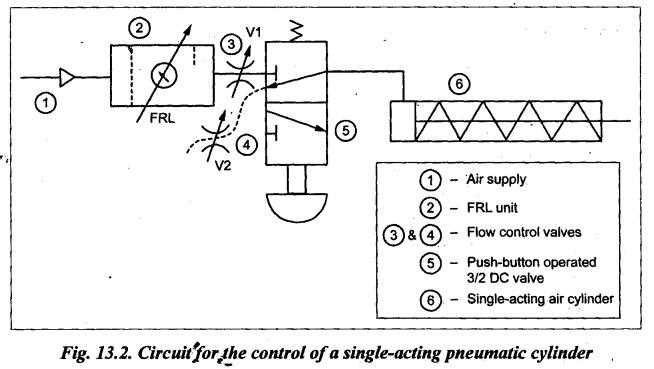
Use a directional spool valve with at least 4 ports and 2 positions to manage the push and pull strokes of the actuator. Ensure the valve’s flow rate matches the bore size of the rod and piston to maintain consistent movement under varying load conditions.
Select tubing with an internal diameter that minimizes pressure drop while allowing sufficient airflow to the actuator. For bore sizes up to 50 mm, 10 mm tubing is recommended, and lengths should not exceed 5 meters to prevent delayed response.
Incorporate flow control fittings on both extend and retract lines to regulate speed. Use needle valves with fine adjustment and include check valves to prevent backflow, ensuring smooth transitions between strokes without sudden jerks or impact.
Mount the actuator securely with alignment brackets to prevent lateral forces on the rod. Misalignment can increase wear on seals and create uneven motion, reducing the lifespan of the assembly. Verify that the rod moves freely under load before connecting to external mechanisms.
Include a pressure relief valve in the supply line set slightly above operational pressure to protect the assembly from spikes. For systems operating at 6 bar, a relief setting around 6.5 bar provides safe operation without compromising motion control.
Flow Layout for Dual Stroke Actuator Setup
Use a four-way, two-position spool valve to manage extension and retraction. Ensure the valve’s flow capacity matches the bore diameter of the actuator; for a 40 mm bore, a valve rated at 200 L/min provides stable operation under moderate load.
Install check valves on both supply lines to prevent backflow during rapid switching. Position the valves close to the actuator ports to reduce lag and maintain consistent stroke timing.
Include adjustable needle valves on each line to fine-tune the movement speed. A retract line setting around 50% of the extend flow allows controlled return without shock, while an extend line set near full flow maintains thrust force for lifting tasks.
- Use reinforced tubing with an internal diameter equal to or slightly larger than the actuator port size.
- Keep tubing lengths under 5 meters to reduce response delay.
- Secure fittings with thread sealant to prevent leaks at higher pressures up to 6 bar.
Mount the actuator with rigid brackets and align the rod carefully. Misalignment increases wear on seals and can cause binding. Verify smooth motion by manually cycling before connecting external loads.
Install a pressure relief device on the supply line set 0.5 bar above operating pressure. This protects against spikes while maintaining consistent stroke force, ensuring both safety and reliable performance over extended use.
Selecting Valves and Actuators for Dual Stroke Assemblies
Choose a spool valve with flow capacity slightly above the maximum requirement of the actuator. For a 50 mm bore with a 100 mm stroke under 5 bar pressure, a valve rated at 250 L/min ensures smooth motion without throttling.
Prioritize actuators with reinforced rods and low-friction seals when handling loads over 50 kg. Stainless steel rods reduce wear and resist corrosion in humid or abrasive environments.
Use solenoid-operated valves for automated systems requiring frequent cycling. Coil voltage should match control power, and response time under 20 ms is recommended for fast stroke applications.
Include manual override options on directional valves to allow maintenance or emergency operation. Lever-type overrides provide immediate control without electrical input.
Check actuator stroke length against operational needs. A mismatch can cause incomplete movement or overextension, increasing wear and reducing reliability. Include mechanical stops if precise positioning is required.
Select valve materials compatible with working pressure and fluid medium. Aluminum or brass valves handle 6 bar air pressure well, while reinforced plastic may suit lighter load applications.
Consider the mounting style of actuators. Foot-mounted units provide stability for horizontal motion, while flange mounts are better for vertical or angled setups. Ensure brackets align the rod to prevent lateral forces.
Install flow control fittings close to actuator ports to regulate speed accurately. Adjustable needle valves allow tuning of extension and retraction independently, maintaining smooth transitions under varying load conditions.