Use separate resistors for each emitter to prevent overcurrent and ensure stable brightness across both outputs. Select resistor values based on supply tension and the forward drop of each diode element.
Consider polarity and common pins carefully when connecting dual-mode elements. Incorrect placement can cause shorting or uneven illumination, particularly in shared-anode or shared-cathode setups.
Test switching methods with low current before full-power operation. Using a multimeter to verify continuity and voltage drop can prevent component damage and allow adjustment of resistor ratings for optimal output.
Plan for thermal management if multiple elements are used in a compact assembly. Even modest heat accumulation can reduce lifespan and change the visual intensity, so spacing and ventilation are critical for reliable operation.
Bi Emitter Light Connection and Control Techniques
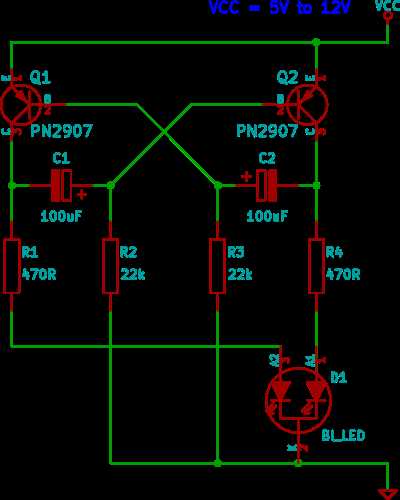
Use independent series resistors for each emitter to maintain consistent brightness and prevent overcurrent. Calculate resistor values based on the supply voltage and the forward voltage drop of each diode element.
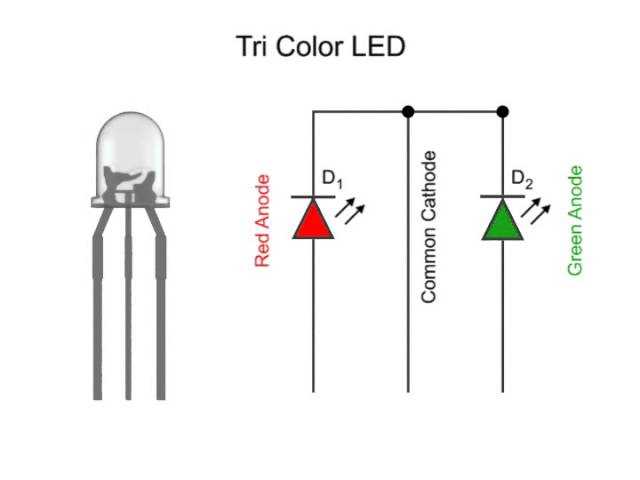
Identify the common pin configuration carefully before connecting multiple emitters. Shared-anode and shared-cathode types require distinct wiring approaches to avoid reverse current and uneven illumination.
Employ pulse-width modulation to adjust intensity and create smooth transitions between the two states. PWM frequency should remain above 100 Hz to eliminate flicker visible to the human eye.
Consider using transistor switches or MOSFETs for higher-current assemblies. Direct control from microcontroller pins may overload the device if the forward current exceeds typical pin ratings, which is usually 20 mA per output.
Testing and Validation
Verify each connection at low current using a multimeter or bench supply. Measure voltage drop and continuity to prevent miswiring and to fine-tune resistor selection, ensuring balanced illumination and safe operation.
Thermal Management
Maintain proper spacing and ventilation when mounting multiple emitters in a single enclosure. Even small amounts of heat can reduce lifespan and alter brightness, so plan for airflow and heat dissipation for consistent performance.
Choosing Light Types and Resistor Ratings for Dual Emitters
Selecting the right emitter type is critical for proper operation. Dual-emitter devices with a shared lead require careful identification of anode or cathode configuration to prevent reverse voltage stress and uneven illumination.
Check the forward voltage of each element individually. Typical red and green segments differ, often with red around 2.0 V and green closer to 3.2 V. This directly influences the resistor selection to maintain uniform brightness.
Calculate series resistor values using Ohm’s law: subtract the forward voltage from the supply and divide by the desired current. For instance, a 5 V source with a 2.0 V red element at 20 mA requires (5-2)/0.02 = 150 Ω.
Use separate resistors for each emitter path to avoid current imbalance. Sharing a single resistor between two different forward voltages often causes one segment to dominate, leading to uneven visual output.
Current Ratings and Safety Margins
Consider the maximum forward current rating of each element. Choose resistors to limit the current below the absolute maximum, typically 20 mA for standard through-hole types. Adding a 10-15% margin extends component lifespan and prevents overheating.
For higher-current applications, include a small capacitor across the supply to stabilize voltage during switching. This prevents momentary brightness spikes that can exceed the emitter’s rating and reduce longevity.
Practical Mounting Considerations
When using multiple dual-emitter components, plan spacing to reduce thermal interaction. Excess heat can alter the forward voltage slightly, affecting brightness balance between segments, particularly in compact panels.
Test each configuration on a breadboard before soldering. Measure the voltage drop across each segment with the series resistor in place to ensure both paths draw the intended current. Adjust resistor values if necessary to achieve balanced illumination for all conditions.