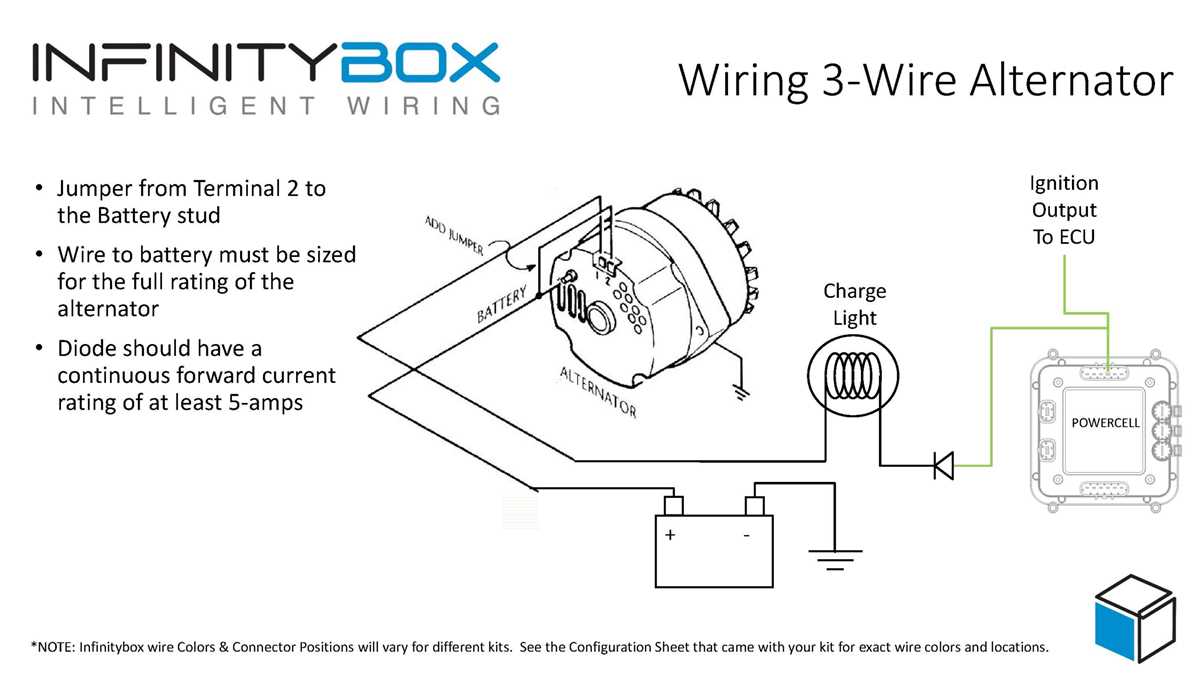
Ensure the main output terminal is securely attached to the positive battery lead to maintain consistent voltage to the vehicle system. Use a ring terminal and a lock nut to prevent loosening from engine vibrations.
Identify the field and sensing terminals before connecting. The field lead controls excitation current, while the sense wire monitors system voltage. Misconnecting these can cause overcharging or insufficient charging.
Route the control wires away from heat sources and moving parts to prevent insulation damage. Keep them secured along the harness with zip ties or protective conduit.
Check for proper grounding on the alternator housing. A poor ground can reduce output efficiency and trigger voltage irregularities across electrical components.
Use a multimeter to verify voltage at the terminals after all connections. Ensure the voltage matches the vehicle specifications and adjust connections if necessary to avoid fluctuations that could damage electronics.
Complete Guide to Connecting an Automotive Alternator
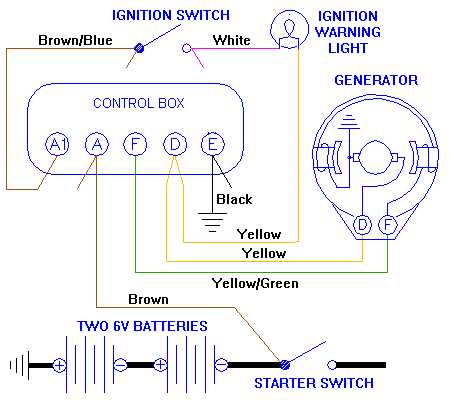
Attach the main output terminal directly to the positive battery post using a heavy-gauge cable and secure it with a lock nut. This ensures stable current delivery to the vehicle electrical system.
Identify the excitation and sense leads before any connections. The excitation lead regulates the magnetic field, while the sense lead monitors voltage for accurate regulation. Misplacement can lead to overvoltage or weak charging.
Route all control cables away from exhaust components and moving parts to prevent heat damage or abrasion. Use protective sleeves or conduit to maintain insulation integrity.
Verify the alternator housing is properly grounded. Connect the chassis ground securely with a clean, bare metal surface to maintain optimal electrical flow and prevent erratic voltage readings.
Check each connection for tightness and corrosion. Loose or oxidized terminals can reduce charging performance and trigger dashboard warning lights.
Use a multimeter to confirm voltage output at the battery after all connections. Expected readings should match the vehicle specifications, typically between 13.8 and 14.5 volts during operation.
Install any protective fuses inline with the main output lead to prevent damage from short circuits. Ensure the fuse rating matches the alternator capacity to avoid electrical faults.
Perform a final inspection of all connections and cable routing. Verify that harnesses are secured with clips or ties, and that no wires are pinched or exposed, ensuring long-term reliability and safety.
Identifying Terminals and Voltage Outputs on the Alternator
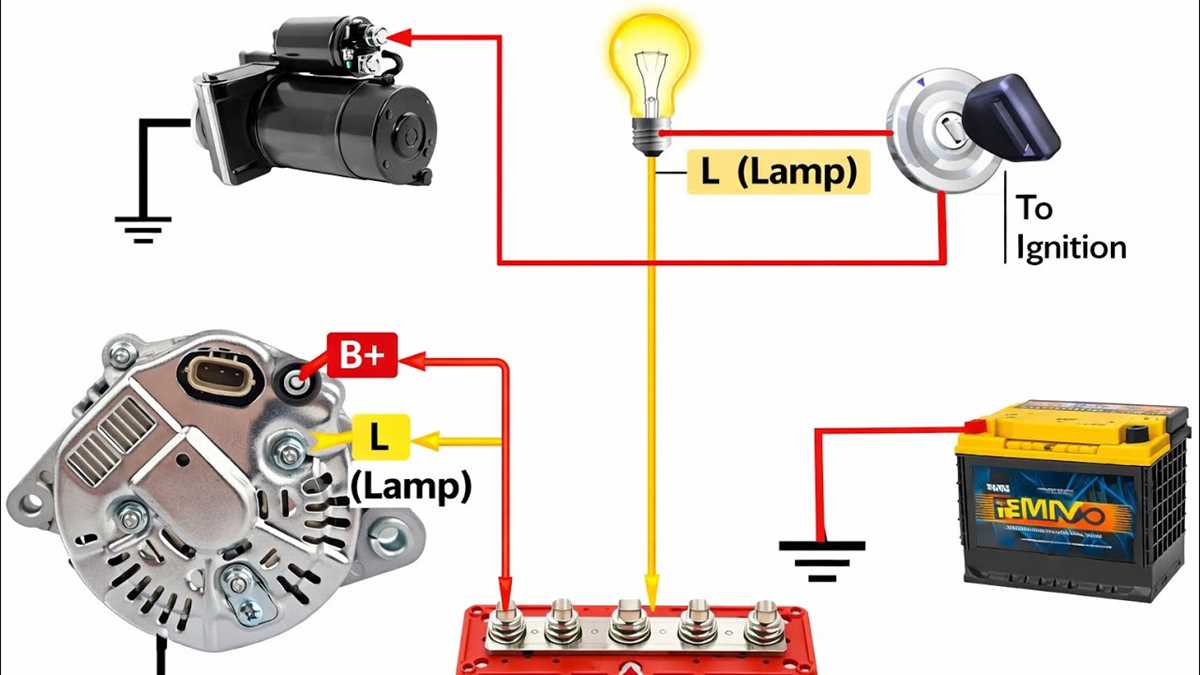
Locate the main output terminal first. This lead delivers the bulk of current to the battery and vehicle circuits. Use a heavy-gauge cable and ensure the connection is free of corrosion for consistent voltage supply.
Identify the field control terminal. This connection regulates the internal magnetic field and directly affects voltage output. Confirm it matches the vehicle specifications before energizing the system.
Check the sense terminal. This wire monitors system voltage and allows the regulator to adjust output accurately. Test with a multimeter to verify proper voltage response at idle and under load.
Inspect the ground connection on the housing. Ensure a clean metal contact to the chassis. Poor grounding can cause fluctuating voltage readings and trigger warning lights.
Measure voltage directly at each terminal before connecting to the battery. Typical readings should range between 13.8 and 14.5 volts during normal operation. Deviations indicate incorrect connections or regulator issues.
Label all leads clearly to avoid cross-connection. Use colored heat-shrink tubing or tags to distinguish between main output, field control, and sensing wires for maintenance and troubleshooting.
Test under varying loads. Activate headlights, ignition, and other electrical accessories while monitoring voltage at the terminals. This ensures consistent output across all operating conditions.
Secure all cables with clamps or ties to prevent movement or vibration contact. Exposed or loose connections can degrade output quality and cause premature component wear.