Connect two 12-volt deep-cycle marine batteries in series to supply a 24-volt propulsion unit used on many fishing boats. Link the positive terminal of the first battery to the negative terminal of the second battery with a short heavy jumper cable. The remaining free negative and positive terminals become the main supply lines that feed the boat propulsion unit.
Use marine-grade copper cables between 6 AWG and 8 AWG depending on distance between batteries and the electric drive unit. Current draw often reaches 40–60 amps during continuous operation and may exceed 80 amps during strong thrust. Thick conductors reduce voltage drop and prevent overheating in long cable runs along the hull.
Install a manual reset circuit breaker rated around 50–60 amps on the positive supply line within about 7 inches of the battery terminal. This device interrupts current during short faults or stalled propeller conditions. Marine safety standards recommend breaker protection close to the energy source to reduce the risk of cable insulation damage.
Route the supply pair toward a bow mounted propulsion unit receptacle or direct connection point depending on the boat configuration. Use corrosion-resistant ring terminals and heat-shrink insulation to protect connections from moisture and salt exposure. Clean terminals and tight mechanical fastening help maintain stable voltage under heavy load.
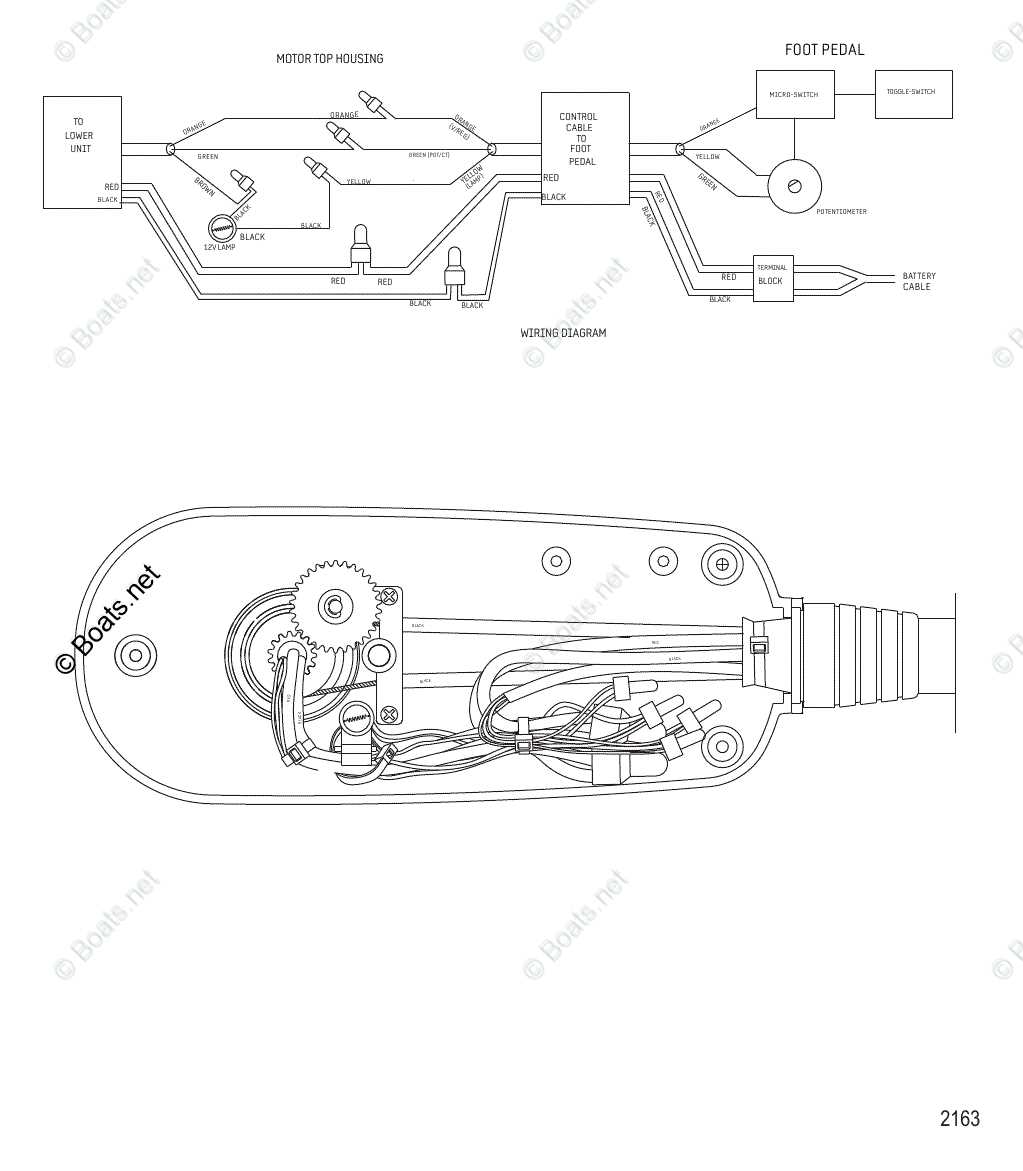
24V Trolling Motor Wiring Diagram With Two Battery Series Connection Guide
Link two 12-volt deep cycle marine batteries in series to supply a 24-volt electric propulsion unit used on many fishing boats. Connect the positive terminal of the first battery to the negative terminal of the second battery with a short jumper cable. The remaining free negative terminal becomes the system ground, while the remaining free positive terminal feeds the propulsion drive.
Use 6 AWG or 8 AWG marine-grade copper cable between the battery set and the electric drive unit depending on distance along the boat hull. Many bow-mounted propulsion drives draw 40–60 amps during normal thrust and may approach 80 amps at full load. A manual reset breaker rated 50–60 amps should be installed on the positive supply line within about 7 inches of the battery terminal to protect the cable path.
Route the positive and negative conductors toward the bow receptacle or direct connection terminals of the electric drive unit. Keep cable runs as short as possible and use sealed ring terminals with heat-shrink insulation to reduce corrosion from water exposure. Tight connections at battery posts and terminal studs maintain stable voltage under heavy propeller load.
How to Connect Two 12V Marine Batteries in Series for a 24V Trolling Motor
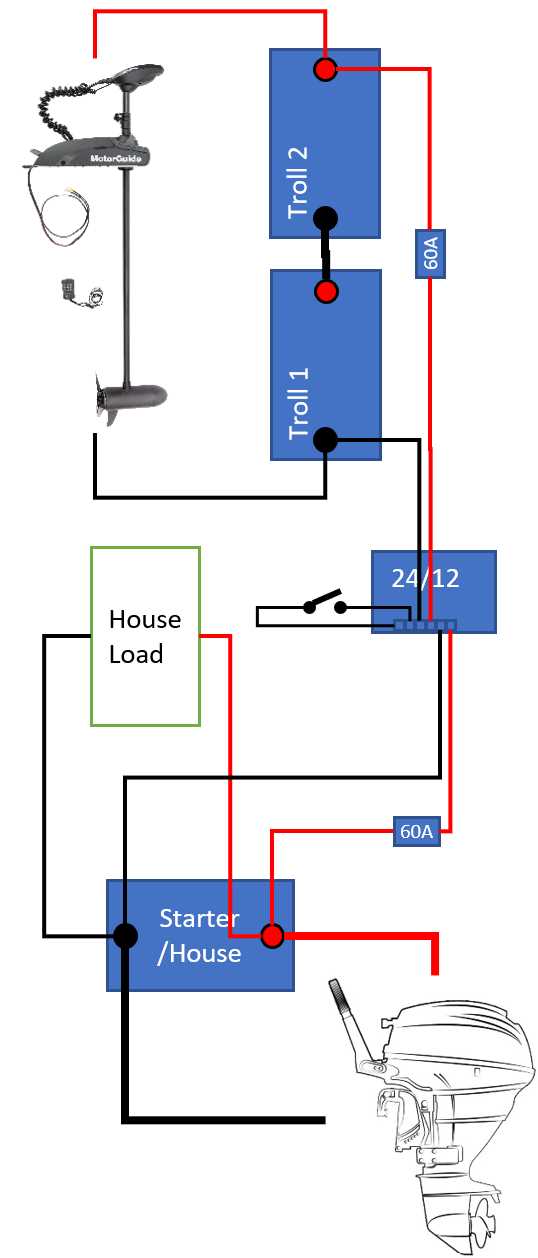
Join two 12-volt deep cycle marine batteries in series so the voltage doubles while capacity in amp-hours remains the same. Use a short heavy jumper cable between the positive terminal of battery one and the negative terminal of battery two. After this link is installed, the remaining free negative post on the first battery becomes system ground and the remaining free positive post on the second battery supplies the propulsion unit at 24 volts.
Recommended connection order:
- Place both batteries close together inside the boat battery compartment
- Install a short jumper cable between positive terminal of battery one and negative terminal of battery two
- Connect the propulsion drive negative lead to the free negative terminal of battery one
- Install a manual reset breaker rated about 50–60 amps on the remaining positive terminal
- Attach the propulsion drive positive lead to the breaker output terminal
Use 6 AWG marine-grade copper conductors if the cable path from batteries to the bow drive exceeds 10–12 feet. Typical thrust units draw 40–70 amps depending on propeller load and speed setting. Seal ring terminals with heat-shrink tubing and tighten battery nuts firmly to maintain stable voltage during heavy thrust.