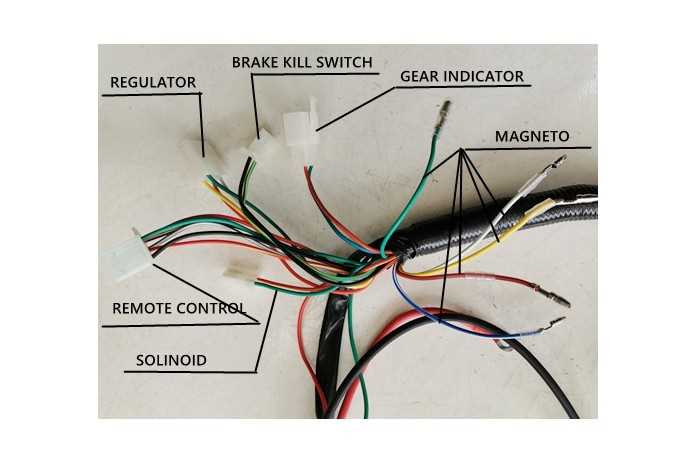
Verify all connector pins and line colors before linking the ignition module to the power source. Mismatched leads can cause blown fuses or permanent damage to the control unit. Use a multimeter to confirm voltage on each terminal, ensuring constant and switched circuits are correctly identified.
Integrate the activation switch with relay outputs carefully, following the unit’s schematic. Separate accessory circuits like lights, horn, and fuel system lines to prevent overloads on the main relay and reduce the risk of short circuits.
Secure all connections with insulated connectors or shrink tubing. Route cables away from moving parts and high-heat areas to prevent wear and accidental disconnection over time.
Test the complete electrical loop before final assembly. Engage the control module multiple times to check for delayed response or false triggering. Label each lead to simplify future troubleshooting and maintenance procedures.
Complete Guide to Electrical Connections and Circuit Layout for 110cc Chinese ATV
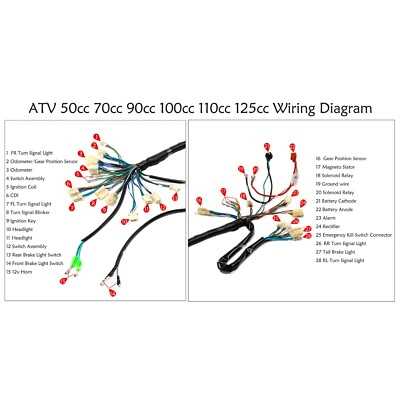
Identify all power and signal lines before connecting the control module to the battery. Red lines typically carry constant voltage, black lines serve as ground, and blue or yellow lines handle ignition or accessory signals. Use a multimeter to confirm each connection.
Inspect connectors for numbered pins or molded labels. Check continuity between each pin and its corresponding circuit to prevent misplacement and potential shorts.
Separate high-current circuits from low-voltage signal leads:
- Battery feed
- Main ignition line
- Accessory circuits including lights and horn
- Fuel pump signal
Route all cables away from heat sources, sharp edges, and moving parts. Protect lines with shrink tubing or split loom to prevent abrasion and accidental disconnection.
Connect relays and fuses according to the schematic. Verify the correct orientation to ensure proper circuit flow and prevent reverse polarity issues. Use insulated connectors for all relay terminals.
Secure the control module with vibration-resistant mounts to maintain stable connections during operation. Loose mounts can result in intermittent faults or false triggers under rough conditions.
Testing and Verification
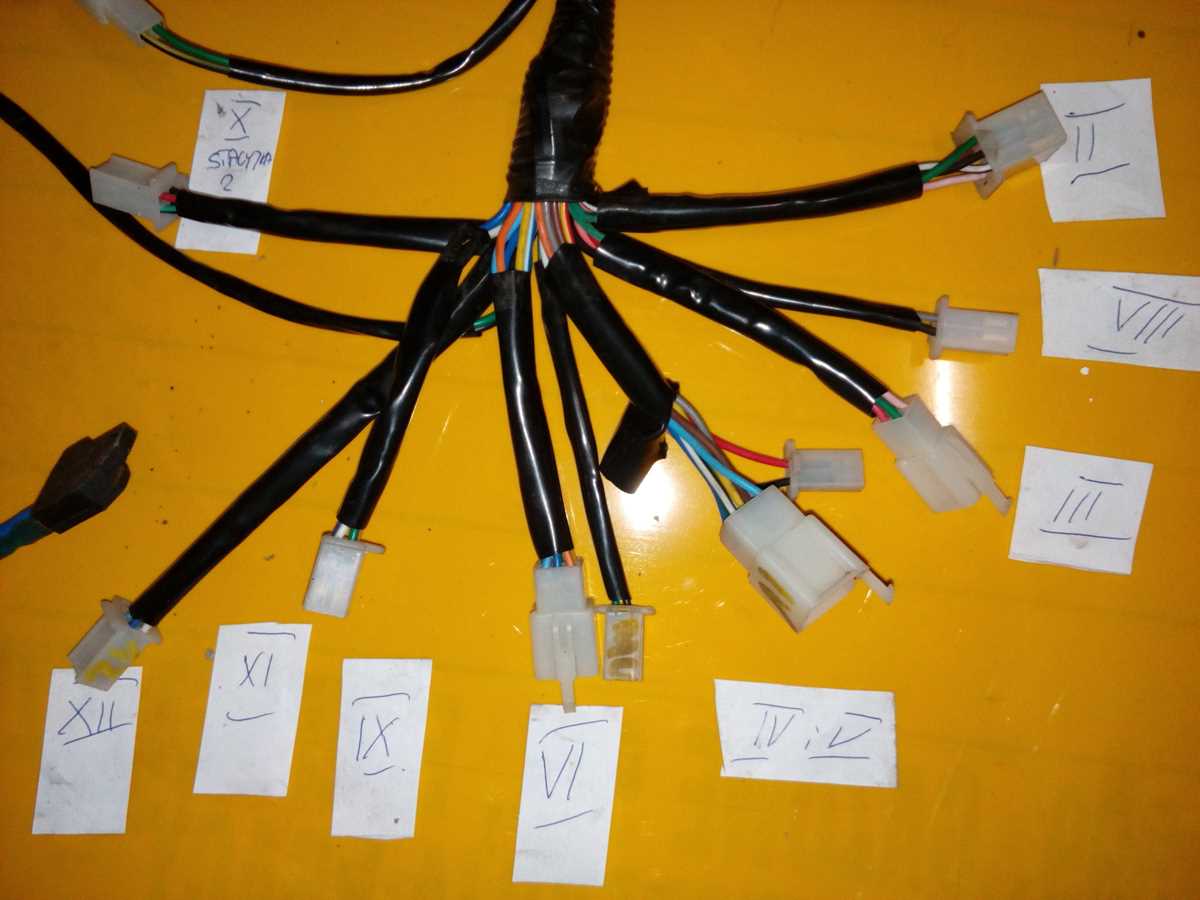
Simulate activation for each circuit individually. Confirm that ignition, accessory, and safety interlocks respond correctly. Document each connection for future maintenance and troubleshooting.
Troubleshooting Common Faults
Check for blown fuses, loose pins, and voltage drops across connectors if circuits fail to respond. Measure voltage at multiple points to isolate faulty segments. Replace damaged terminals or cables immediately to maintain system reliability.
Identifying Color Codes and Pin Assignments on 110cc ATV Circuits
Match each cable color to its function using the control module reference sheet. Red typically carries constant battery voltage, black serves as ground, yellow handles ignition signals, and blue or green lines operate accessory circuits. Confirm each lead with a multimeter to ensure proper connection before assembly.
Inspect each connector for numbered or labeled pins. Test continuity from pin to component to verify assignments, and mark each line with tape or heat-shrink labels. Proper identification prevents shorts, misfires, and failure of relays or safety interlocks during operation.