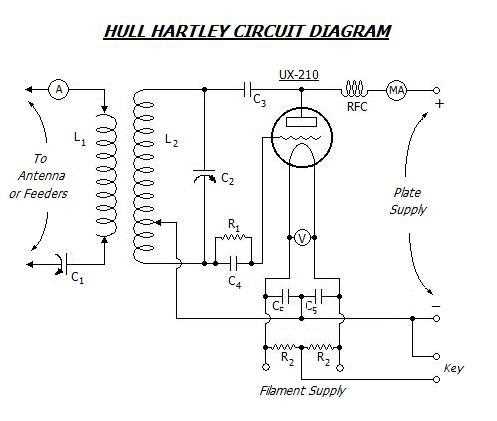
Use a precise coil and capacitor combination to establish a stable resonant frequency. Choose inductors with low series resistance and capacitors rated above the expected voltage to minimize signal distortion and prevent overheating.
Ensure the active amplification stage receives the correct biasing voltage to maintain continuous oscillation. A mismatch in transistor or FET bias can lead to intermittent signal or amplitude decay, reducing the reliability of the setup.
Place all components on a low-noise board to reduce parasitic capacitance and electromagnetic interference. Keep lead lengths short and avoid unnecessary loops in the connections to maintain waveform purity.
Verify output frequency using a frequency counter or spectrum analyzer. Adjust the tap point on the coil or fine-tune the capacitor values to reach the desired frequency range accurately, ensuring the generator meets your design specifications.
Frequency Generator Setup and Tuning Guide
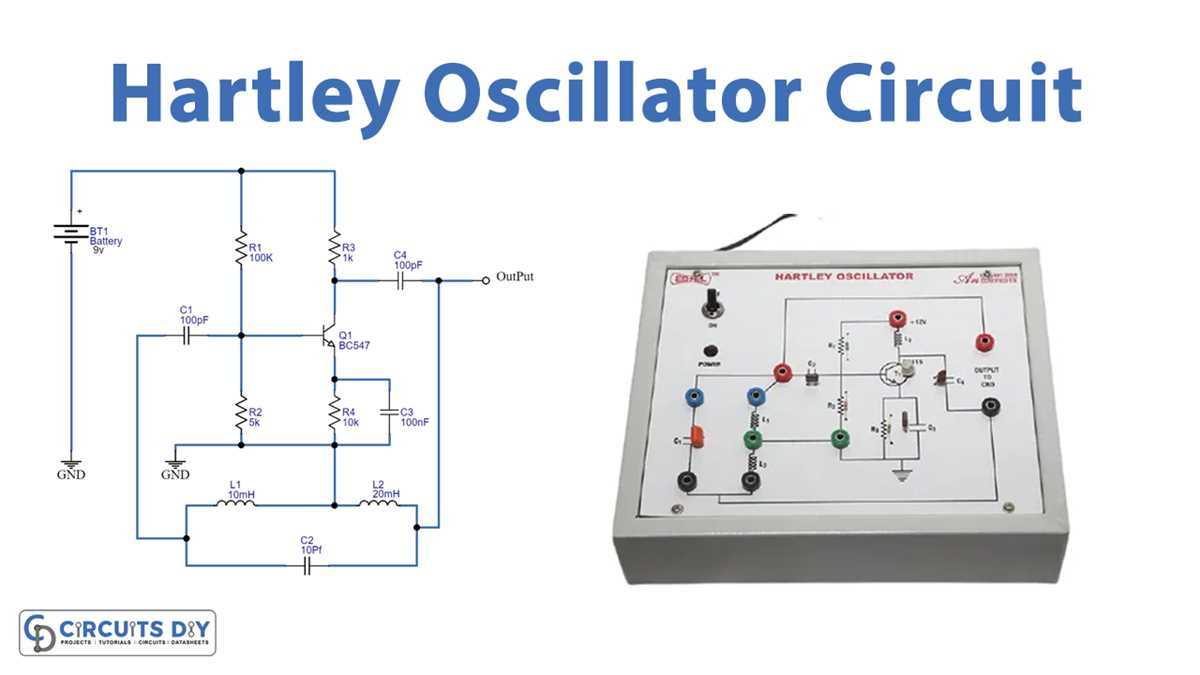
Connect the inductor and capacitor network to the amplification stage ensuring the tap point is positioned correctly for feedback. A misaligned tap can prevent stable oscillation or produce unwanted harmonic distortion.
Adjust the coil turns and capacitor values gradually while monitoring the output on a frequency counter or oscilloscope. Even a single-turn change or small capacitance variation can shift the resonant frequency significantly, so fine adjustments are necessary for precise tuning.
Verify signal amplitude and waveform shape to ensure consistent output. If the waveform is clipped or unstable, check the biasing of the active component and eliminate any loose connections, stray capacitance, or long leads that may introduce interference or phase shifts.
Selecting Components for Stable Frequency Generation
Use low-tolerance capacitors for the resonant network to reduce frequency drift. Ceramic or film types rated within 1% to 5% tolerance help maintain a steady oscillation point over temperature variations.
Choose inductors with minimal parasitic resistance to preserve Q-factor and reduce energy loss. Air-core or high-quality ferrite-core coils provide better frequency stability than standard iron-core variants under similar conditions.
Verify the active element’s gain to ensure it compensates for losses in the reactive components. A transistor or FET that is too weak may fail to sustain oscillation, while excessive gain can distort the output waveform.
Consider temperature coefficients for all reactive elements. Components with low temperature drift ratings minimize frequency shift in environments with fluctuating ambient temperatures.
Implement adjustable elements such as a small trimmer capacitor in parallel with the main capacitor or a tapped coil. These allow fine-tuning of the resonant frequency after initial assembly for precise control.
Ensure stable power supply voltage for the amplification stage. Voltage fluctuations can change the active element’s operating point, resulting in frequency variations or amplitude modulation of the output signal.
Check layout and lead lengths to reduce stray capacitance and inductance. Short, direct connections between components help maintain the intended resonant conditions and prevent unintended frequency shifts.
Test components individually before integration to confirm their specifications match the design requirements. Measuring capacitance, inductance, and resistance ensures all parts perform consistently, contributing to reliable frequency generation.