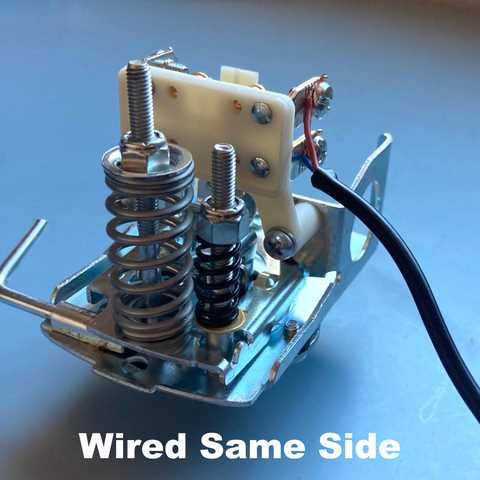
Use a two-pole contact controller rated for single-phase mains around 230 to manage a compressor motor safely. The line conductors from the supply panel should enter the control enclosure and terminate on the line terminals of the contact device, commonly marked L1 and L2. From the opposite side, route the outgoing conductors toward the motor terminals. This arrangement allows the controller to interrupt both live conductors simultaneously when tank force reaches the preset cutoff level.
The connection layout must include a dedicated protective earth conductor linked directly to the compressor frame. Copper conductors with a cross-section near 2.5 mm² are typically used for small workshop compressors drawing up to about 3 kW from a single-phase supply. Keep conductor paths short and secure them with strain relief at the enclosure entry points. Inside the housing, maintain clear separation between incoming lines and the motor leads to reduce overheating and accidental contact.
The mechanical sensing element inside the controller reacts to air force in the tank through a diaphragm and spring assembly. When the tank load drops below the lower setpoint, the internal contacts close and restore power to the motor. Once the upper threshold is reached, the contacts open and disconnect the supply lines. Adjust the spring nuts gradually; a quarter-turn can change the activation range by several tenths of a bar depending on the model.
A clear connection sketch placed inside the cover helps maintenance work later. Mark incoming supply conductors, motor leads, and the grounding point with durable labels. Tighten terminal screws firmly but avoid excessive torque that may deform the clamp plates. After assembly, energize the system briefly and observe whether the compressor stops exactly at the chosen upper tank load and restarts near the lower setting.
Two-Phase Pump Control Connection Layout
Connect the incoming dual-phase supply to the contact block marked L1 and L2, while the outgoing conductors feeding the pump motor attach to T1 and T2. This layout allows the mechanical regulator to interrupt both energized lines simultaneously. A copper conductor with cross-section between 2.5–4 mm² suits most domestic pump systems drawing up to 15 A. Tighten terminal screws to roughly 1.2–1.5 N·m so vibration from the pump housing does not loosen the connection.
Inside the control unit, a spring-loaded membrane reacts to fluid force within the pipeline. When internal force rises above the calibrated limit, the contact pair separates and stops the motor circuit. Once the fluid force drops below the lower threshold, contacts close again and restore power flow. The gap between upper and lower thresholds is adjustable through a compression nut located above the main spring assembly.
Terminal Identification and Cable Placement
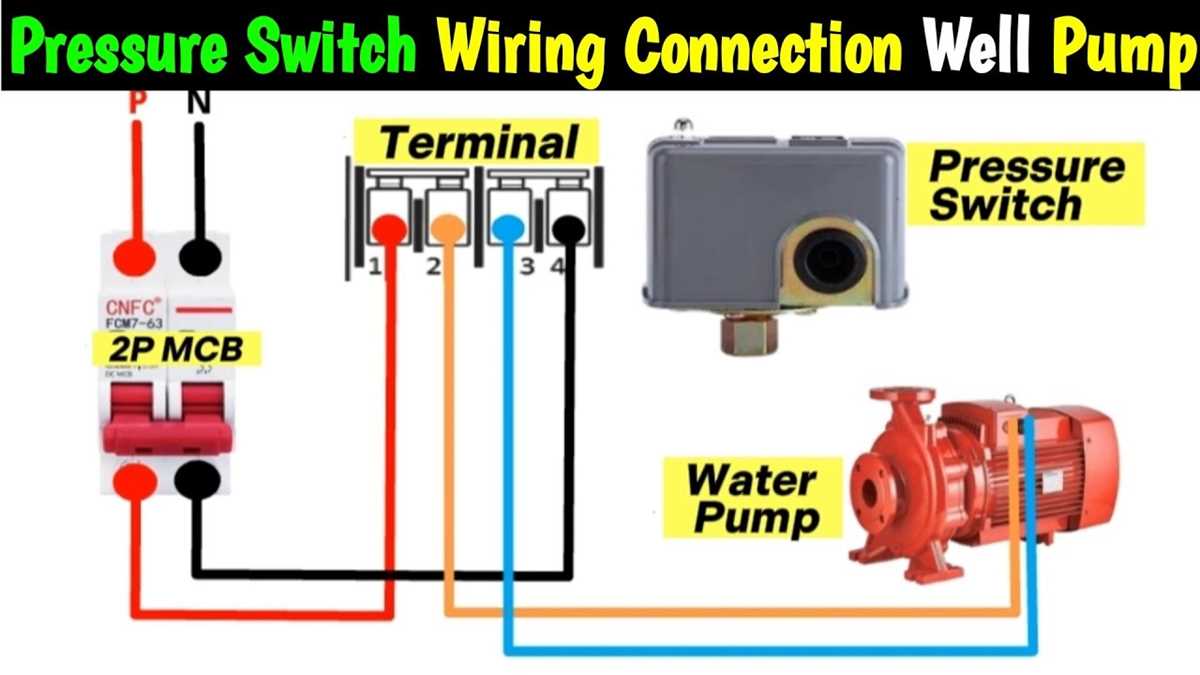
Most pump regulators include four main terminals. Their arrangement often appears in a rectangular pattern beneath the protective cap. Use the following placement logic during assembly:
- Line conductor A → terminal L1
- Line conductor B → terminal L2
- Motor conductor A → terminal T1
- Motor conductor B → terminal T2
- Protective earth → grounding lug on the metal housing
Strip insulation by about 8–10 mm and avoid nicking copper strands. Stranded cable works better than solid core because it tolerates vibration near pump equipment. Insert ferrules on flexible leads before tightening clamps.
Typical Control Path for a Well Pump
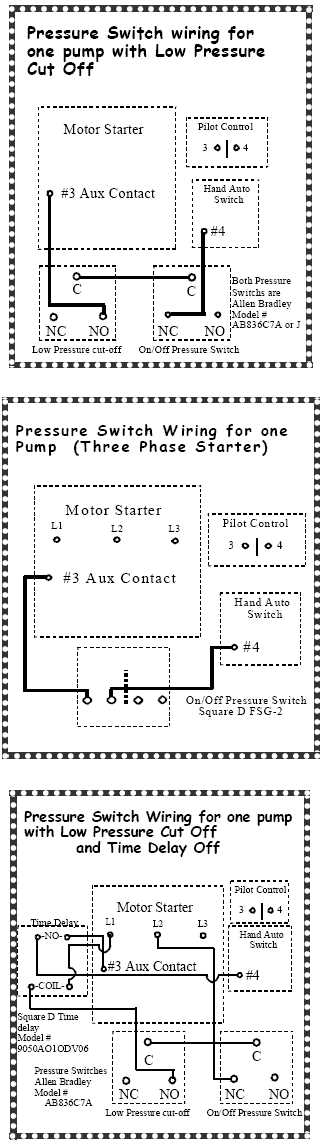
The regulation device sits between the power source and the motor starter. A simplified connection path normally follows this order:
- Main distribution panel
- Circuit breaker rated 16–20 A
- Mechanical fluid regulator
- Pump motor terminals
This sequence prevents the motor from running continuously when the pipeline already holds sufficient internal force. The breaker isolates the circuit during maintenance and shields conductors from overload.
Mount the regulator on a threaded manifold close to the tank tee. Use PTFE sealing tape on the pipe thread and orient the electrical enclosure upward so condensation cannot enter. Leave at least 60 mm clearance above the cover to allow spring calibration without removing the device from the pipeline assembly.
Before energizing the system, check continuity with a multimeter: closed contacts should show resistance below 1 Ω when the pipeline is empty. After filling the tank and running the pump, confirm that contact separation occurs near the desired upper limit, commonly around 3–4 bar for residential water supply installations.