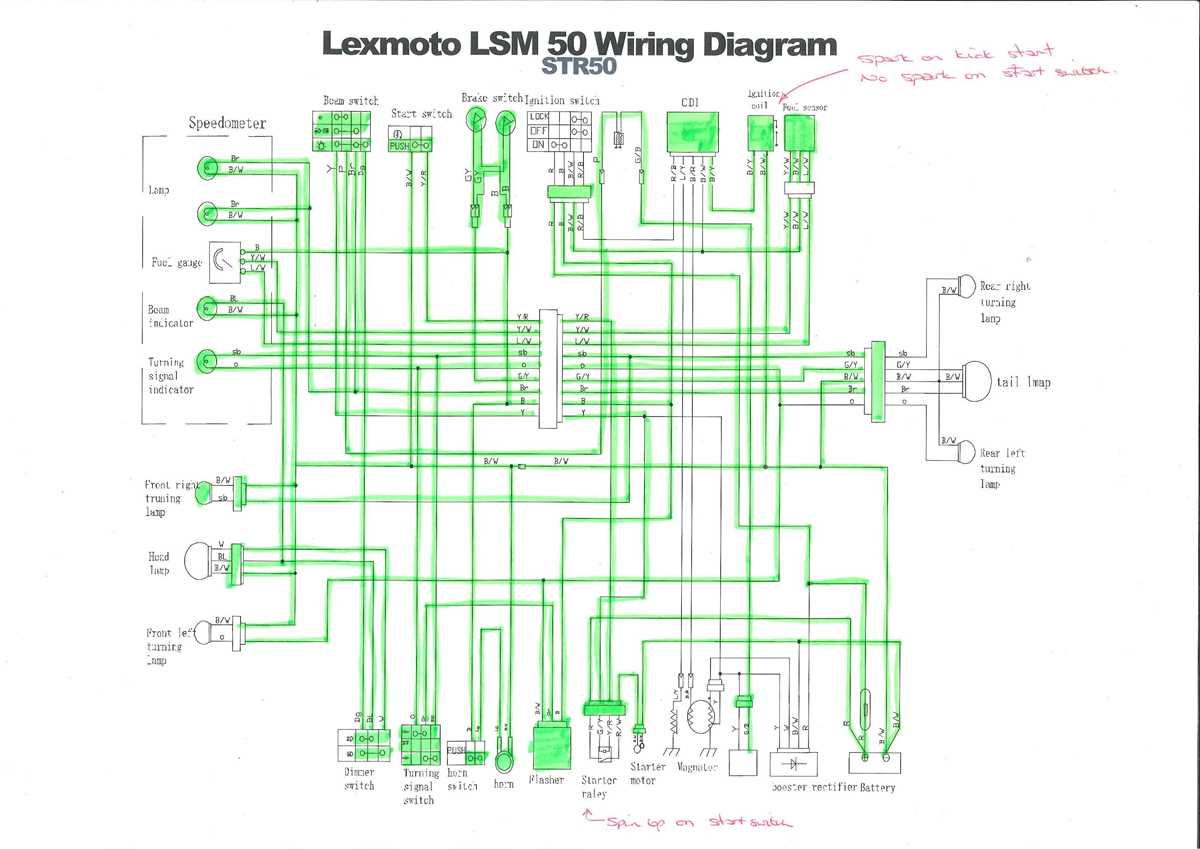
Check the electrical layout of the small GY6-based motorbike before touching any cable. A clear circuit layout helps identify where the ignition unit, stator coil, regulator-rectifier, starter relay, and battery leads connect. Most faults in compact step-through bikes appear in loose connectors, worn insulation, or mixed wire colors after previous repairs.
Many entry-level mopeds built around the GY6 engine share nearly identical electrical systems. Typical harnesses include a 5-pin AC ignition module, a 6-wire stator assembly, and a regulator with four or five terminals. Color coding often follows a predictable pattern: green for ground, red for battery positive, black for switched power, yellow or white for charging lines, and blue-white for the pickup coil signal. Recognizing these colors speeds up cable tracing and prevents incorrect connections.
Electrical troubleshooting becomes simpler once the routing of the harness is clear. For example, the starter circuit usually runs from the battery through a fuse to the relay, then to the starter motor. Lighting circuits connect through the handlebar switch block and regulator output. By matching each cable to its function, a mechanic can quickly isolate faults such as no spark, weak charging output, or non-working lights without dismantling the entire vehicle.
Careful inspection of connectors also saves time. Corrosion inside plastic plugs, broken ground wires near the frame, and damaged stator leads under the engine cover appear frequently on low-cost commuter bikes. Using a multimeter to verify voltage at each point of the harness helps confirm whether the ignition module, pickup coil, or charging unit is sending the expected signal.
50cc Chinese Scooter Wiring Diagram With Wire Color Codes and Electrical Connections
Locate the main harness running from the engine area to the front panel and trace each cable using its color before disconnecting anything. Small GY6-based mopeds rely on a simple electrical layout linking the stator assembly, ignition module, regulator-rectifier, starter relay, battery, and handlebar switches. Checking color markings on each conductor helps determine its role and prevents mixing charging, ignition, and lighting circuits.
The grounding network usually uses green insulation. These lines connect the engine case, frame, ignition module, and regulator body. Poor contact at any ground point often causes weak spark, dim lights, or unstable charging voltage. Clean frame bolts and confirm continuity between the engine block and battery negative terminal using a multimeter.
Battery power normally travels through red cables. This line runs from the battery positive terminal to the main fuse, ignition switch, and starter relay. A damaged fuse holder or oxidized connector can interrupt power to the entire electrical system. Measure voltage directly at the battery and compare it with readings at the switch connector to locate voltage drops.
Switched power is commonly carried by a black conductor. This lead becomes live after the ignition key is turned on and feeds the ignition control unit, lighting switches, and dashboard indicators. If the instrument panel remains dark while the battery has charge, inspect the black supply line leaving the key switch.
The charging circuit uses yellow and white cables from the stator. These leads transfer alternating current from the engine generator to the regulator-rectifier. A standard unit then converts it into direct current and limits voltage around 13.5–14.5 volts. Burned connectors or brittle insulation near the engine cover often interrupt this path.
The ignition trigger signal usually appears on a blue with white stripe conductor from the pickup coil. This signal enters the ignition module and determines spark timing. Loss of this pulse prevents the spark plug from firing, while irregular signals cause rough running or misfires at higher engine speed.
Verify each electrical path by following the harness visually and checking continuity between connectors. Pay attention to plastic plugs under the seat and near the steering column where moisture accumulates. Correct identification of color-coded conductors allows quick diagnosis of no-start conditions, weak battery charging, or lighting failures without dismantling the entire vehicle.
How to Read a 50cc Chinese Scooter Wiring Diagram and Identify Main Electrical Parts
Print the electrical scheme and mark the power source, ground network, and ignition circuit before tracing any conductor. Most compact GY6-based mopeds use a simple layout where the battery feeds the ignition switch, the stator generates alternating current, and the regulator converts it to stable direct current for lights and charging.
Recognizing Power and Ground Paths
Locate the battery symbol first and follow the positive path through the fuse and ignition switch. This line usually supplies the starter relay, control unit, and dashboard. Ground connections appear as lines linking components to the frame or engine block. Verify that each device shown on the scheme has both a supply line and a ground point; missing ground connections often explain electrical faults.
Identifying Ignition and Charging Components
Find the ignition control module connected to the pickup coil and ignition coil. The pickup coil sends a timing pulse from the stator to the control unit, which then triggers the high-voltage coil connected to the spark plug. Nearby you will also see the regulator-rectifier connected to the generator windings and the battery charging line.
Symbols on the layout usually represent switches, connectors, coils, and lamps. Handlebar switches appear as simple contact symbols controlling headlights, indicators, or the horn. Connectors are often shown as small rectangles where multiple conductors meet, reflecting the plastic plugs found inside the body panels.
Trace each circuit from source to load with a pen or highlighter. For example, follow the path from the generator windings to the regulator, then to the battery and lighting circuits. This step-by-step tracing makes it easier to match the drawing with the real harness installed on the small commuter bike.