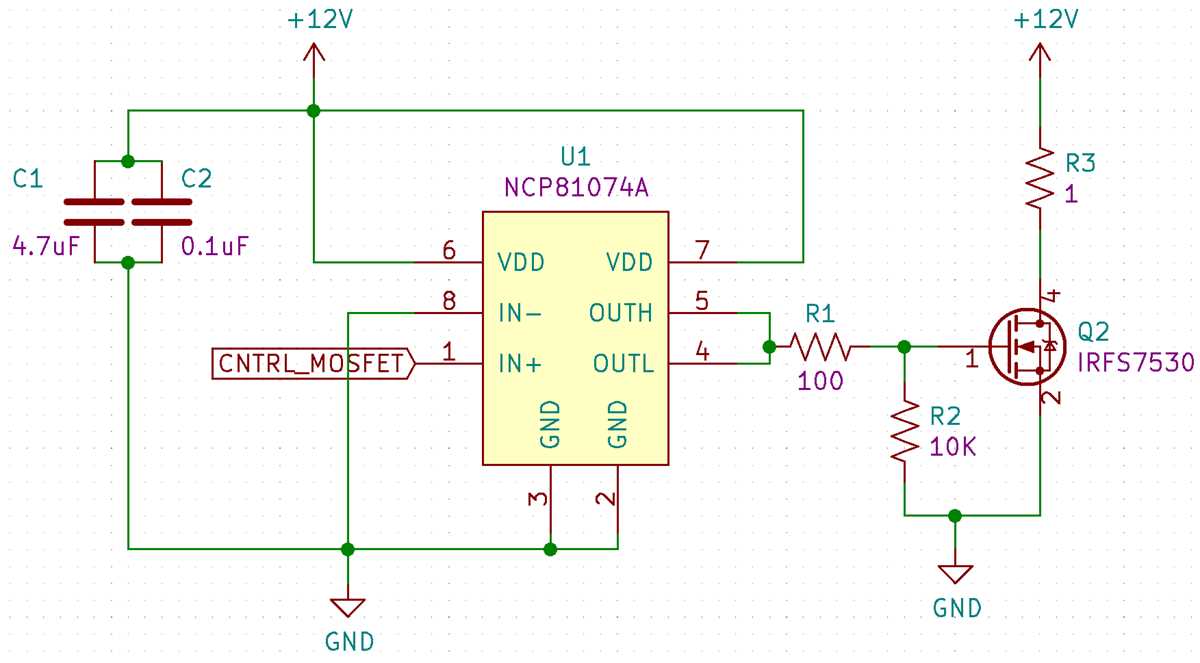
To efficiently control high-speed switching devices, start by understanding the role of the switching component and the required voltage levels. The key to smooth operation lies in providing a reliable voltage source that can quickly toggle the switch between its on and off states without delay or power loss. Pay close attention to the pulse width modulation (PWM) signals to ensure precise control.
For best results, choose components that can handle the voltage and current requirements of the load. Also, check the input and output impedance to avoid any mismatches that could lead to inefficiency or failure. Proper insulation and secure grounding are essential for safe and reliable operation. Always test your connections before powering the system to avoid damaging sensitive components.
Finally, be mindful of heat dissipation. High-speed switching can generate significant heat, so it’s crucial to implement an effective cooling solution to prevent overheating. Choose transistors with low thermal resistance and integrate heat sinks or other thermal management techniques as needed to ensure long-term reliability.
Mosfet Switching Control Design and Application Guide
Begin by selecting an appropriate switching element that meets the voltage and current requirements of your application. The switching device should be chosen based on its threshold voltage, which determines when it will transition between on and off states. Ensure that the device can operate at the desired frequency without compromising performance or causing excessive heat generation.
The power supply for your switching setup must provide stable and adequate voltage for the chosen components. Voltage spikes or unstable power inputs can lead to unreliable switching behavior or even damage the components. Use decoupling capacitors to filter out any noise and ensure smooth operation during switching transitions.
Next, focus on the control signal. PWM signals are commonly used for efficient switching control, but the control voltage must be within the recommended range for the switching device. Ensure that the control signals are sharp and fast to avoid slow transitions, which can cause excessive power dissipation or inefficient operation.
For reliability, include protection components such as diodes to prevent back-EMF damage and resistors to limit current through sensitive control pins. It’s also helpful to implement a fail-safe mechanism that ensures the system remains safe in case of an error, preventing damage to components or the system as a whole.
Finally, always test the system under load conditions before finalizing the design. This helps ensure that the switching component can handle real-world operational stresses and that the entire setup performs as expected without any risk of failure. Monitoring the temperature of critical components during operation will give you insights into the thermal performance of your design and highlight any potential issues before they cause system failure.
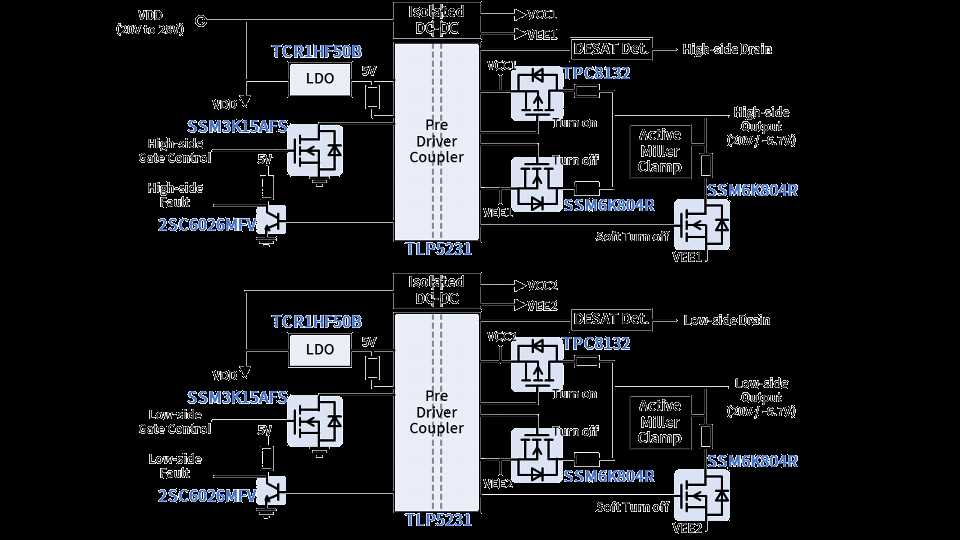
Understanding the Components of a Mosfet Gate Driver Circuit
Begin by focusing on the power supply, which is the backbone of any switching system. It must provide a consistent voltage level to properly drive the switching element, ensuring smooth transitions between on and off states. Any fluctuation in supply voltage can lead to unreliable operation, making it critical to maintain stable input conditions for optimal performance.
The control logic stage follows the power input. This stage interprets the control signals and converts them into the appropriate voltage levels required for activating the switching element. Often, PWM signals are used for efficient control, but the timing and frequency of these signals must align with the device’s specifications to avoid inefficiencies or thermal damage.
Another critical component is the isolation stage, which protects the lower voltage control circuitry from the high-voltage power stage. This isolation ensures that the system remains safe from voltage spikes or accidental shorts, preventing damage to sensitive components. Optocouplers or transformers are commonly employed in this role, ensuring safe operation even under fault conditions.
Finally, the protection circuitry plays a key role in maintaining the longevity and reliability of the system. Diodes are used to safeguard the switching element from potential back-EMF, while resistors limit the current through control lines. Proper heat management, through heat sinks or thermal pads, ensures that all components stay within their operating temperature range during extended use, preventing thermal breakdown.