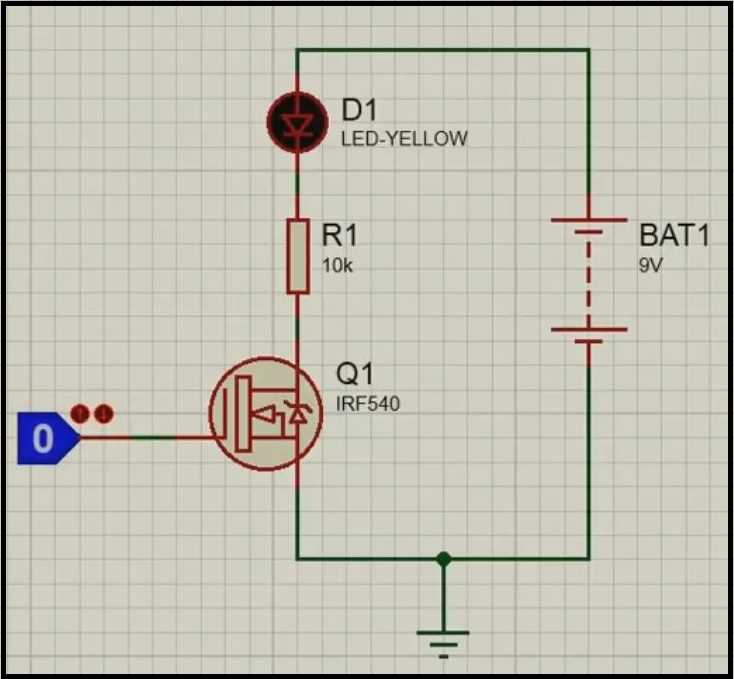
Connect the control terminal directly to a low-resistance driver to minimize voltage drop and ensure rapid toggling. Use a resistor of 10–100 ohms in series to limit inrush current and protect the gate from spikes. Verify that the chosen device can handle the maximum drain current of the connected load to prevent overheating.
Position the main conducting element close to the load terminals to reduce parasitic inductance and maintain stable operation. Heatsinking is necessary when dissipating more than 1–2 watts to avoid thermal runaway, especially in continuous conduction mode.
Implement a flyback diode across inductive loads to prevent voltage spikes from damaging the transistor. Check the gate-source threshold voltage to ensure full enhancement during operation and avoid partial conduction that can lead to inefficiency and heating.
Use a multimeter to measure voltage at the load and the control terminal simultaneously to confirm switching performance. Oscilloscope testing is recommended for high-frequency applications to monitor rise and fall times and detect unwanted oscillations.
Field-Effect Transistor Practical Applications and Setup
Connect the control pin to a stable low-voltage source capable of sourcing at least 5 mA to fully activate the device. Use a series resistor between 20 and 100 ohms to limit the initial gate current and protect the driver. Place the main conduction path close to the load to minimize voltage drop and reduce heat generation under continuous operation.
Integrate a freewheeling diode across inductive loads such as motors or coils to prevent voltage spikes from damaging the component. Check the on-resistance and threshold voltage for each application to ensure rapid switching and maintain consistent output without generating excess heat during frequent cycles.
Choosing the Right Field-Effect Device for Load Control
For controlling resistive or small inductive loads, select a component with low on-resistance and a gate threshold below 5 volts to ensure quick activation and minimal heat generation. Confirm the maximum drain current rating exceeds the load’s peak draw by at least 20% to prevent overstressing the element during transient conditions.
For larger inductive loads, such as motors or solenoids, prioritize devices with high voltage tolerance and fast switching times. Include a snubber or flyback diode to absorb voltage spikes and protect the element, reducing the risk of failure during repetitive operation.
Consider logic-level components if the control signal comes from a microcontroller. Their low input voltage requirement allows direct interfacing without additional driver circuitry, maintaining consistent load response and minimizing signal distortion across multiple switching cycles.