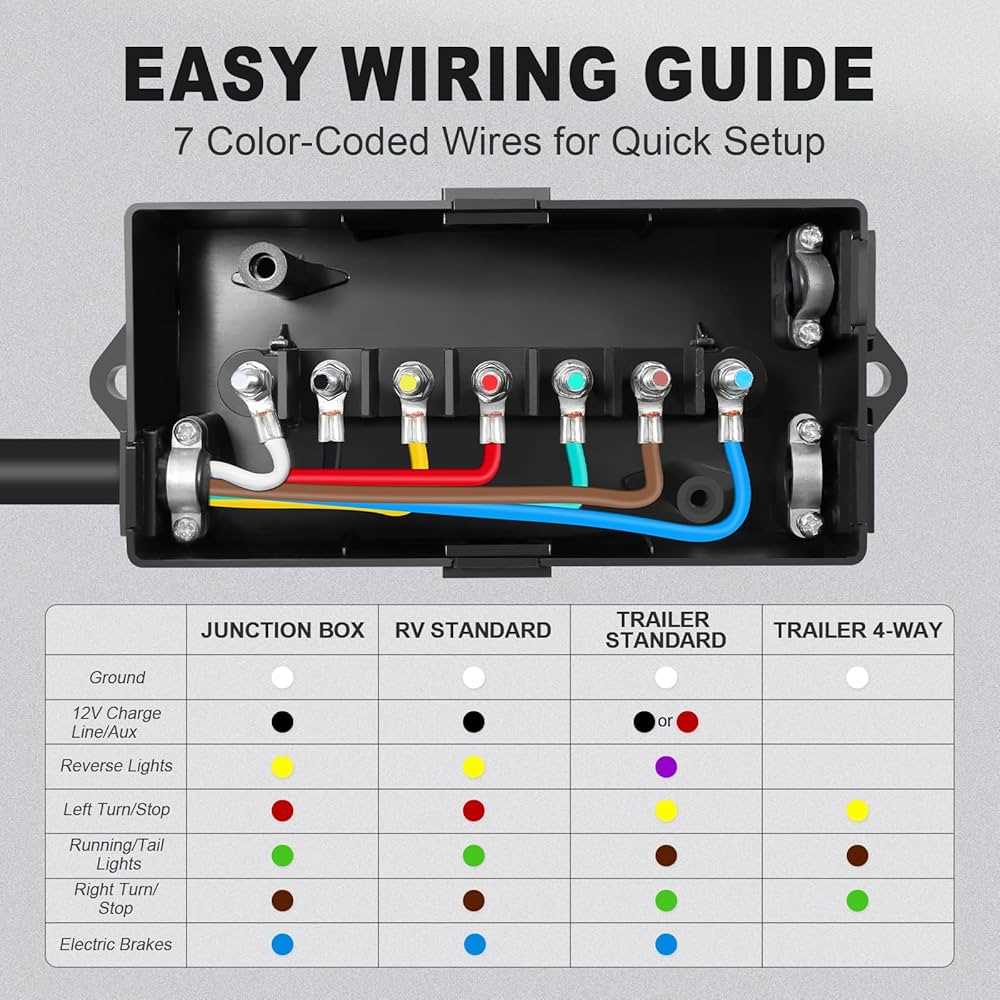
Match each socket to its function precisely: Tail lamps require a continuous 12V feed with proper grounding, while brake signals need a dedicated line rated for 10–15 amps. Use color-coded cables: brown for running lights, yellow for left turn, green for right turn, blue for brakes, white for ground, and black for auxiliary power. Incorrect pairing can cause shorts or nonfunctional lamps.
Inspect terminals before installation: Corrosion on contacts increases resistance and can trigger intermittent failures. Clean with a wire brush and apply dielectric grease to prevent oxidation. Loose connectors can mimic electrical faults that are hard to diagnose.
Secure routing matters: Keep all conductors at least 2 inches away from heat sources like exhaust pipes and avoid tight bends sharper than a 90-degree radius. Use UV-resistant clamps to prevent chafing. Neglecting proper routing reduces service life and increases maintenance calls.
Test circuits individually: Use a multimeter to confirm continuity and verify voltage drop under load. Activate brakes, turn signals, and auxiliary systems one by one while observing current draw. Document readings to detect weak connections or wiring fatigue before it causes on-road failures.
Connector Setup for Heavy Hauling Units
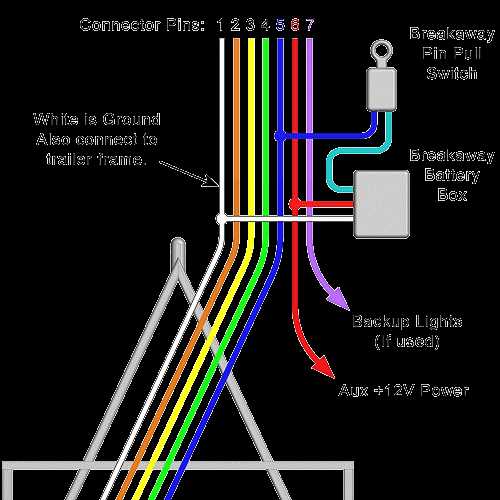
Assign each terminal accurately: Left and right indicators require separate lines rated for 10 amps. Brake lights need a dedicated circuit with minimal resistance, ideally less than 0.5 ohms over the full run. Incorrect connections can disable signals or blow fuses.
Use color codes consistently: Standard coding includes brown for running lamps, yellow for left turns, green for right turns, blue for service brakes, white for ground, black for auxiliary circuits, and red for electric brakes. Deviation from these codes increases troubleshooting time.
Check contact surfaces before joining connectors. Clean any rust or oxidation with a fine wire brush. Apply thin layers of dielectric grease to prevent moisture ingress and ensure stable conductivity.
Secure all cables along chassis rails. Maintain at least a 2-inch clearance from hot components. Avoid sharp bends smaller than a 90-degree radius. Use UV-resistant clips to hold the harness in place.
Test each line individually:
- Run tail lamps and verify 12V under load.
- Activate brake lamps and measure current draw.
- Switch turn signals and confirm voltage stability.
- Check auxiliary outputs for continuity and insulation resistance.
Inspect grounding paths thoroughly. Use a dedicated metal-to-metal connection to the frame, preferably with a star washer. Poor grounds cause flickering lamps and erratic relay behavior.
Label each connection with durable tags. Include function, amperage, and installation date. Labels reduce errors during future maintenance or fleet rotation.
Perform a final road test. Observe all lights while operating brakes, signals, and hazard indicators. Verify that auxiliary systems like refrigeration or lift gates remain operational without voltage sag.
Identifying Each Terminal Function on a 7-Connection Connector
Label each contact clearly: Running lights connect to the brown line, left indicators to yellow, right indicators to green, service brakes to blue, ground to white, auxiliary circuits to black, and electric brake controls to red. Accurate identification prevents short circuits and lamp failure.
Use a multimeter to confirm continuity before attaching cables. Check resistance across each line; it should not exceed 0.5 ohms for signal circuits. High resistance indicates corrosion or loose contacts.
Visual Inspection and Color Coding
Inspect all metallic surfaces for oxidation or dirt. Scrape off corrosion with a small brush and apply thin dielectric grease. Maintain standard color coding to reduce errors during maintenance or replacements.
Mark connectors with permanent tags specifying function and amperage. Include installation date for tracking service intervals. This labeling aids rapid troubleshooting under field conditions.
Functional Testing
Activate each system individually: turn on running lights, flash indicators, apply brakes, and engage auxiliary devices. Measure voltage at each line while the system operates to verify load tolerance. Any voltage drop over 0.5 volts signals a weak connection.
Verify grounding paths by measuring continuity from the white conductor to the chassis. A reading above 1 ohm suggests a poor connection. Tighten or reattach the ground to restore proper signal operation.
Document each line’s function and test results. Keep records for fleet management or future troubleshooting. Well-organized documentation reduces time spent diagnosing electrical issues and prevents accidental misconnection.