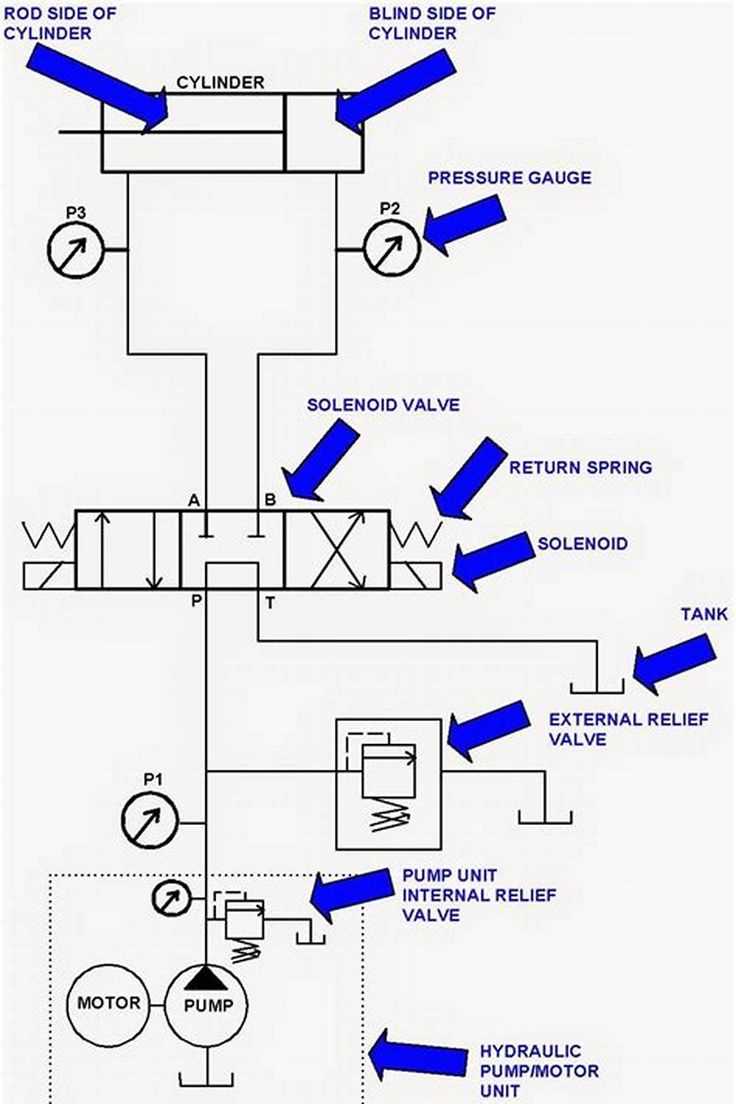
Use a clear flow layout that places the pump, reservoir, control valve, and actuator in a logical sequence from energy source to motion output. Position the tank at the lowest level of the scheme and connect the suction line directly to the pump with a short pipe section (preferably under 1.5 m) to reduce cavitation risk. A suction filter rated around 100–150 µm helps keep contamination out while maintaining adequate inlet flow.
Pressure generation should be shown immediately after the pump unit. Indicate a pressure-limiting valve set slightly above operating demand; for many industrial drives this falls near 120–210 bar. Place the valve branch close to the pump outlet so excess pressure returns straight to the tank. This placement reduces thermal load and protects seals, hoses, and pistons from overload.
Control elements must appear between the pressure source and the working actuator. A direction selector distributes oil toward either chamber of a cylinder or to a rotary motor. For double-acting cylinders, represent two supply lines and include throttle valves where speed adjustment is required. A restriction opening between 0.5–2.0 mm is typical for moderate motion control in small industrial equipment.
Return flow should be routed through a fine filter (10–25 µm) before re-entering the reservoir. Show the cooling path or heat exchanger if system temperature may exceed 60 °C. Mark flow direction with arrows and label each component clearly; this improves troubleshooting and reduces assembly errors when technicians translate the schematic into real piping and hose connections.
Fluid Power Line Scheme: Practical Structure and Reading Guide
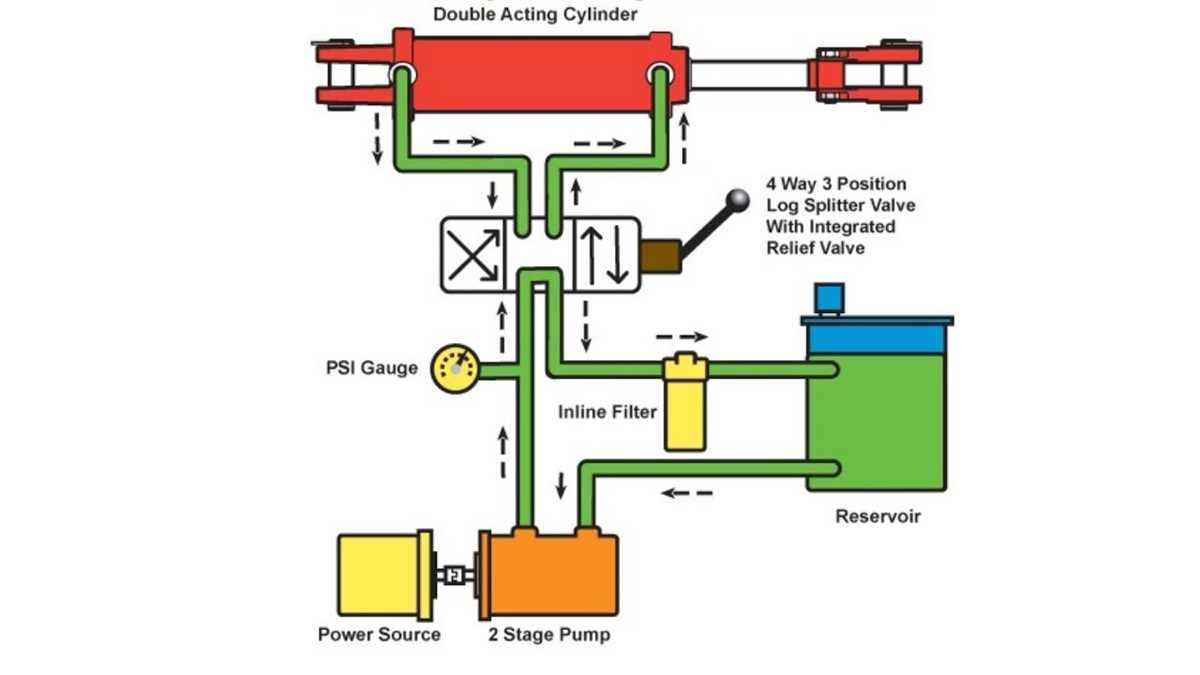
Trace oil movement from the pump outlet toward the reservoir return; this single rule prevents most reading errors in a fluid-power scheme. Identify three paths first: pressure supply (pump → control units), working lines leading to actuators, and return flow toward the tank. Direction arrows and line thickness often distinguish these routes: thick continuous lines usually represent pressure delivery, thin lines often indicate pilot control. Locate the pump symbol, pressure relief valve, directional valve, actuator (cylinder or motor), and reservoir. Reading becomes straightforward once the flow path is mentally followed through each valve position.
A practical layout normally contains a reservoir, suction filter, pump, pressure relief valve, directional control valve, actuator, and return filter. The reservoir sits at the lowest point of the scheme because every working path eventually drains back into it. The pump draws oil through the suction filter and sends pressurized flow to the main line. Close to the pump outlet, a relief valve limits pressure; common factory values range between 120–210 bar for many industrial machines. Directional valves guide oil toward either side of a cylinder or toward a motor port. Each valve position changes internal passages, which alters oil routing; this is represented by adjacent boxes showing alternate flow paths. Actuators convert fluid pressure into motion: cylinders produce linear travel measured in millimeters, while motors generate rotation measured in rpm. Return lines typically include filtration rated around 10–25 μm to trap wear particles before oil reenters the tank.
Check symbol standards from ISO 1219 while reading the scheme: triangles mark pumps and motors, spring icons indicate default valve positions, and dashed lines denote pilot control. Viewing the drawing this way allows rapid detection of blocked flow paths, incorrect valve orientation, or missing pressure protection.
How to Identify Pumps, Reservoirs, Valves, and Actuators in a Basic Hydraulic Circuit Diagram
Locate the energy source symbol first: a pump is typically drawn as a circle containing a filled triangle pointing toward the flow line. The triangle direction indicates fluid movement; if it points outward, the unit pushes fluid into the line. Variable-displacement versions often include a diagonal arrow across the circle. Adjacent to this symbol, search for the storage tank representation–usually an open-top rectangular container connected by return lines. The tank mark often appears at the lowest point of the schematic sheet because designers place return flow downward toward storage. A thick suction line from the tank leading to the pump confirms the pairing and distinguishes the pump from similar circular marks used for motors.
Recognizing Flow Control Elements
Valve symbols appear as small boxes inserted along the flow path. Each box contains arrows, blocking bars, or spring indicators that show permitted flow paths. A two-position directional valve uses two adjacent squares; a spring symbol on one side signals automatic return. When multiple ports exist, short line stubs extend from the box edges–count them to determine the valve type.
Detecting Motion Devices
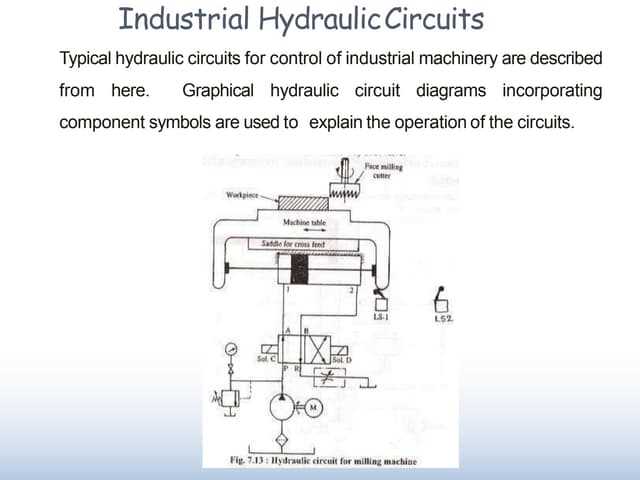
Actuators appear at the ends of pressure lines where motion occurs. A linear unit is drawn as a long rectangle with a rod projecting from one side; dual-port versions connect to both ends of the chamber, revealing bidirectional movement. Rotary motion devices are depicted as circles with curved arrows inside, distinguishing them from pump symbols that contain straight triangles. Labels such as A, B, or numbered ports near the actuator lines indicate which valve outlets control extension or rotation, allowing quick tracing of pressure paths through the system layout.