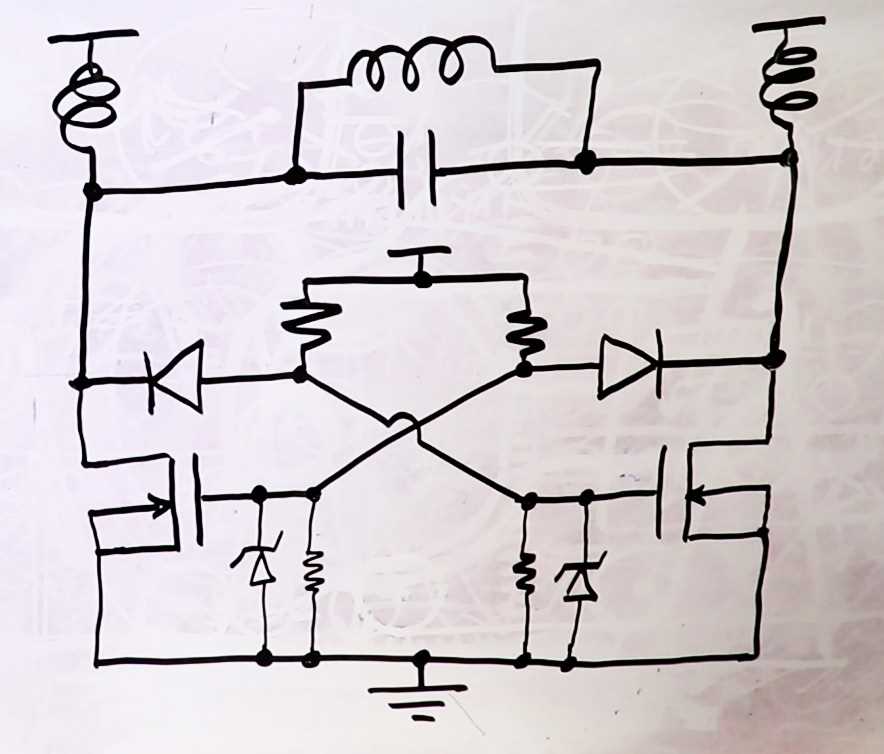
Select components rated for currents exceeding 8 amps and voltages up to 220V to ensure stability under continuous operation
Use thick gauge copper windings for the main coil to minimize resistive losses and prevent overheating during extended heating cycles
Integrate a high-frequency inverter module capable of operating around 50–150 kHz to maximize energy transfer to metallic workpieces
Include thermal protection and current sensing to automatically shut down the system in case of overcurrent or excessive temperature rise, preserving both components and operator safety
Mount all components on a heat-resistant base and provide sufficient spacing to reduce electromagnetic interference and ensure reliable performance under load
High-Power Electromagnetic Coil Assembly and Connection Guide
Use a copper coil with at least 10 turns of 6 mm² insulated wire for the primary winding to handle currents around 8–10 amps. Secure the coil on a heat-resistant base to prevent deformation under load.
Install a MOSFET or IGBT inverter module rated for 200–250V and 15A. Connect the gate and source terminals according to the component specifications, and include a high-frequency driver to maintain oscillation near 100 kHz for optimal heating performance.
Include a capacitor bank of 0.33–0.47 µF to form a resonant tank with the main coil. Connect the capacitors in parallel to the primary winding and ensure tight soldering to minimize losses and prevent voltage spikes during operation.
Implement safety measures such as a thermal cutoff switch and a fuse rated slightly above normal operating current. Connect the power supply through these protective components and ensure all connections are insulated and secured to prevent short circuits and accidental contact.
Component Selection and Rating for a High-Power Electromagnetic Assembly
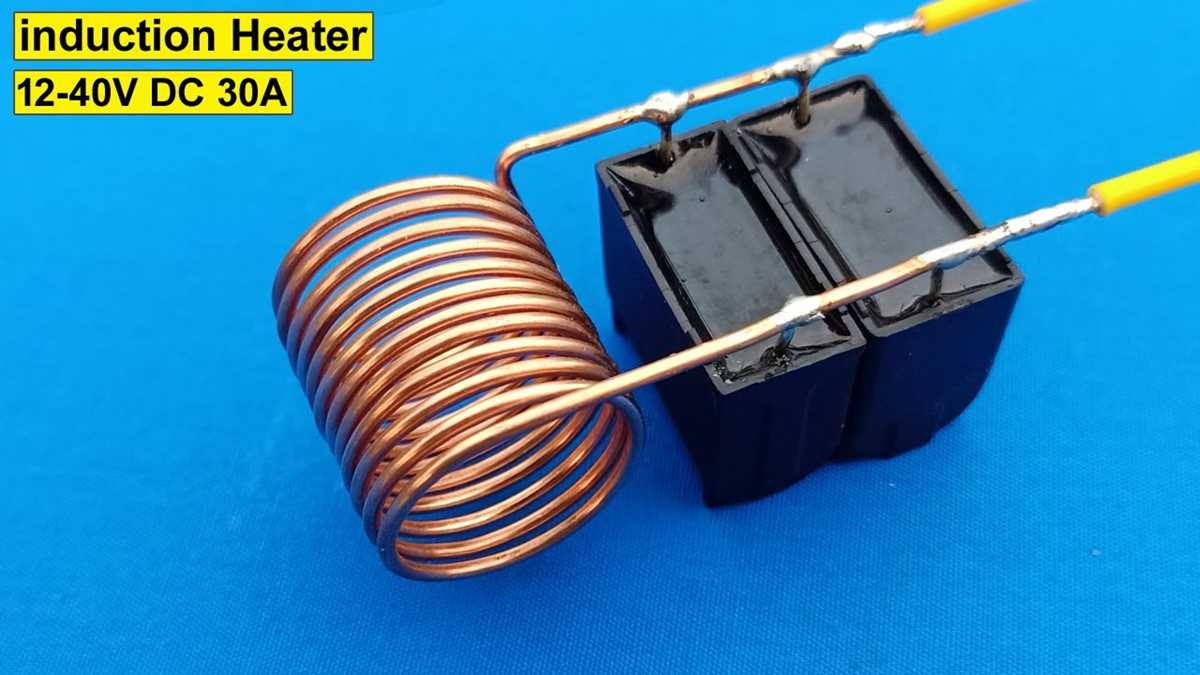
Choose high-current MOSFETs or IGBT modules rated for at least 200V and 15A to handle the main load. Select a coil with copper wire diameter of 6–8 mm² and ensure the insulation can withstand temperatures above 150°C. Capacitors forming the resonant network should have low ESR and voltage ratings exceeding 400V AC to maintain stable oscillation.
Verify all supporting components including gate drivers, resistors, and heat sinks. Use thermally conductive pads for module mounting and choose fuses slightly above the normal operating current for protection. Ensure all wiring connections are secure and capable of carrying transient currents without significant voltage drops to prevent performance loss and overheating.