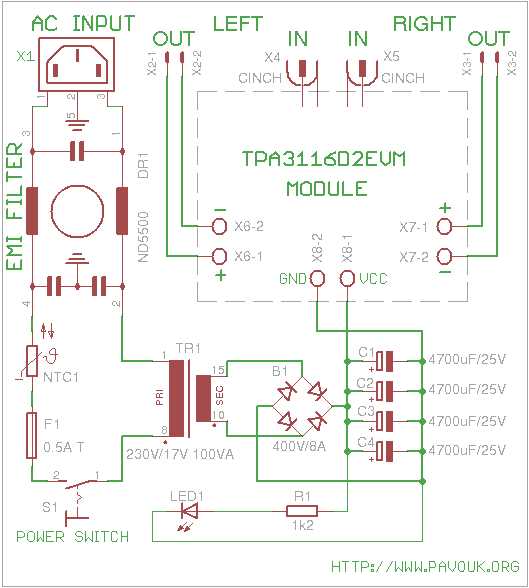
Connect a stable 12 to 24V DC source with at least 3A capacity to ensure the unit operates without voltage drops or distortion under load. Use thick, short leads to reduce resistance and heat buildup.
Match input signals carefully to the module’s line-level connectors. Single-ended RCA inputs or differential inputs can be used, but maintain a consistent signal polarity to prevent phase issues and uneven output levels.
Speaker outputs require precise load matching. The module handles 4–8Ω loads per channel reliably. Parallel or series connections must not reduce total impedance below 4Ω to avoid thermal shutdown and clipping.
Adjust gain and tone settings cautiously to balance output without overdriving the unit. Small incremental changes help prevent distortion and protect both the module and connected drivers.
Ensure proper cooling by mounting the module on a heat-dissipating surface or using a small fan. Continuous high-power operation can cause thermal throttling if airflow is restricted.
Check all connections for tightness and insulation. Loose contacts increase resistance, cause voltage drops, and may generate sparks or intermittent audio interruptions.
TPA3116D2 Amplifier Board Setup and Connection Guide
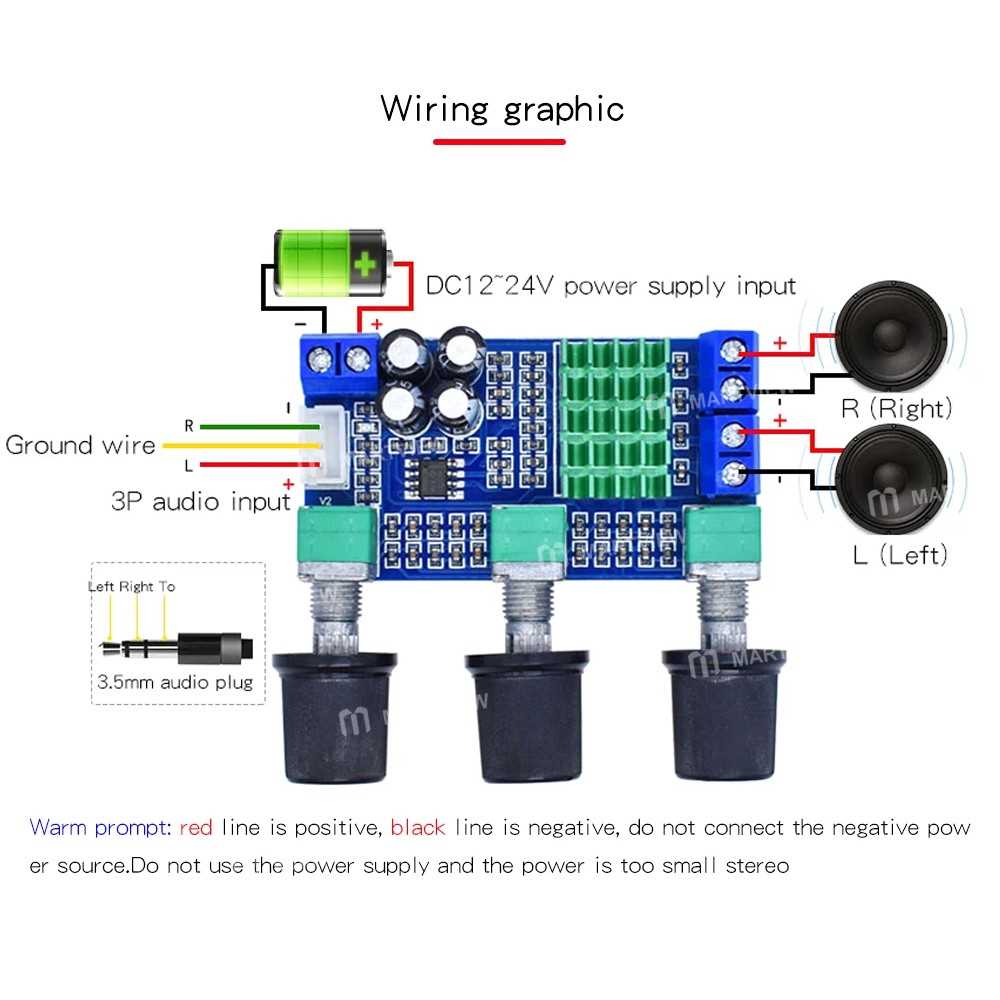
Connect a stable 12–24V DC source with at least 3A current capacity to the power terminals. Ensure polarity is correct and use short, thick leads to minimize voltage drop and heat generation during operation.
Link input signals carefully to the line-level connectors, preferably using shielded cables. RCA or differential inputs should be routed away from power lines to prevent hum, and signal polarity must be consistent to maintain phase integrity across channels.
Attach speaker outputs to loads rated between 4Ω and 8Ω per channel. Avoid connecting multiple speakers in a way that drops total impedance below 4Ω. Provide airflow or heatsinks to prevent thermal throttling during continuous playback.
Power Supply Selection and Voltage Requirements for TPA3116D2
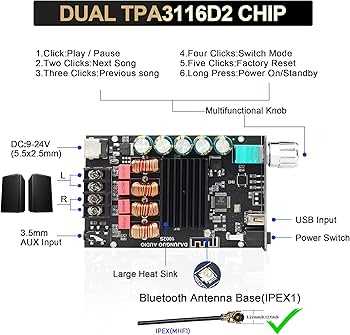
Choose a DC source within 12–24V range to match the operating specifications of the module. Voltage below 12V may cause distortion and reduced output, while exceeding 24V risks permanent damage to internal components.
Ensure current capacity of at least 3A for stereo operation at moderate volume. Higher output demands require a supply rated for 5A or more to maintain voltage stability and prevent shutdowns under peak loads.
Use low ripple and well-regulated supplies to avoid audible hum or interference. Switching adapters with adequate filtering or linear power supplies with smoothing capacitors are recommended.
Consider voltage drop across cables when connecting power. Keep lead lengths short and use thick wires to maintain nominal voltage at the terminals, especially under high output conditions.
Include a fuse inline with the positive lead for protection. Select a fuse rated slightly above the typical operating current but below the maximum current the supply can deliver.
Verify load capability by checking that the supply can maintain voltage during dynamic peaks. Modules drawing 50–100W per channel may require surge capacity beyond continuous ratings.
Temperature stability affects performance. Supplies that sag under heat or operate above 40°C may trigger thermal protection, reducing output and reliability. Keep the source in a ventilated location.

When using batteries or multiple cells in series, confirm correct series connection to maintain the target voltage and avoid polarity reversal, which can permanently damage the module.