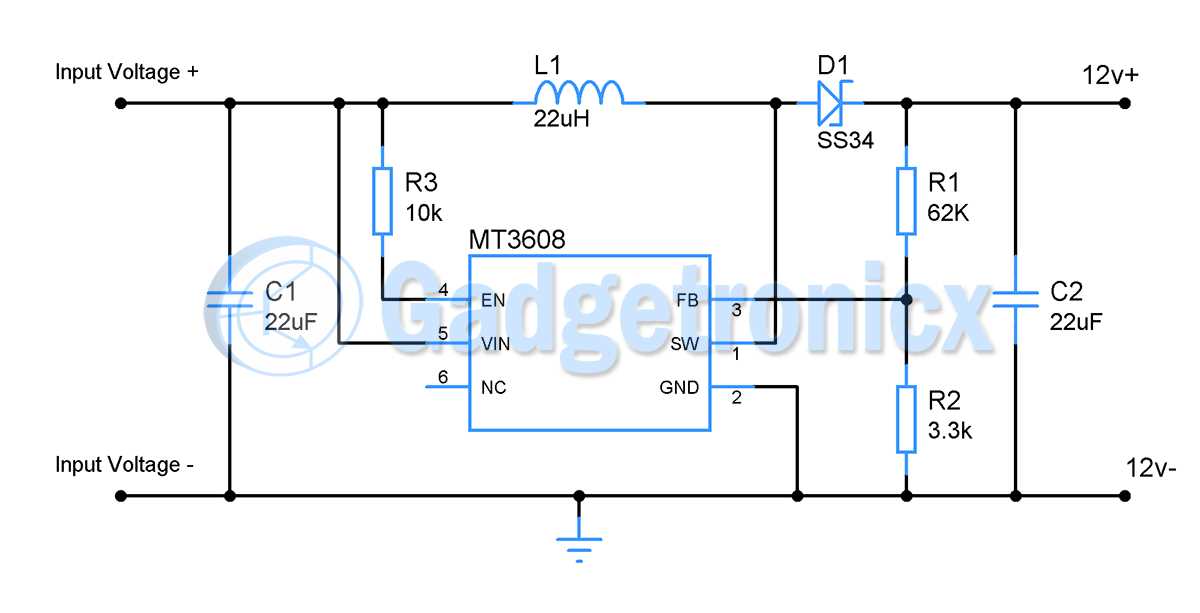
To efficiently step up a 3V power supply to 5V, start by understanding the role of key components like inductors, capacitors, diodes, and switching transistors. The process relies on converting lower voltage into a higher one, making it useful for powering devices that require more energy than the source can directly provide. You will need to select components that can handle the current and voltage requirements without excessive heat buildup or inefficiency.
The key to building a reliable setup is understanding the function of the inductor in this system. The inductor stores energy temporarily and releases it when needed, boosting the voltage. In combination with the right switching element, this allows for a higher output voltage. Carefully calculate the inductor’s value and ensure it matches the current and voltage specifications of your device.
Once you have selected the right components, follow the design principles to build the step-up configuration. Pay attention to component ratings, especially the switching transistor, which must be capable of handling high frequencies without significant losses. After assembling the system, check for any signs of instability or overheating, as this may indicate that certain components need adjustment or replacement.
3V to 5V Power Step-Up Design
Start by selecting a suitable inductor to handle the energy conversion process. The inductor must have a value that aligns with the input voltage and desired output, typically in the range of 10 µH to 100 µH. The switching transistor plays a pivotal role by controlling the current flow to the inductor. Use a MOSFET for efficient switching, ensuring it can operate at the frequencies required by your design, typically in the tens to hundreds of kHz.
Next, incorporate a diode that allows current to flow in one direction only, preventing backflow that could damage your system. Schottky diodes are often used due to their low forward voltage drop, which improves overall efficiency. A capacitor is also crucial for smoothing the output, reducing voltage ripple. Choose a capacitor with a voltage rating higher than 5V and enough capacitance to maintain stability in the output voltage under varying loads.
Building the Basic 3V to 5V Step-Up Power System
Start by selecting the correct inductor for this power system. For stepping up from 3V to 5V, choose an inductor with a value in the range of 10 µH to 100 µH. The specific value will depend on the current requirements of your load and the desired efficiency. A smaller inductor value can provide faster response times but might reduce efficiency at higher currents. Be sure to check the inductor’s current rating to prevent overheating or damage.
The next key component is the switching transistor, typically a MOSFET. The MOSFET must be rated for the input voltage and have low on-resistance to minimize power loss during operation. The switching frequency usually falls between 50 kHz and 200 kHz, depending on the application. Higher frequencies can reduce component size but might increase switching losses, so choose a frequency that balances size and efficiency.
Include a Schottky diode in your setup. Schottky diodes are ideal due to their low forward voltage drop and fast recovery time, which reduces energy loss and ensures stable output. Select a diode that can handle the peak current expected in your system, and make sure its reverse voltage rating exceeds the output voltage to prevent breakdown.
The output capacitor is critical for filtering the voltage and reducing ripple. A ceramic or tantalum capacitor with a rating of at least 6V will typically suffice. For better performance, choose a capacitor with a high capacitance value to smooth out any fluctuations in the output voltage. The capacitor should be placed as close to the output terminals as possible to minimize impedance and improve performance.
Now, design the feedback mechanism to regulate the output voltage. This is typically achieved using a voltage feedback loop that senses the output voltage and adjusts the switching transistor’s duty cycle accordingly. A simple voltage divider or an integrated feedback controller can be used to achieve precise regulation. Ensure the feedback network is stable and doesn’t introduce noise or oscillations.
After assembling the components, focus on grounding. Proper grounding minimizes noise and maximizes the efficiency of the system. Connect the ground of the input and output together and ensure that the ground traces are wide enough to handle the expected current without significant voltage drops.
Finally, make sure to test the step-up power system under different load conditions. Start by connecting a low-power load and gradually increase the current to check the system’s stability. Monitor the temperature of key components such as the transistor and inductor during operation. If any part of the system gets too hot, consider using components with higher power ratings or adding a heatsink to the transistor.
Once testing is complete and you have verified the system’s stability and efficiency, you can finalize the design. If needed, make adjustments to the switching frequency or inductor size to optimize performance for your specific application.