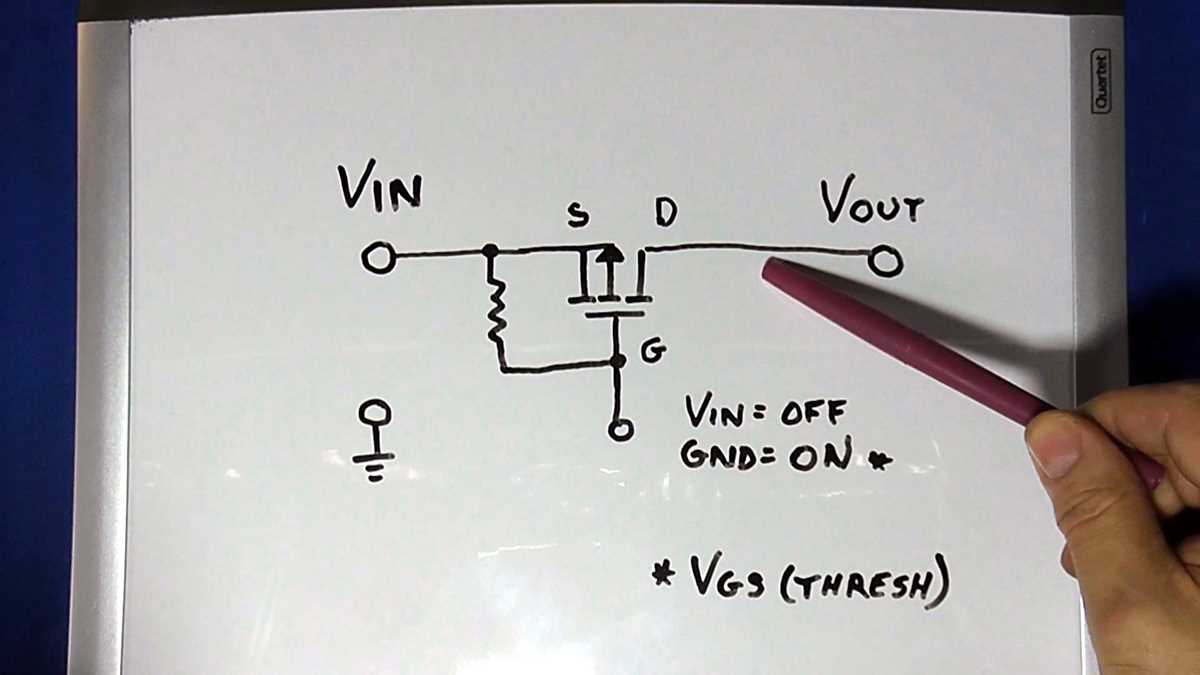
To begin, choose a P-type transistor that suits your voltage and current requirements. These transistors are commonly used for switching applications due to their ability to control high voltages with low current. A typical choice is the IRF9540, which can handle up to 23V and 15A, making it suitable for many applications.
Next, connect the source terminal to the negative side of your power supply. The drain will go to the load that needs to be controlled. Ensure that the gate terminal is connected to the control signal that will switch the transistor on and off. A low voltage signal will turn the transistor on, allowing current to flow through the load.
For smooth operation, include a gate resistor to limit the current flowing into the gate and protect the control circuitry. Additionally, adding a pull-up resistor between the gate and source ensures that the transistor remains off when no signal is present. The value of the pull-up resistor typically ranges from 10kΩ to 100kΩ, depending on the specific transistor and the desired response time.
Always verify the gate threshold voltage (V_GS(th)) of the transistor before using it in your design. This value determines the voltage required to switch the transistor on. For reliable operation, ensure that your control signal voltage is well above this threshold.
P Type Transistor Switching Circuit Design
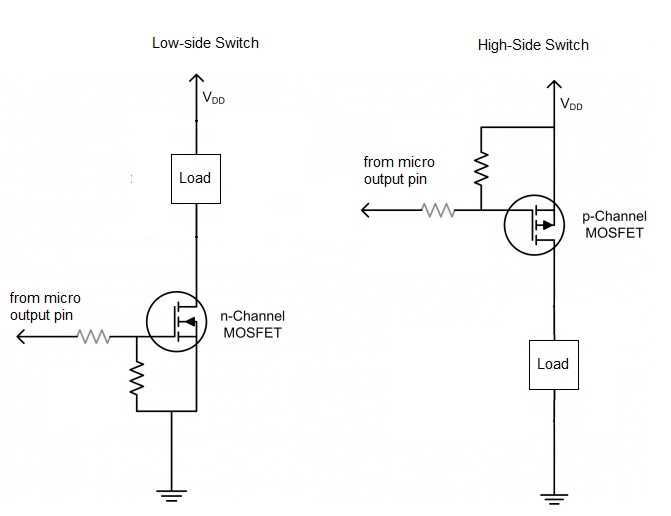
Begin by selecting the appropriate P-type transistor based on voltage and current ratings. A popular choice for most applications is the IRF9540 transistor, which can handle up to 23V and 15A. This transistor is suitable for low-to-medium power switching tasks and is easy to integrate into most designs.
For the source connection, attach it to the negative side of your power supply. The drain should be connected to the load you intend to control, ensuring that the current flows through the load when the transistor is activated. Be sure the load does not exceed the current limit of the transistor to avoid damaging the component.
The gate terminal is used to control the operation of the transistor. To turn the device on, apply a low voltage to the gate relative to the source. A typical gate voltage of 5V is common for these components. When designing the gate control, ensure the voltage is sufficient to fully activate the transistor, taking into account the gate threshold voltage (V_GS(th)) of the device.
Use a pull-up resistor between the gate and source to keep the transistor off when no control signal is applied. The pull-up resistor helps prevent floating gate voltage, which can cause unwanted switching behavior. The value of this resistor typically ranges from 10kΩ to 100kΩ, depending on the transistor’s characteristics.
For efficient operation, especially with high-speed switching, include a gate resistor to limit current flowing into the gate. This protects the control circuitry and ensures smooth transitions between on and off states. A typical value for the gate resistor is between 100Ω and 1kΩ, depending on the application and switching frequency.
Understanding the P Type Transistor and Its Operation
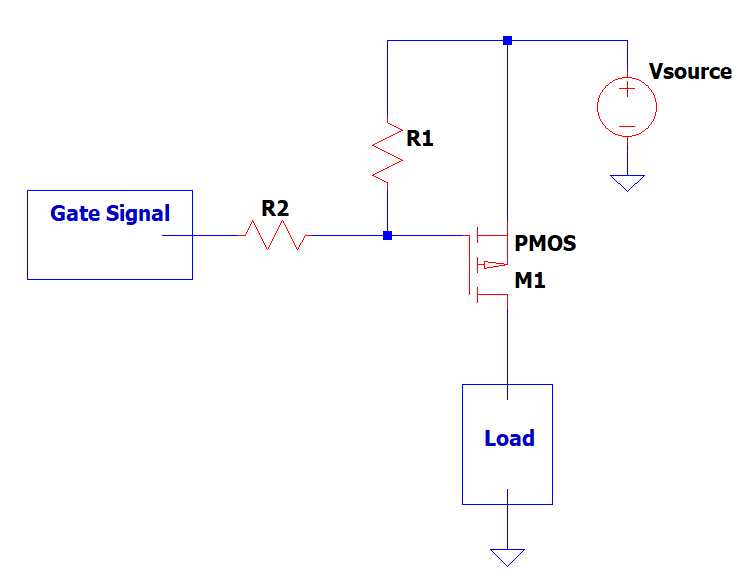
The P-type transistor operates as a switch, controlling current flow in response to a voltage applied to its gate. Unlike N-type transistors, which require a positive voltage to turn on, P-type transistors turn on when a negative voltage is applied to the gate relative to the source. This key difference makes them ideal for high-side switching applications.
Basic Operation
When the gate voltage is lower than the source voltage by at least the threshold voltage (V_GS(th)), the transistor will conduct, allowing current to flow from the source to the drain. When the gate voltage is close to the source voltage, the transistor will be in its off state, blocking current flow. This on/off behavior is the fundamental characteristic of the component.
Voltage Control
One of the most important factors in designing a circuit with a P-type transistor is ensuring that the gate voltage is properly controlled. A low gate voltage (relative to the source) is needed to turn the transistor on. Typically, a voltage difference of around 5V is sufficient to fully activate most P-type transistors, but always check the datasheet for the specific threshold voltage (V_GS(th)) for your chosen component.
When choosing a P-type transistor for your design, ensure it has a low enough threshold voltage to be easily driven by the control signal. For example, transistors with a threshold voltage between -2V and -4V are commonly used in many low-voltage applications, such as microcontroller-controlled circuits.
- Gate Voltage Control: Use a voltage reference or a dedicated driver circuit to control the gate voltage efficiently.
- Threshold Voltage: Ensure that the voltage difference between the gate and the source is adequate for turning the transistor on and off as required.
Lastly, the drain current rating of the transistor should match or exceed the maximum current expected in the load. For instance, if your design involves switching motors or high-current LEDs, ensure that the P-type transistor can handle the necessary current without overheating or failing. Also, consider using a heatsink or active cooling if the current is high.