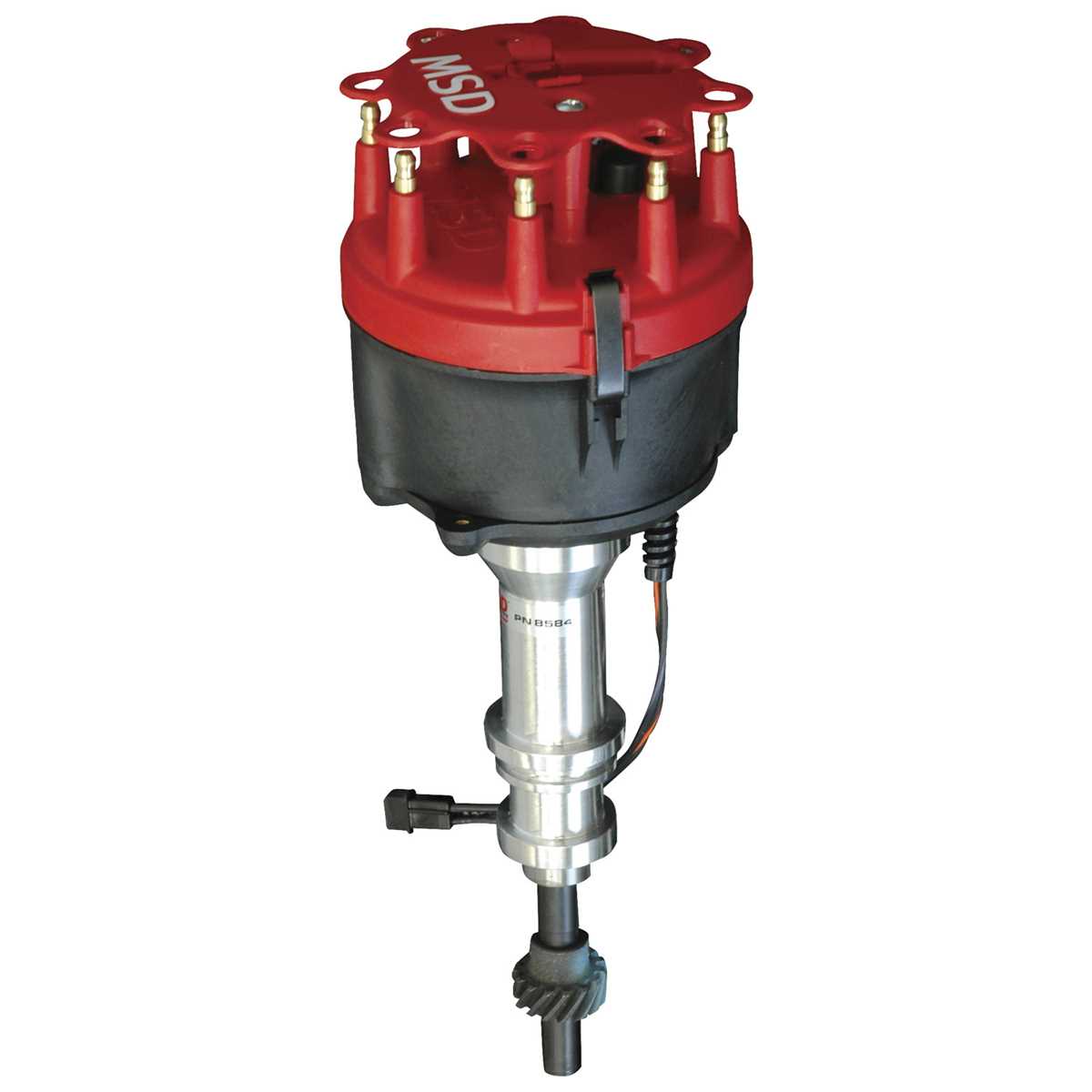
Connect the magnetic pickup leads from the ignition trigger unit to the capacitive discharge ignition box using the two signal wires provided with the performance ignition system. The violet lead carries the positive trigger signal, while the green lead carries the negative return. Correct polarity keeps spark timing stable across the full RPM range.
The trigger assembly mounted in the ignition housing replaces traditional breaker points and sends a clean signal to the external ignition control box. This signal tells the control module exactly when to discharge energy through the ignition coil. With this setup, the coil receives a high-energy pulse that produces a stronger spark compared with point-based ignition systems.
Route the signal leads away from alternator cables, starter power lines, and ignition coil high-voltage wires. Electrical interference from high current circuits can distort the pickup signal, which may cause misfires or unstable timing at higher engine speeds. Shielded routing or dedicated loom channels help reduce noise in performance engine bays.
The ignition control box must receive a solid ground connection directly to the engine block or battery negative terminal. Poor grounding increases resistance and weakens the trigger signal. Many installation issues occur because the ground lead attaches to painted surfaces or thin sheet metal rather than a clean metal grounding point.
Accurate signal routing between the trigger assembly, ignition control box, and coil allows precise spark timing, which supports stable idle, strong throttle response, and reliable ignition events during high RPM operation.
MSD Pro Billet Distributor Wiring Diagram With Magnetic Pickup and Ignition Box Connections
Connect the magnetic trigger leads from the ignition housing directly to the capacitive discharge ignition control unit. The violet lead carries the positive trigger signal, while the green lead carries the negative signal. These two conductors transmit the timing pulse generated by the internal magnetic pickup. Reversed polarity shifts ignition timing several degrees and often causes rough idle or poor acceleration.
The trigger signal travels from the rotating reluctor inside the ignition housing to the control module. Each passing tooth generates a small alternating voltage that the control box interprets as a spark event command. This design replaces mechanical breaker points and prevents contact wear at high engine speed.
Route the signal pair through a shielded loom whenever the engine bay contains high current cables such as starter feeds or alternator output lines. Magnetic interference from these circuits can distort the pickup signal. Distortion may appear as misfires above 4500–5000 RPM or unstable ignition timing under load.
Ignition Control Box and Coil Connections
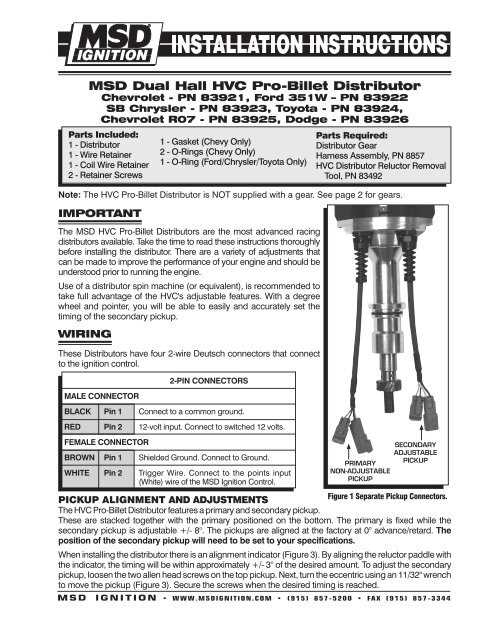
The control module sends high-energy pulses to the ignition coil through two heavy conductors. The orange lead connects to the positive coil terminal, while the black lead attaches to the negative coil terminal. These wires carry rapid discharge pulses that generate strong spark energy across the spark plug gap.
Power supply routing must follow a direct path from the battery. The heavy red wire connects to battery positive, and the heavy black wire connects to battery negative or the engine block. Thin ignition switch leads should not carry the main current supply. Insufficient current delivery weakens spark intensity.
Mount the ignition control unit away from exhaust headers or turbocharger housings. Heat above roughly 80–90°C reduces electronic component life and may interrupt ignition pulses during extended operation.
Magnetic Pickup Signal Integrity
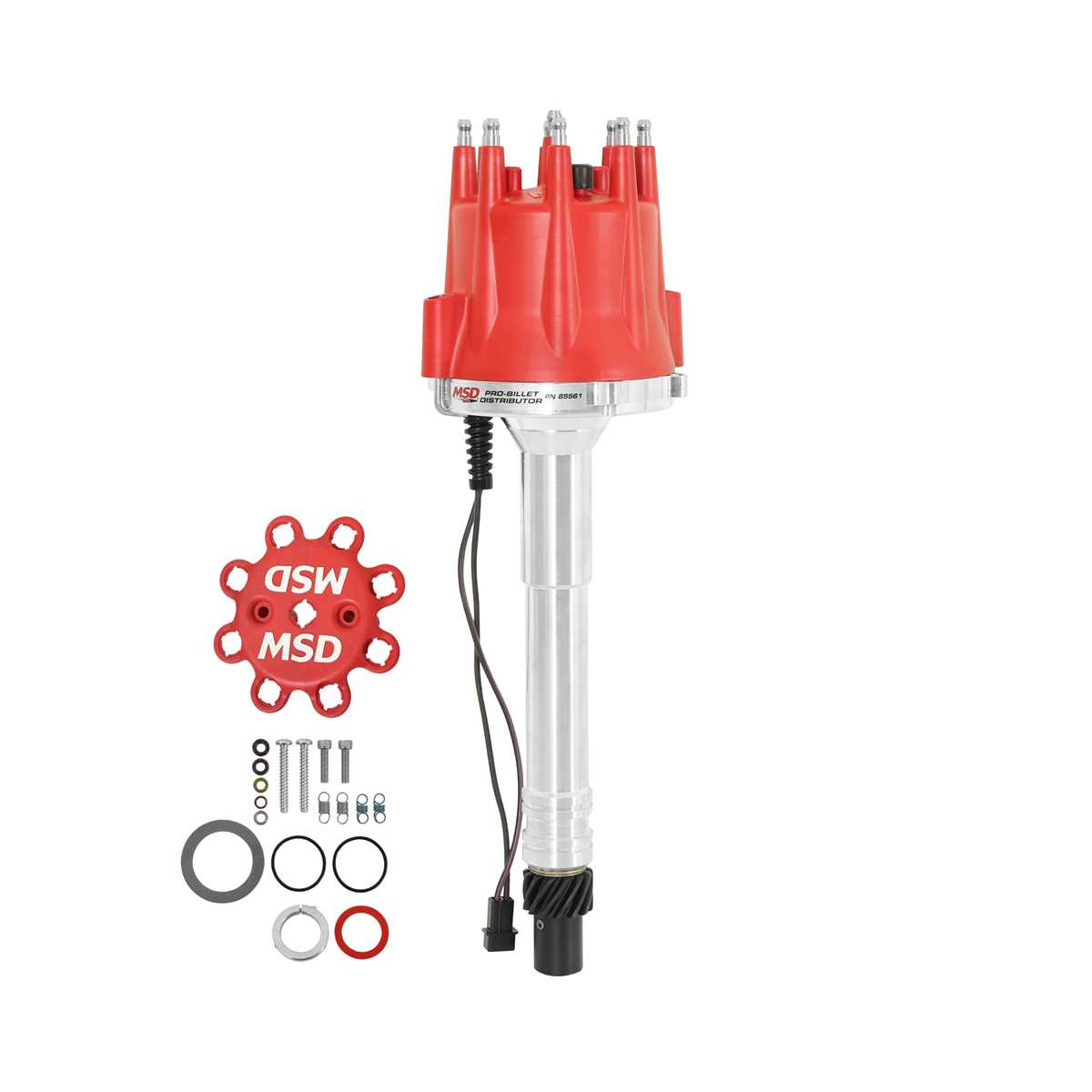
Maintain solid grounding between the engine block, battery negative terminal, and the ignition control module. A ground strap between the engine and vehicle chassis reduces electrical resistance and stabilizes the trigger signal generated by the magnetic pickup assembly.
Verify rotor phasing after installation. The rotor tip should align with the cap terminal at the moment the trigger signal fires the coil. Incorrect alignment forces spark energy to jump a wider gap inside the cap, which may cause crossfire between adjacent terminals.
Magnetic pickup wire colors and connection points between MSD Pro Billet distributor and ignition box
Connect the violet and green signal leads from the magnetic trigger assembly inside the ignition housing directly to the matching pickup input on the capacitive discharge ignition unit. The violet conductor carries the positive trigger signal and the green conductor carries the negative return. Reversed polarity shifts ignition timing and can cause unstable spark events at higher engine speed.
Magnetic Pickup Lead Identification
- Violet lead – positive trigger signal from the magnetic pickup sensor.
- Green lead – negative trigger signal returning to the ignition control unit.
- Both conductors connect to the dedicated two-pin pickup connector on the ignition control module.
- Keep these signal leads separated from spark plug cables and alternator output lines.
Connection Points and Routing
- Route the violet conductor from the trigger assembly to the positive pickup terminal on the ignition control box.
- Route the green conductor to the negative pickup terminal on the same connector.
- Secure the signal pair in a protective loom along the intake manifold or firewall.
- Avoid contact with high-temperature areas such as exhaust headers.
- Leave slight slack near the ignition housing to allow timing adjustment without stressing the signal wires.
Stable trigger signals depend on clean routing and solid connectors. Loose terminals, reversed polarity, or routing beside high-voltage spark cables often lead to timing scatter, random misfires, or weak ignition events at high RPM.