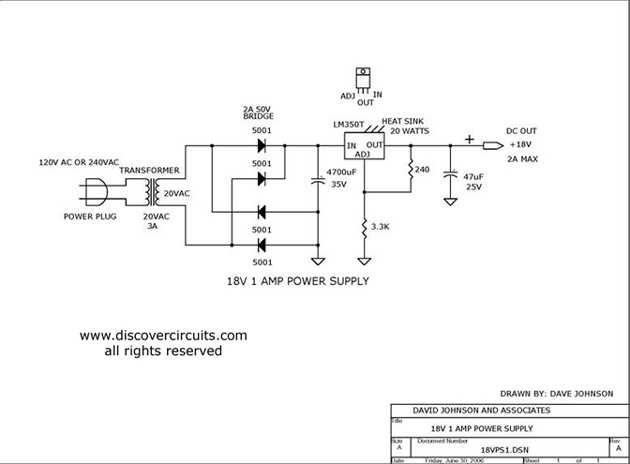
If you need to transform alternating current into direct current for various electronic devices, it’s vital to understand how to build a reliable conversion mechanism. Start with identifying the necessary components, such as diodes, resistors, and capacitors, which will help in rectifying and filtering the incoming AC. The process of switching AC to DC is crucial for powering many common devices like radios, computers, and even battery chargers.
Begin by connecting a bridge rectifier setup, consisting of four diodes arranged in a specific pattern to convert the negative half of the waveform into a positive one. Once the rectification is done, smoothing components, particularly capacitors, are added to eliminate the ripple effect in the current. This allows for a more consistent flow of electricity, which is critical for sensitive devices.
Finally, ensure proper regulation by adding voltage regulators. These ensure that the output remains constant, even when the input fluctuates, thus preventing damage to the equipment. Without this regulation step, fluctuating voltage can lead to malfunction or reduced efficiency in your setup. This approach is commonly used in powering microcontrollers, battery charging systems, and low-voltage appliances.
AC to DC Conversion Setup
To build a reliable mechanism for transforming alternating current into direct current, the first step is selecting the right components. Begin with a bridge rectifier composed of four diodes arranged in a way that both halves of the AC waveform are converted into positive current. This ensures that the output will be unidirectional, which is necessary for many electronic applications like charging circuits and sensor systems.
Choosing the Right Components
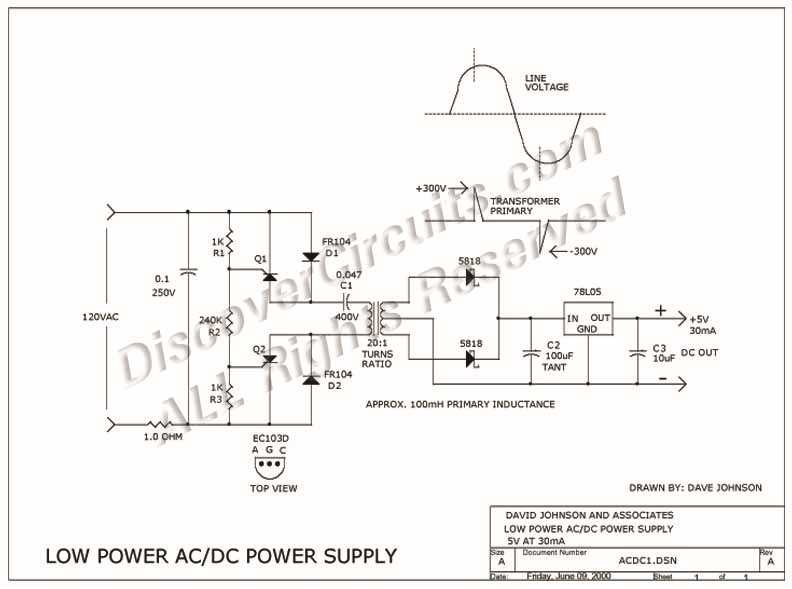
The most common diodes used for rectification are silicon-based, but depending on your voltage and current requirements, you might choose Schottky diodes for their lower forward voltage drop. After the rectifier, you’ll need to smooth the fluctuating current by incorporating capacitors. Electrolytic capacitors are typically used because of their high capacitance values, which help in reducing ripple. Consider selecting a capacitor with a voltage rating higher than the peak voltage to avoid damage during surges.
Regulating the Output
Once the current is rectified and smoothed, you must stabilize it by using voltage regulators. A commonly used regulator for small projects is the LM7805, which provides a steady 5V output, ideal for microcontroller-based systems. Without a regulator, the voltage would fluctuate with changes in load, leading to unpredictable behavior in sensitive devices. Adding a heatsink to the regulator may be necessary to prevent overheating, especially in circuits with higher current requirements.
Components Required for AC to DC Conversion
The first item needed is the bridge rectifier, which is typically constructed from four diodes. This setup allows the alternating current to be converted into a pulsating direct current. Make sure to use diodes with a voltage rating that exceeds the peak voltage of your AC source to prevent breakdown or damage during operation.
Next, a filter capacitor is necessary to smooth out the fluctuations in the current after rectification. Electrolytic capacitors are commonly chosen due to their high capacitance values and cost-effectiveness. Select a capacitor with a voltage rating that’s higher than the peak voltage to ensure longevity and reliability.
Adding Voltage Regulation
Once the current is rectified and filtered, it will still be unstable. To achieve a steady output, use a voltage regulator. The LM7805 is often chosen for its ability to maintain a stable 5V output. However, depending on the application, other regulators, such as the LM317, may be more suitable for different output voltages.
In cases where higher efficiency is required, consider using a switching regulator instead of a linear one. Switching regulators, like the LM2596, offer higher conversion efficiency by switching the transistors on and off rapidly, thus reducing power loss and heat generation.
Additional Protection Components
To prevent damage to the components, it’s a good idea to include a fuse at the input of your setup. This will protect the system in case of short circuits or overcurrent situations. Choose a fuse with a current rating that’s slightly higher than the expected load but low enough to provide protection during faults.
In addition, a reverse polarity protection diode should be used at the input stage. This will prevent damage in case the AC input is mistakenly connected in reverse, ensuring that the system continues to operate without issue.
Finally, heatsinks may be required for the regulator if the load is heavy or if the device will operate continuously. Overheating can shorten the lifespan of electronic components, so ensuring proper heat dissipation is an important aspect of maintaining long-term reliability in the setup.