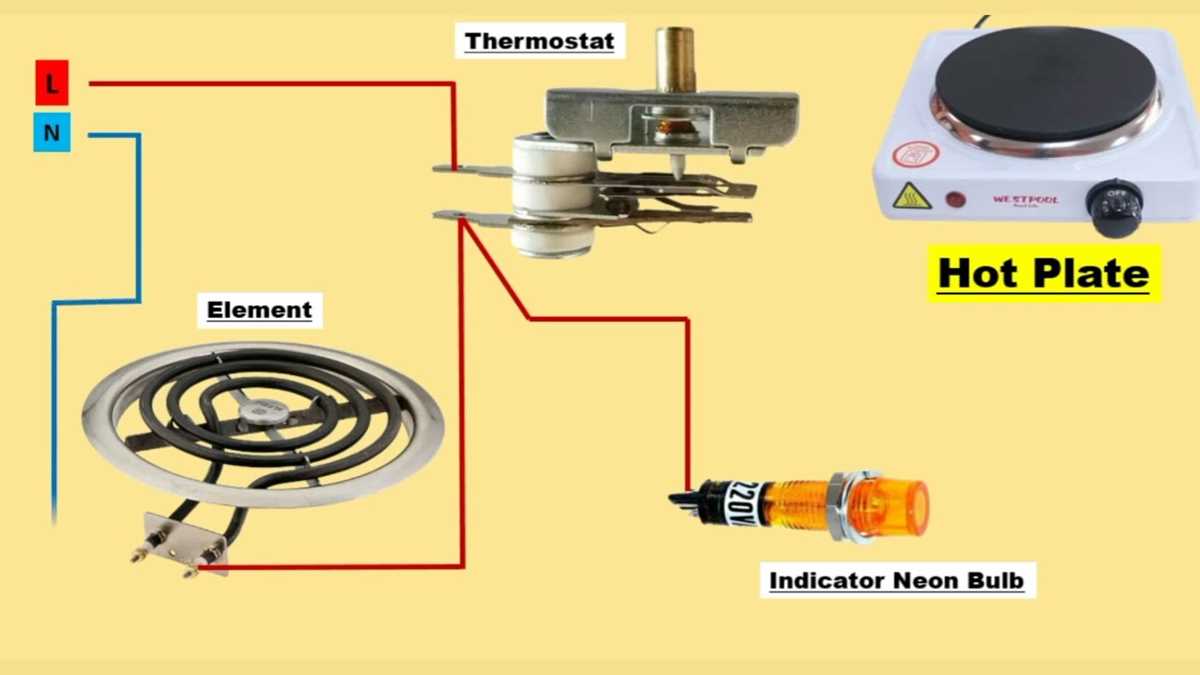
Connect the main power lines to the terminal block using copper wires rated for at least 20 amps. Ensure all connections are tightened to prevent sparking or loose contact during operation.
Install a dedicated circuit breaker rated at 30 amps to protect the appliance and household wiring from overload. Position the breaker near the power entry point for quick access in emergencies.
Attach heating elements individually to their respective terminals, verifying polarity if specified by the manufacturer. Use heat-resistant connectors to maintain contact integrity under high temperatures.
Route control switches and indicator lights with insulated wiring, avoiding proximity to high-current lines to reduce interference. Test each control independently before full operation.
Label each connection clearly to simplify future maintenance. Include notes on wire gauge, terminal numbers, and component ratings to ensure accuracy during troubleshooting.
Connections Layout for Home Cooking Appliance
Connect the main power lines directly to the terminal block using 12 AWG copper wires rated for 30 amps. Tighten all screws securely and apply a small amount of anti-oxidation paste to prevent corrosion and voltage drop.
Route each heating element individually to its designated terminal. Ensure that high-current leads are kept separate from control and indicator wiring to reduce interference and overheating risks.
Install a properly rated fuse or circuit breaker at the supply entry point. A 30-amp breaker protects the system against overload while allowing quick shutoff during maintenance or emergency conditions.
Label all terminals and wire ends clearly with permanent markers or heat-resistant tags. Include notes about voltage ratings, amperage, and terminal numbers to simplify troubleshooting and future modifications.
Connecting Power Supply and Main Terminals Safely
Use a dedicated 240V line with a 30-amp rating to supply the appliance. Ensure all connections at the main terminals are tightened to manufacturer specifications to prevent sparking and overheating.
Install a circuit breaker or fuse at the entry point of the supply line. A properly rated breaker allows immediate shutdown during overloads and protects wiring from damage. Place it within easy reach for maintenance.
Follow color coding strictly for live, neutral, and ground lines:
- Black or red for live wires
- White for neutral
- Green or bare copper for ground
This reduces the risk of incorrect connections and ensures compliance with safety standards.
Double-check all terminal contacts after installation. Apply dielectric grease to screws if recommended, and verify continuity using a multimeter. Testing before powering the appliance prevents shorts and maintains reliable operation.