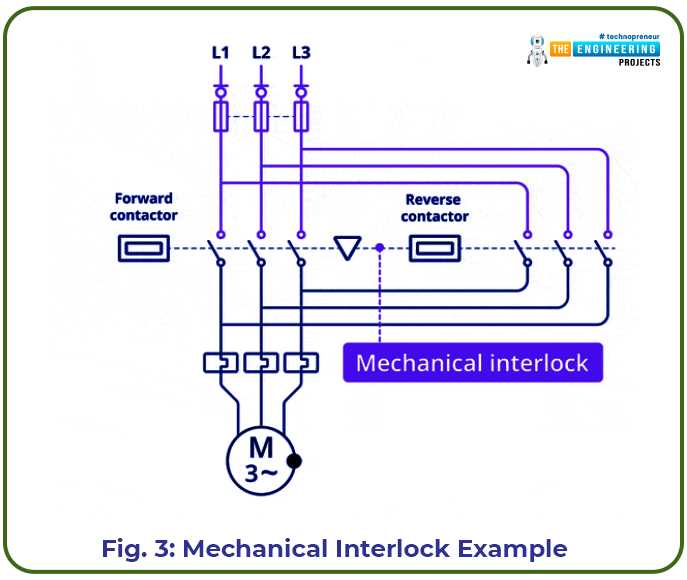
Use mutual blocking contacts between control relays to prevent two opposing electrical operations from activating at the same time. This arrangement is common in motor forward-reverse control panels where simultaneous energizing would short phases or damage the drive system.
The control path normally includes two magnetic contactors, each equipped with a normally closed auxiliary contact. The auxiliary contact from the forward unit is placed in series with the reverse coil supply, while the reverse auxiliary contact sits in the forward coil path. When one contactor pulls in, its auxiliary contact opens and blocks power from reaching the opposite coil.
A typical motor control panel operating on 220–240 V control power uses start and stop pushbuttons connected ahead of the relay coils. Pressing the forward button energizes the first coil, closes the main power contacts, and simultaneously opens the normally closed blocking contact in the reverse control line.
This arrangement prevents both contactors from closing together. Without the blocking contact path, simultaneous activation would connect opposing phase sequences to the motor windings and cause high current flow or mechanical shock.
Correct terminal routing, labeled auxiliary contacts, and secure connections maintain stable motor direction control and protect equipment from electrical faults caused by conflicting commands.
Interlock Circuit Diagram With Contactors and Control Logic for Motor Protection
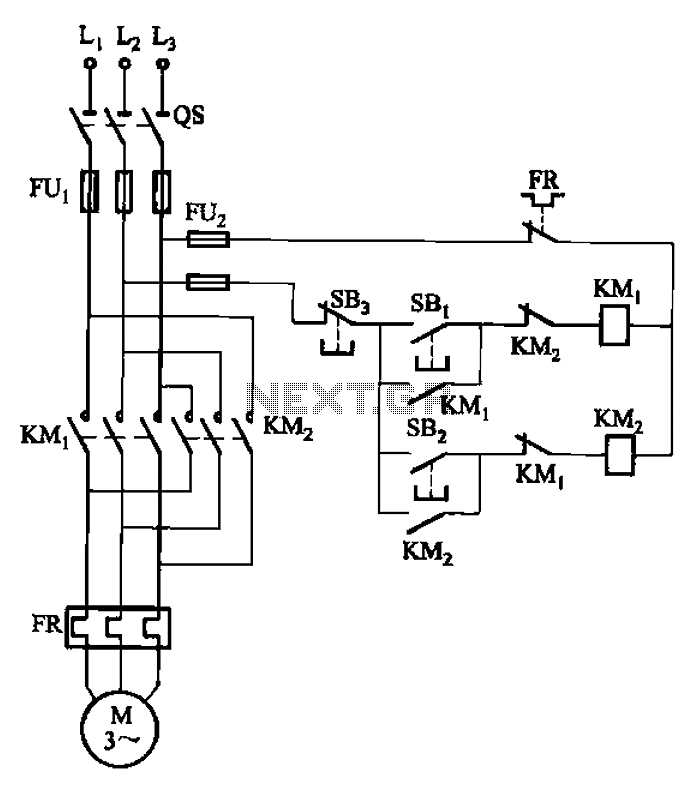
Install a normally closed auxiliary contact from the reverse magnetic starter in the control path of the forward starter coil. Place the forward auxiliary contact in the reverse coil line. This cross-blocking layout stops both starters from pulling in at the same time and prevents phase conflict at the motor terminals.
Use two magnetic starters rated for the motor current. For example, a three-phase motor drawing 18 A should be paired with starters rated at least 25 A AC-3. Each unit must include one normally closed auxiliary contact dedicated to the blocking function and one normally open contact for coil holding.
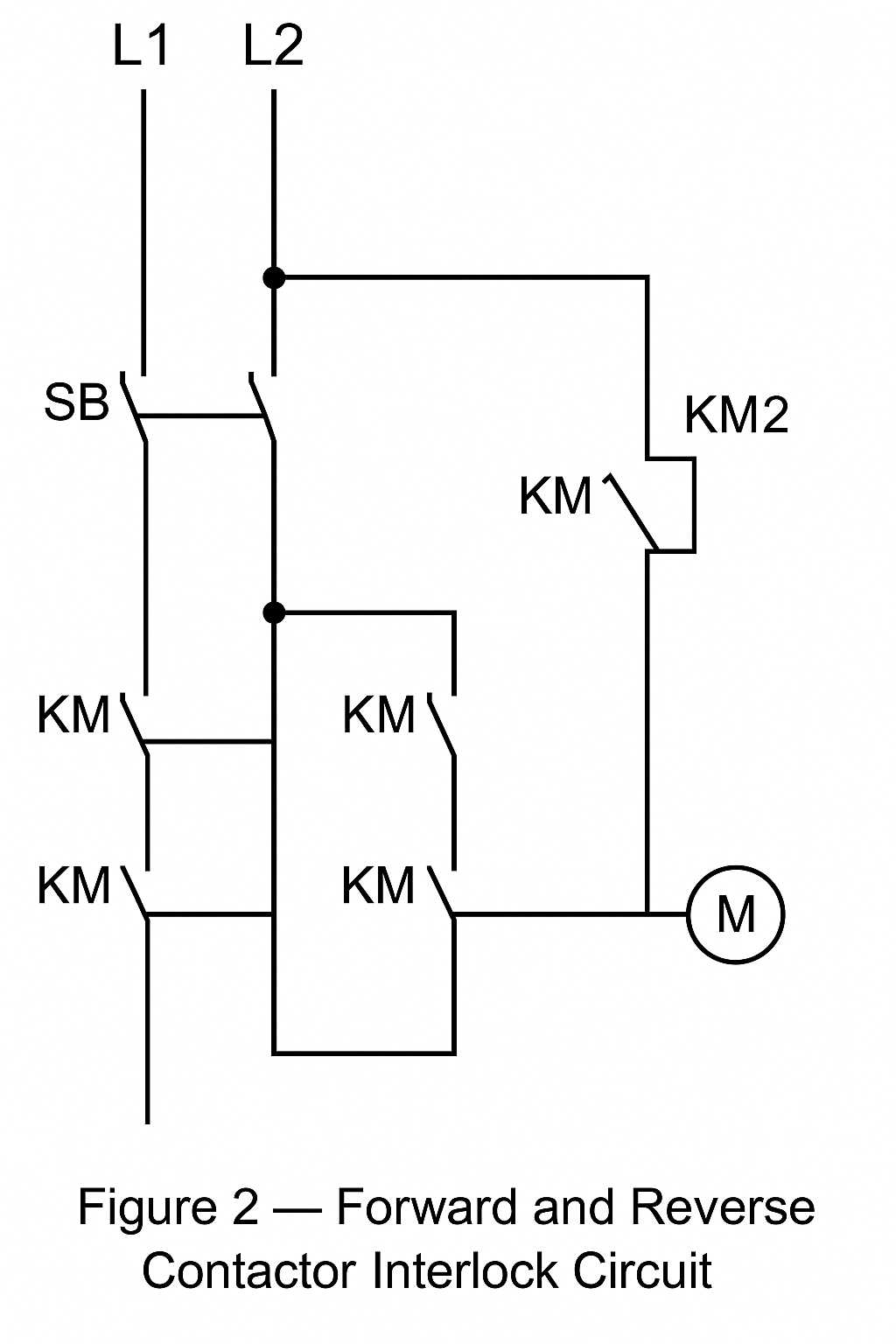
The control path usually begins with a stop pushbutton wired in series with both coil supply lines. A normally closed stop device ensures power to the control chain is interrupted immediately when pressed. After the stop contact, the line splits toward the forward and reverse start pushbuttons.
Pressing the forward button sends control voltage through the reverse auxiliary contact and energizes the forward coil. Once the coil is energized, the forward holding contact closes and maintains power after the button is released.
At the same moment the forward unit activates, its normally closed auxiliary contact located in the reverse coil path opens. This action blocks current from reaching the reverse coil.
If the operator presses the reverse button while forward operation is active, the open auxiliary contact interrupts the path and the second coil remains de-energized. Mechanical damage and phase collision inside the motor windings are prevented.
Add a thermal overload relay between the power contacts and the motor leads. The overload relay normally closed control contact must be wired in series with the coil supply so that excessive current disconnects the control path and releases the starter.
Verify the control arrangement using a multimeter. Measure continuity through each auxiliary contact while the corresponding starter is energized and de-energized. Correct readings confirm the blocking logic functions as intended and the motor cannot receive conflicting direction commands.
Electrical Interlock Wiring Between Forward and Reverse Motor Contactors
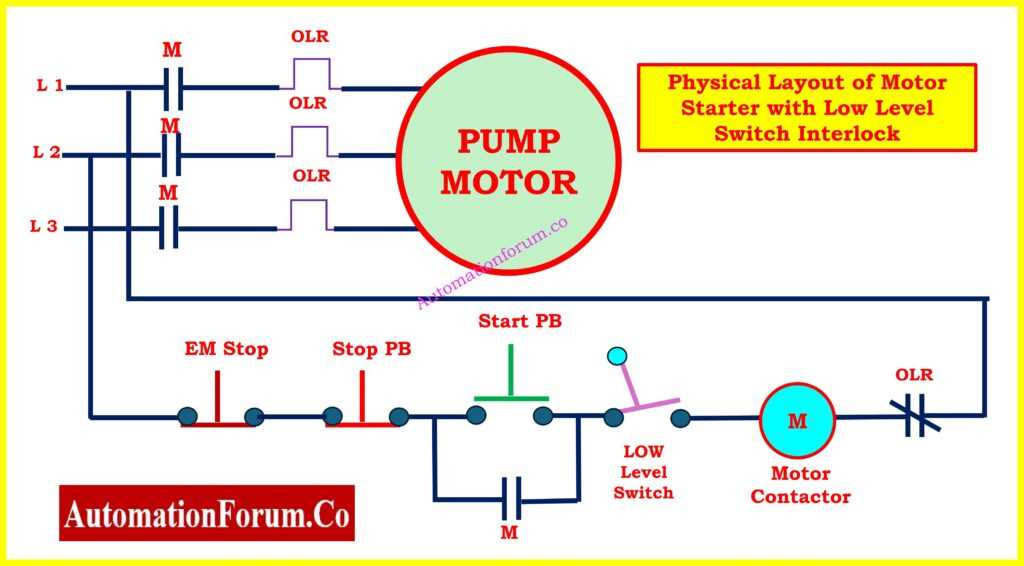
Place a normally closed auxiliary contact from the reverse starter in series with the forward coil supply. Install the forward auxiliary contact in the reverse coil line. This cross-blocking arrangement stops both starters from energizing at the same time and protects the motor from opposite phase rotation commands.
The control path begins at the stop pushbutton, which must use a normally closed contact. From this point the line branches toward the forward and reverse start buttons. Each start button connects to the coil of its respective magnetic starter through the auxiliary contact of the opposite unit.
Pressing the forward button sends control voltage through the reverse auxiliary contact and energizes the forward coil. As soon as the forward starter pulls in, its holding contact closes and keeps the coil powered after the button is released.
At the same moment, the normally closed auxiliary contact mounted on the forward starter opens inside the reverse coil path. This opened contact blocks voltage from reaching the reverse coil.
If an operator presses the reverse button while the forward starter remains energized, the open auxiliary contact interrupts the control path. The reverse coil cannot activate, and the motor continues rotating in the same direction without electrical conflict.
Use clearly labeled terminal numbers such as 13–14 for holding contacts and 21–22 for normally closed blocking contacts. This labeling simplifies maintenance and prevents incorrect routing during panel assembly.
Check the arrangement with a multimeter during commissioning. Energize one starter and measure continuity across the opposite coil path. The reading should show an open state, confirming that simultaneous activation of forward and reverse starters cannot occur.