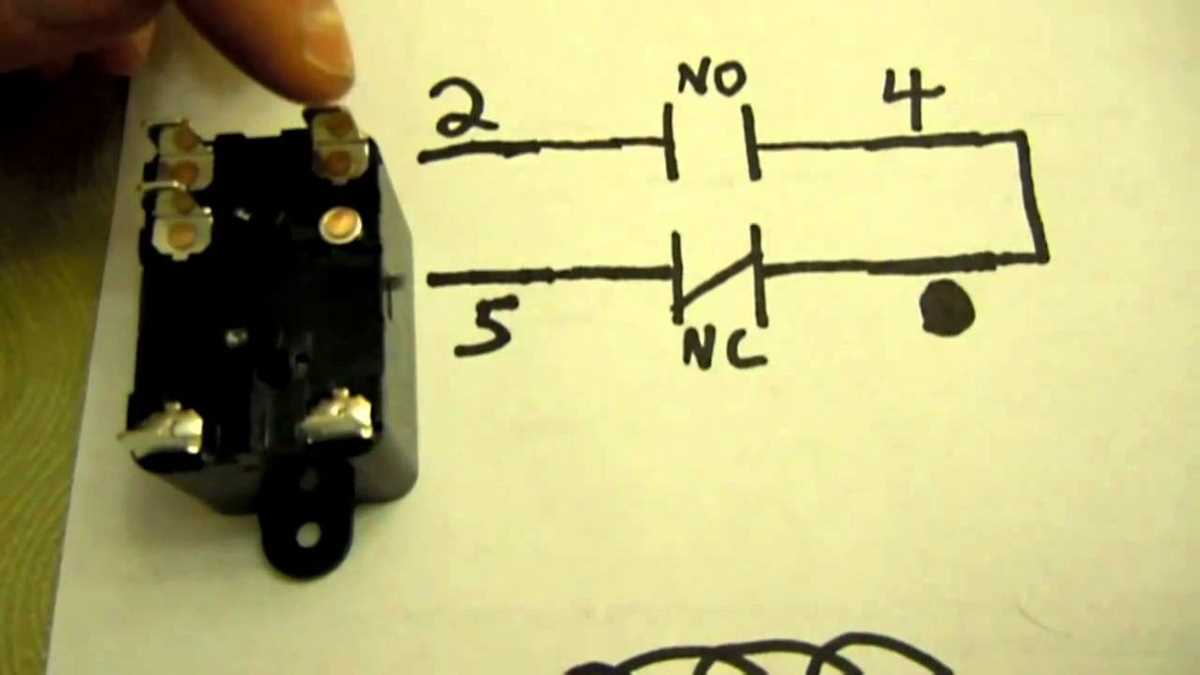
Use a low-voltage control circuit with a coil-driven contact switch connected through a dedicated transformer that reduces mains power to roughly two dozen volts. One terminal from the transformer secondary feeds the thermostat control line, while the return path goes directly to the coil terminal of the electromechanical switch. The remaining coil pin connects back to the transformer common. This arrangement allows the thermostat to energize the coil and close the load contacts that activate the blower or compressor stage.
For stable operation, place the transformer secondary common on the same reference line used by the thermostat and control coil. Label conductors clearly: one line for power supply from the transformer, one switched control line from the thermostat, and two heavier conductors routed through the switch contacts to the equipment load. The contact pair acts as an isolated gate between the low-voltage control side and the higher-power device such as a fan motor or condensing unit.
Mount the contact switch in a ventilated enclosure near the air handler cabinet. Keep control conductors separated from high-current lines by at least several centimeters to limit electromagnetic interference. Use insulated terminals or crimp connectors rated above the expected current of the controlled device. A common practice is routing the thermostat call line to one coil terminal while the transformer return line completes the coil circuit.
Verification requires measuring the transformer output and checking that the coil receives voltage only during a thermostat demand signal. When energized, the internal armature closes the contact pair, allowing current to pass to the compressor clutch or blower contactor circuit. If the switch chatters or fails to hold, inspect coil resistance, terminal tightness, and transformer capacity.
Twenty-Four-Volt Control Switch Coil Layout: Terminal Connections and Fault Isolation
Connect the coil pair from the transformer secondary to terminals marked A1 and A2 (or C and W depending on manufacturer marking). One lead usually comes from the common side of the low-voltage transformer inside the furnace or air handler, while the second lead arrives from the thermostat call line. Contact terminals labeled COM, NO, and NC carry the load for devices such as condenser contactors, blower triggers, or valve actuators. Tighten screw clamps firmly and strip conductors about 6–7 mm; longer exposed copper can cause unintended contact with the metal frame.
- COM – incoming control power from transformer secondary
- NO – closed only after the coil energizes
- NC – closed when the coil is inactive
- A1 / A2 – coil inputs from thermostat circuit
- Aux terminals – optional fan delay or defrost signals on some units
Correct polarity rarely matters in AC control circuits, yet consistent lead placement helps diagnostics later. Keep the common conductor color identical across the cabinet (often blue or brown). Thermostat call lines typically use red for supply and white, yellow, or green for command signals. Route conductors away from blower housings and sheet-metal edges; plastic grommets prevent insulation cuts where wires pass through cabinet panels.
- If the coil does not energize, measure transformer output: expect roughly 22–28 VAC across the secondary.
- Check continuity across A1–A2; infinite resistance indicates a burned coil.
- Verify thermostat output while calling for cooling or heating.
- Inspect COM–NO contacts for pitting or carbon buildup that blocks current flow.
- Confirm that the load device (fan motor contactor or valve) is not drawing excessive current.
Intermittent operation often traces to loose terminal screws, oxidized spade connectors, or voltage drop caused by long control runs. Measure voltage directly at the coil while the thermostat calls for operation; values below ~20 VAC can prevent pull-in. If chatter occurs, inspect the transformer for overheating and confirm the control circuit shares no parallel loads such as humidifier solenoids. Replace the switching module when contact resistance exceeds roughly 0.3–0.5 ohms under load, as this level creates heat and unreliable equipment cycling.
Reading a Low-Voltage Climate Control Schematic to Align Thermostat, Transformer, and Coil Terminals
Trace the secondary side of the step-down transformer first: one conductor typically lands on the thermostat’s common terminal (often marked C), while the opposite side feeds the thermostat input labeled R or RC. From that point the controller acts as a gate that sends the same low-voltage supply toward the coil terminals of the switching contactor whenever heating, cooling, or fan demand appears. If the schematic sheet shows a continuous line from transformer secondary → thermostat R → control terminal such as Y, G, or W → coil input, the circuit path is correct.
Transformer labeling usually shows primary taps for mains power and a secondary pair delivering roughly mid-20-volt alternating current. These two leads become the reference pair for the entire control loop. One side is distributed as “hot control supply” through the thermostat selector contacts, while the opposite side returns directly to one side of the coil in the contactor block. Matching these paths on the schematic sheet confirms which thermostat output activates which coil.
Identifying Thermostat Output Paths
Thermostat terminals correspond to functions rather than components. For example, Y often routes the control supply toward the compressor contactor coil, G toward the blower motor contactor, and W toward the heat control stage. On the schematic sheet, each of these outputs appears as a branch leaving the R supply node. Follow the branch line until it reaches the coil symbol of the contactor assembly. That coil normally shows two connection points: one from the thermostat branch and one tied back to the transformer return conductor.
Check for series safety devices drawn between the thermostat output and the coil. Pressure switches, float switches, or limit cutouts may interrupt the path. If the schematic sheet shows a switch symbol along that route, the coil receives voltage only when that device is closed. While matching terminals, confirm that these protective components remain in line with the coil feed rather than bypassed.
Matching Coil Terminals to the Control Supply
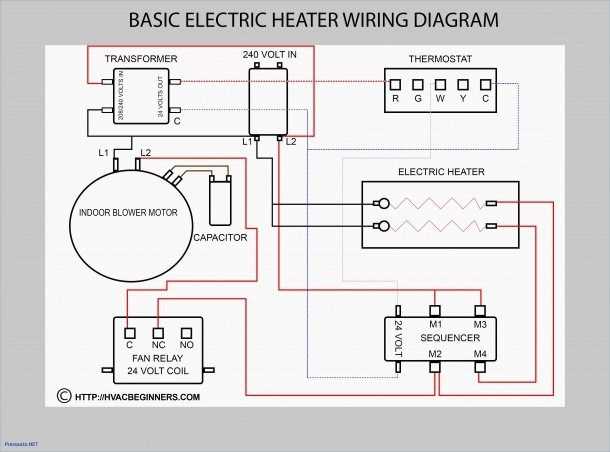
The coil symbol usually includes two tags such as A1 and A2 or similar markings. One side connects to the thermostat output branch, the opposite side ties to the transformer return. When translating the schematic sheet to actual terminals in the control cabinet, locate the transformer secondary pair first, then verify continuity from the return conductor to one coil terminal. The remaining coil terminal should correspond with the thermostat signal lead.
If multiple contactor coils appear on the schematic sheet, compare their return connections. Many designs share a common return conductor from the transformer secondary while each thermostat output feeds a separate coil input. Confirming this shared return line prevents misplacing conductors and ensures each thermostat command energizes the intended contactor assembly.