Ensure all input jacks are clearly labeled and connected to isolated preamp stages to prevent cross-talk and maintain clean signal paths across all inputs.
Check resistor values at each input to match the expected voltage levels of incoming devices. Incorrect values can distort signals or overload subsequent stages.
Balance output paths using dedicated summing resistors to maintain uniform levels across multiple outputs. This prevents one source from dominating the final mix.
Verify power supply voltage and current ratings to support all active components simultaneously. Insufficient power can cause noise, signal dropouts, or component stress.
Secure all ground connections to a central point to avoid ground loops, which introduce hum or interference into the signal chain.
Use decoupling capacitors near op-amps or other active devices to stabilize voltage rails and reduce transient noise during dynamic signal changes.
Label and organize patch points for easier troubleshooting and consistent operation, especially when integrating multiple sources or effects units.
Test each input and output individually before final assembly to ensure signal integrity, correct polarity, and proper impedance matching throughout the system.
8 Input Sound Control Assembly and Connection Guide
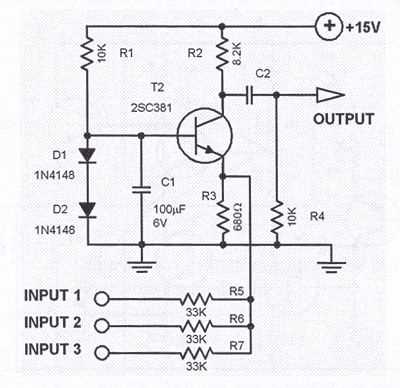
Align all preamp modules on a stable chassis and secure them with insulated mounts to prevent vibration and minimize interference. Connect each input using shielded leads, keeping lengths as short as possible to maintain signal clarity and reduce noise pickup.
Verify all summing resistors and output paths before final assembly. Ensure each source is correctly matched to the bus resistors to maintain balanced levels, and confirm power rails deliver adequate current without voltage drops under full load conditions.
Identifying Input and Output Terminals for Each Signal Line
Label each connector clearly before installation. Use colored tags or numbered markers to differentiate between incoming and outgoing signals to prevent cross-connections and ensure consistent routing.
Check polarity and ground connections on all terminals. Incorrect orientation can introduce hum or signal loss. Always use a multimeter to verify continuity between the source and the destination terminals.
Organize terminal strips in a logical sequence:
- Input jacks at the top row for quick access.
- Output jacks at the bottom row for signal distribution.
- Maintain separate rows for preamplified and line-level signals to reduce interference.
Document the terminal layout with a table or schematic. Include
- Connector ID
- Signal type
- Expected voltage levels
- Notes on shielding or special handling
This helps future maintenance and minimizes errors during upgrades or troubleshooting.