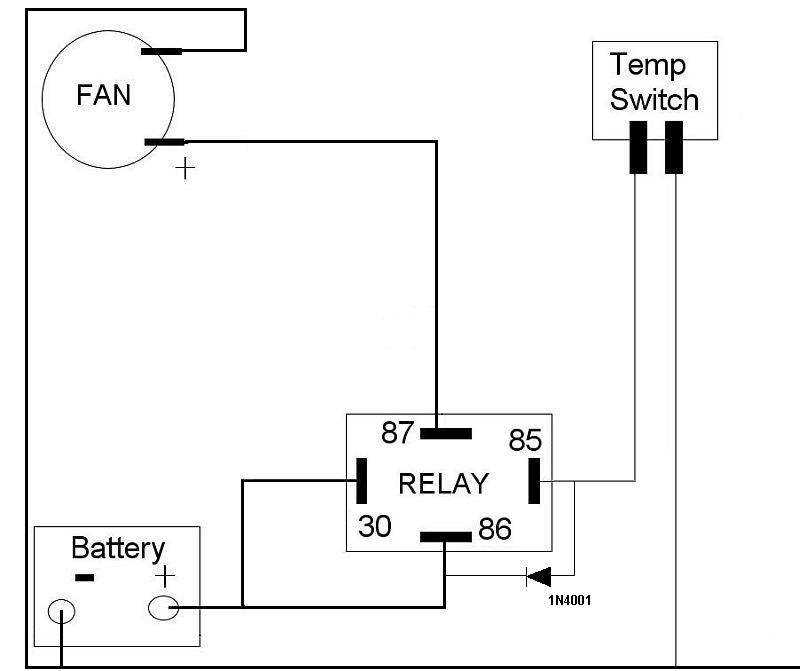
Connect the cooling motor through a relay supplied directly from the battery and protect the supply line with a fuse rated between 20 A and 40 A depending on motor size. This configuration prevents heavy current from passing through the dashboard temperature control circuit and reduces overheating of smaller conductors.
The cooling motor normally operates through a temperature sensor installed in the radiator or engine block. When coolant temperature rises to the set point, the sensor closes the control path that activates the relay coil. The relay then connects battery voltage to the cooling motor, causing the blades to rotate and draw air through the radiator core.
Use automotive-grade copper conductors with insulation rated above 105 °C near the engine compartment. Route the positive supply from the battery to the fuse holder, then to the relay contact terminal, and finally to the cooling motor. The return path from the motor housing connects directly to chassis ground. A short and clean ground connection stabilizes motor speed and reduces voltage drop.
Place the relay close to the cooling unit to shorten the high-current path. Long supply conductors increase resistance and heat buildup under load. Verify voltage at the motor terminals with a multimeter while the temperature sensor triggers the relay to confirm full system voltage reaches the motor assembly.
Electric Fan Wiring Diagram with Relay Thermostat and Power Connection Layout
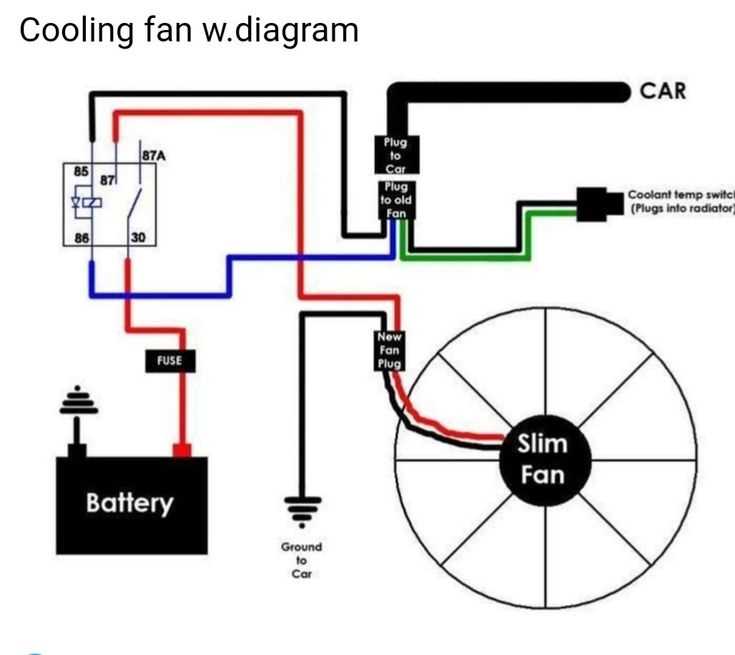
Connect the cooling motor to battery power through a relay rated for at least 30–40 A and place a fuse on the positive supply lead close to the battery terminal. This layout prevents heavy current from passing through the temperature sensor and dashboard circuits.
Power distribution path
The high-current path should remain short and direct between the battery, relay contacts, and the cooling motor.
- Battery positive terminal connects to a fuse holder
- Fuse output connects to relay contact terminal 30
- Relay terminal 87 connects to the cooling motor positive terminal
- Motor housing or negative lead attaches to chassis ground
Temperature control and relay trigger
The relay coil activates through a thermostat placed in the radiator or engine block. When coolant temperature rises to the preset value, the sensor closes the control path and energizes the relay coil.
The coil current remains low, usually below 0.2 A, allowing thin control conductors to operate the relay while the high-current motor supply stays isolated within the relay contacts.
Verify operation with a multimeter and temperature trigger test.
- Check battery voltage at relay terminal 30
- Confirm ground continuity at the motor housing
- Heat the thermostat or run the engine until activation temperature
- Measure voltage at the motor terminal when the relay clicks
Power supply routing and fuse placement in an electric fan wiring diagram
Route the positive supply from the battery directly to a fuse holder positioned within 15–20 cm of the battery terminal, then continue the line to the relay contact that feeds the cooling motor. This placement protects the entire high-current path from short circuits and prevents insulation damage along the engine harness.
Select a fuse rated slightly above the motor’s operating current. Small radiator cooling units usually draw 10–15 A, while larger assemblies can reach 25–30 A during startup. Install a conductor with a cross-section between 2.5 mm² and 4 mm² for most automotive cooling motors. A thicker conductor limits voltage drop and stabilizes blade speed during heavy thermal load.
Keep the supply route away from exhaust manifolds, turbo housings, and sharp metal edges. Secure the harness with clips at intervals of about 25 cm and use protective loom near high-temperature areas. A short path between battery, fuse, relay, and motor reduces resistance and heat buildup under load.