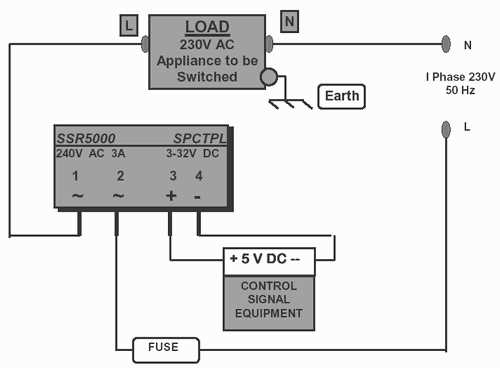
Apply a low voltage control signal through an optically isolated relay module to switch a direct current load safely. Semiconductor relay modules replace mechanical contacts with internal transistors or MOSFET pairs, allowing silent switching and long service life. Typical input control levels range from 3 V to 32 V while the output side may handle loads from 5 V up to 60 V depending on the device model.
Electrical layouts for these relay modules show three main sections: the input trigger stage, the isolation block using an optocoupler, and the output switching stage built from power MOSFETs or transistor arrays. The input side usually includes a current limiting resistor and LED inside the optocoupler. When current flows through this LED, the optical element activates the transistor on the output stage.
Direct current load switching requires attention to polarity and heat dissipation. MOSFET output stages often include two transistors arranged in a back-to-back configuration so current can pass correctly without internal body diode leakage. Heat sinks or metal mounting plates may be required when load current exceeds several amperes.
Typical applications include battery powered systems, automation controllers, LED lighting drivers, heating elements, and motor control modules. Engineers frequently use these relay units where silent operation, vibration resistance, and long switching life are preferred over mechanical relays.
Accurate connection layouts show where the control signal enters the optocoupler stage, how the semiconductor switching section links to the power supply, and how the load connects across the output terminals. Following these layouts prevents reversed polarity, overload conditions, and unwanted current paths inside the relay module.
DC to DC SSR Circuit Diagram With Solid State Relay Control and Load Switching
Use an optically isolated semiconductor relay module between the control signal and the load supply. The control side normally accepts 3–32 V direct current, while the output side can switch loads such as 12 V heaters, LED strips, pumps, or small motors. This arrangement separates the control electronics from the power path.
Control Input and Trigger Section
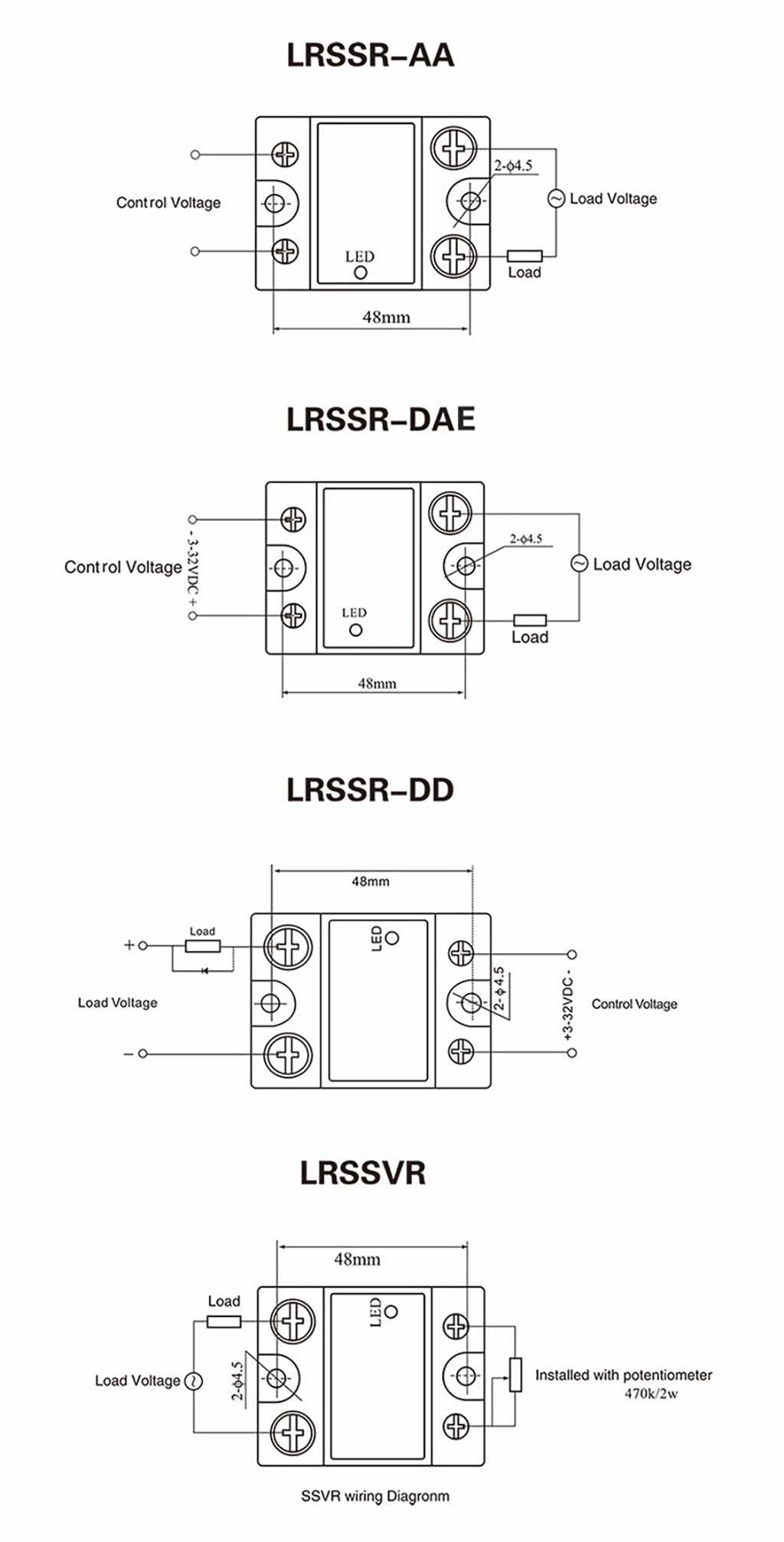
The trigger stage usually contains an optocoupler with an internal LED and phototransistor. A current-limiting resistor regulates the LED current so the device activates reliably without overheating.
- Control signal source such as microcontroller pin or switch
- Current limiting resistor typically 220 Ω to 1 kΩ
- Optocoupler input LED
- Ground reference for the control stage
Activation occurs when current flows through the optocoupler LED. The optical element transfers the signal to the output stage while keeping both electrical sections isolated.
Output Switching Stage and Load Connection
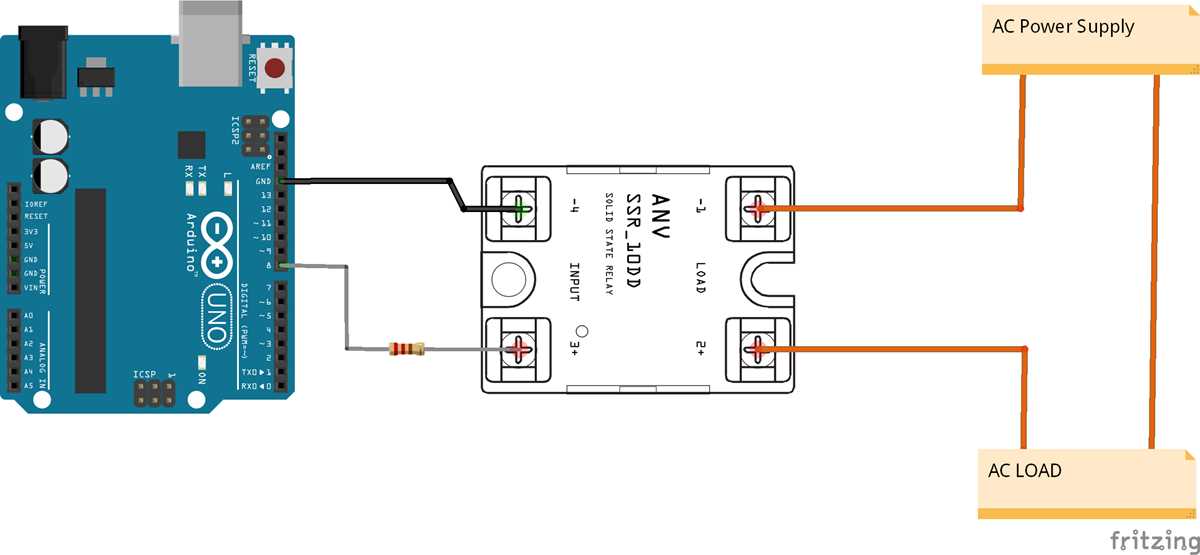
The power switching section normally uses MOSFET pairs connected back-to-back. This arrangement blocks reverse current and allows stable switching of direct current loads. The load connects in series with the power supply and the semiconductor relay output terminals.
- Connect the positive supply line to the load
- Attach the other side of the load to the relay output terminal
- Link the remaining output terminal to supply ground
- Apply the trigger voltage to the control input
Heat dissipation must be considered when switching currents above 2–5 A. Many relay modules include aluminum plates or mounting tabs that transfer heat to a metal chassis.
Protection components such as flyback diodes across inductive loads reduce voltage spikes created by motors or coils. These spikes may damage the semiconductor switching stage if suppression components are missing.
DC Input Trigger Connection and Control Stage for Solid State Relay Switching
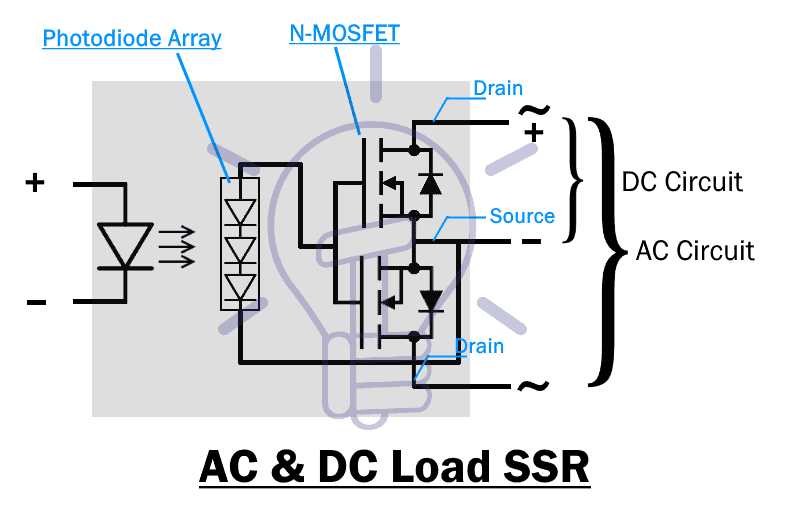
Apply the control voltage through a current limiting resistor before feeding the trigger input of the semiconductor relay module. Typical trigger ranges fall between 3 V and 32 V direct current. A resistor between 220 Ω and 1 kΩ regulates current flowing through the internal optocoupler LED, preventing overheating and maintaining stable activation.
Control Signal Path
The trigger path normally contains a signal source such as a microcontroller output pin, toggle switch, sensor module, or transistor driver stage. The positive control line connects to the input terminal of the relay unit, while the negative line connects to the control ground. Inside the module, the LED of the optocoupler receives this current and emits light toward the internal phototransistor.
Isolation between the control electronics and the load supply occurs through the optocoupler. The optical link transfers the switching signal without direct electrical contact. This separation protects microcontrollers and logic boards from voltage spikes generated by motors, coils, or other inductive loads.
Stable triggering requires sufficient current through the optocoupler LED. Many modules activate at 5–15 mA input current. If the control source cannot deliver this level directly, a transistor driver stage can be placed between the controller output and the relay trigger terminals.